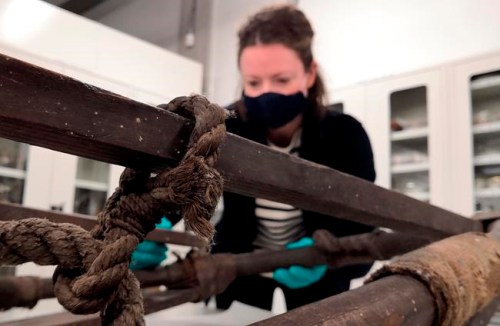
Shackleton expedition artifacts to be donated to UK museums
Advertisement
Read this article for free:
or
Already have an account? Log in here »
To continue reading, please subscribe:

Digital Subscription
One year of digital access for only $205*
- Enjoy unlimited reading on winnipegfreepress.com
- Read the E-Edition, our digital replica newspaper
- Access News Break, our award-winning app
- Play interactive puzzles
*First annual payment billed as $205.00 + GST for one year. This annual subscription will automatically renew at $233.00 + GST every 52 weeks (10% off the regular annual price of $259.35). Offer available to new and qualified returning subscribers only. Cancel any time.
To continue reading, please subscribe:
Add Free Press access to your Brandon Sun subscription for only an additional
$1 for the first 4 weeks*
- Enjoy unlimited reading on winnipegfreepress.com
- Read the E-Edition, our digital replica newspaper
- Access News Break, our award-winning app
- Play interactive puzzles
*Your next Brandon Sun subscription payment will increase by $1.00 and you will be charged $17.95 plus GST for four weeks. After four weeks, your payment will increase to $24.95 plus GST every four weeks.
Read unlimited articles for free today:
or
Already have an account? Log in here »
Hey there, time traveller!
This article was published 16/12/2020 (2068 days ago), so information in it may no longer be current.
LONDON – A sled and flag used in one of explorer Ernest Shackleton’s famed expeditions to the South Pole have been bought by a British government-funded body to keep the treasured artifacts in the U.K.
The National Heritage Memorial Fund, a government-funded body, said Wednesday that it paid 204,000 pounds ($274,000) to help purchase the two items, used in the first of three British Antarctic expeditions led by Shackleton in the early 1900s. The artifacts will be donated to two English museums.
Earlier this year, British authorities slapped a temporary export ban on the artifacts.
The expedition was named Nimrod after the ship, which came within less than 100 miles (160 kilometres) of the South Pole for the first time in 1909. But before reaching their target, the explorers were forced to turn back, having stretched their rations to the limit.
Despite ultimately ending in failure, the expedition is considered the greatest advance to the pole in history, and set the stage for Norwegian explorer Roald Amundsen’s successful trek just two years later.
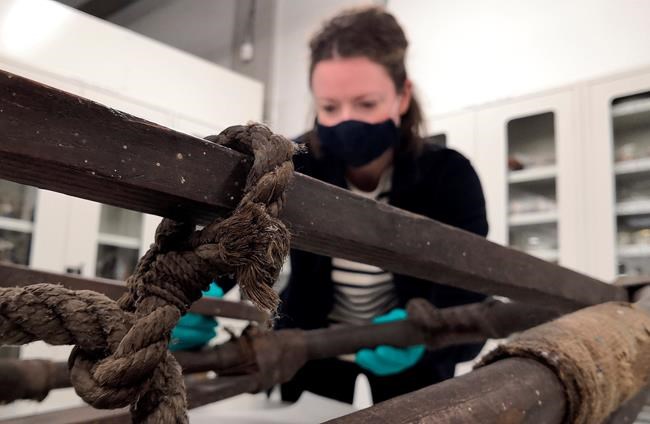
The 11-foot (3.35-meter) wooden sled was one of four used to haul supplies and equipment across the Antarctic tundra. The flag, which features a red unicorn head and golden anchor, appears in many grainy photographs from the journey.
“Very little from the expedition survives,” said Jeremy Michell, senior curator at the National Maritime Museum in London. ”In our Polar gallery that we’ve got, we have one item which is a rather uninspiring lamp racket from Nimrod. And you can’t really tell the same dynamic stories that you can when you’ve got a sledge.”
Shackleton never reached the South Pole and died of a heart attack in 1922 off South Georgia, a British overseas territory, during a fourth Antarctic expedition.
The sled and flag were owned by Eric Marshall, a surgeon and polar explorer who accompanied Shackleton on Nimrod’s “sledge march” to the South Pole.

Marshall brought the items back to Britain and in the 1950s donated them to his former school.
Eilish McGuinness, executive director of the National Heritage Memorial, said the body has paused a lot of normal funding during the coronavirus pandemic, but it’s still open to “urgent and special things” at the risk of a loss.
“The general agreement throughout was that it was so important that we really had to help save it and keep these precious items in the U.K.,” she said.
The National Heritage Memorial Fund said the sled will be donated to London’s Thames-side National Maritime Museum, and the flag to Cambridge’s Scott Polar Research Institute.
“People will see that sledge and they’ll be able to kind of imagine the stories and really get close to those incredible items,” McGuinness said.
Related Articles
First images released of the wreck of Quest, explorer Ernest Shackleton's last ship

Advertisement Advertise With Us
Advertisement Advertise With Us