Tanzanian Abdulrazak Gurnah awarded Nobel literature prize
Advertisement
Read this article for free:
or
Already have an account? Log in here »
To continue reading, please subscribe:

Digital Subscription
One year of digital access for only $205*
- Enjoy unlimited reading on winnipegfreepress.com
- Read the E-Edition, our digital replica newspaper
- Access News Break, our award-winning app
- Play interactive puzzles
*First annual payment billed as $205.00 + GST for one year. This annual subscription will automatically renew at $233.00 + GST every 52 weeks (10% off the regular annual price of $259.35). Offer available to new and qualified returning subscribers only. Cancel any time.
To continue reading, please subscribe:
Add Free Press access to your Brandon Sun subscription for only an additional
$1 for the first 4 weeks*
- Enjoy unlimited reading on winnipegfreepress.com
- Read the E-Edition, our digital replica newspaper
- Access News Break, our award-winning app
- Play interactive puzzles
*Your next Brandon Sun subscription payment will increase by $1.00 and you will be charged $17.95 plus GST for four weeks. After four weeks, your payment will increase to $24.95 plus GST every four weeks.
Read unlimited articles for free today:
or
Already have an account? Log in here »
Hey there, time traveller!
This article was published 07/10/2021 (1792 days ago), so information in it may no longer be current.
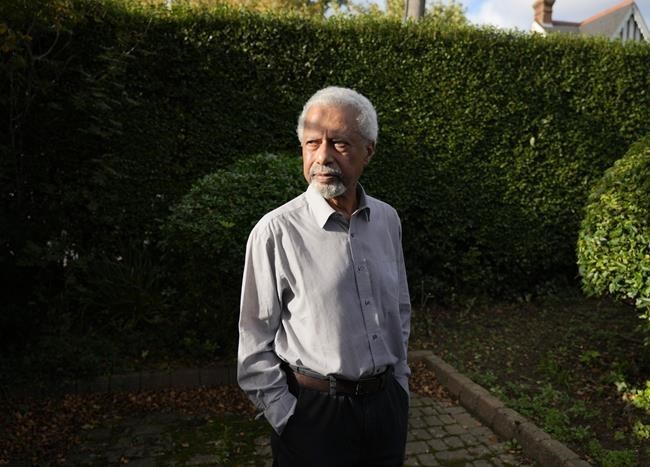
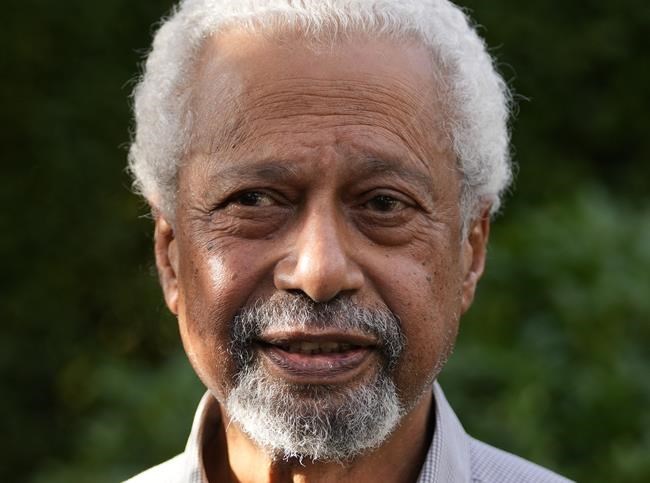
STOCKHOLM (AP) — U.K.-based Tanzanian writer Abdulrazak Gurnah, whose experience of crossing continents and cultures has nurtured his novels about the impact of migration on individuals and societies, won the Nobel Prize for Literature on Thursday.
The Swedish Academy said the award was in recognition of Gurnah’s “uncompromising and compassionate penetration of the effects of colonialism and the fate of the refugee.”
Gurnah, who recently retired as a professor of English and post-colonial literatures at the University of Kent, got the call from the Swedish Academy in the kitchen of his home in Canterbury, in southeast England — and initially thought it was a prank.
“You think it can’t be true,” he told The Associated Press. “It literally took my breath away.”
Gurnah, 72, arrived in Britain as an 18-year-old refugee a half-century ago. He said the themes of migration and displacement explored in his novels are even more urgent now — amid mass movements of people displaced from Syria, Afghanistan and beyond — than when he began his writing career.
“The scale is different,” he said. “What makes it different, I think, is what we see in the way that people risk their lives. Of course, people risked their lives from Haiti coming to the United States a couple of decades ago, and that was horrible.”
But in more recent years, the vast numbers of asylum seekers perilously crossing the Mediterranean or the Sahara, he said, are “a different scale of horror.
He said he hoped fiction could help people in wealthy nations understand the humanity of the migrants they see on their screens.
“What fiction can do is it can fill in the gaps,” he said. “And actually allow people to to see that, in fact, they are complicated stories which are being mashed up by the high-sounding lies and distortions that seem to be what popular culture somehow requires to continue to ignore and to dismiss what they don’t want to hear.”
Born in 1948 on the island of Zanzibar, now part of Tanzania, Gurnah moved to Britain in the late 1960s, fleeing a repressive regime that persecuted the Arab Muslim community to which he belonged.

He has said he “stumbled into” writing after arriving in England as a way of exploring both the loss and liberation of the emigrant experience.
Gurnah is the author of 10 novels, including “Memory of Departure,” “Pilgrims Way,” “Paradise” — shortlisted for the Booker Prize in 1994 — “By the Sea,” “Desertion” and “Afterlives.” The settings range from East Africa under German colonialism to modern-day England. Many explore what he has called “one of the stories of our times”: the profound impact of migration both on uprooted people and the places they make their new homes.
Gurnah, whose native language is Swahili but who writes in English, is only the sixth Africa-born author to be awarded the Nobel for literature, which has been dominated by European and North American writers since it was founded in 1901.
Nigerian writer Wole Soyinka, who won the Nobel Literature prize in 1986, welcomed the latest African Nobel laureate as proof that “the Arts — and literature in particular — are well and thriving, a sturdy flag waved above depressing actualities” in “a continent in permanent travail.”
“May the tribe increase!” Soyinka told the AP in an email.
Anders Olsson, chairman of the Nobel Committee for literature, called Gurnah “one of the world’s most prominent post-colonial writers.” He said it was significant that Gurnah’s roots are in Zanzibar, a polyglot place that “was cosmopolitan long before globalization.”
“His work gives us a vivid and very precise picture of another Africa not so well known for many readers, a coastal area in and around the Indian Ocean marked by slavery and shifting forms of repression under different regimes and colonial powers: Portuguese, Indian, Arab, German and the British,” Olsson said.

He said Gurnah’s characters “find themselves in the gulf between cultures … between the life left behind and the life to come, confronting racism and prejudice, but also compelling themselves to silence the truth or reinventing a biography to avoid conflict with reality.”
News of the award was greeted with excitement in Zanzibar, where many remembered Gurnah and his family — though few had actually read his books.
Gurnah’s books are not required reading in schools there and “are hardly to be found,” said the local education minister, Simai Mohammed Said, whose wife is Gurnah’s niece. But, he added, “a son of Zanzibar has brought so much pride.”
“The reaction is fantastic … The young people are proud that he’s Zanzibari,” said Farid Himid, who described himself as a local historian whose father had been a teacher of the Quran to the young Gurnah.
Gurnah didn’t often visit Zanzibar, he said, but he has suddenly become the talk of young people in the semiautonomous island region.
“And many elder people are very, very happy Himid said. “Also me, as a Zanzibari. It’s a new step to make people read books again, since the internet has taken over.”
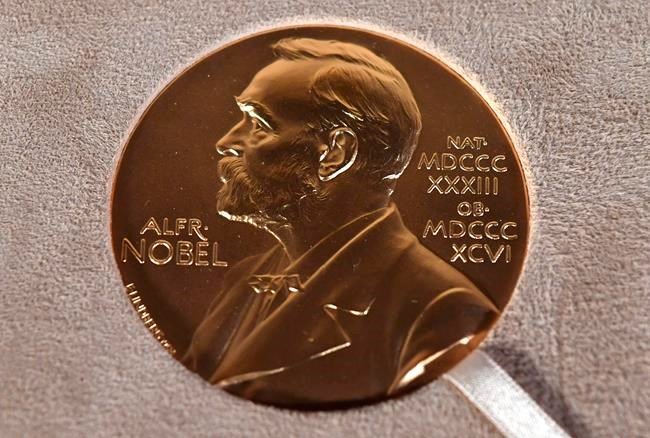
The prestigious award comes with a gold medal and 10 million Swedish kronor (over $1.14 million). The money comes from a bequest left by the prize’s creator, Swedish inventor Alfred Nobel, who died in 1895.
Last year’s prize went to American poet Louise Glück. Glück was a popular choice after several years of controversy. In 2018, the award was postponed after sex abuse allegations rocked the Swedish Academy, the secretive body that chooses the winners. The awarding of the 2019 prize to Austrian writer Peter Handke caused protests because of his strong support for the Serbs during the 1990s Balkan wars.
On Monday, the Nobel Committee awarded the prize in physiology or medicine to Americans David Julius and Ardem Patapoutian for their discoveries into how the human body perceives temperature and touch.
The Nobel Prize in physics was awarded Tuesday to three scientists whose work found order in seeming disorder, helping to explain and predict complex forces of nature, including expanding our understanding of climate change.
Benjamin List and David W.C. MacMillan were named as laureates of the Nobel Prize for chemistry Wednesday for finding an easier and environmentally cleaner way to build molecules that can be used to make compounds, including medicines and pesticides.

Still to come are prizes for outstanding work in the fields of peace, on Friday, and economics, on Monday.
—-
Lawless reported from London and Anna from Nairobi, Kenya. Associated Press writers Danica Kirka in London, Chinedu Asadu in Lagos, Nigeria. and Frank Jordans in Berlin contributed.
—-
Read more stories about Nobel Prizes past and present by The Associated Press at https://www.apnews.com/NobelPrizes