Treasury urges closer watch on money laundering in fine art

Advertisement

Advertise with us

WASHINGTON (AP) — Fine art isn’t just nice to look at — it’s also attractive to criminals trying to launder money, finance terrorism and trade illegal drugs and arms. And the Treasury Department wants art dealers and financiers to do something about that.

Read this article for free:


or

Already have an account? Log in here »

To continue reading, please subscribe:

Subscribe and receive a limited-edition Free Press branded hat or tote.

Digital Subscription

One year of digital access for only $205*

  • Enjoy unlimited reading on winnipegfreepress.com
  • Read the E-Edition, our digital replica newspaper
  • Access News Break, our award-winning app
  • Play interactive puzzles

*First annual payment billed as $205.00 + GST for one year. This annual subscription will automatically renew at $233.00 + GST every 52 weeks (10% off the regular annual price of $259.35). Offer available to new and qualified returning subscribers only. Cancel any time.

To continue reading, please subscribe:

Add Free Press access to your Brandon Sun subscription for only an additional

$1 for the first 4 weeks*

  • Enjoy unlimited reading on winnipegfreepress.com
  • Read the E-Edition, our digital replica newspaper
  • Access News Break, our award-winning app
  • Play interactive puzzles
Start now

*Your next Brandon Sun subscription payment will increase by $1.00 and you will be charged $17.95 plus GST for four weeks. After four weeks, your payment will increase to $24.95 plus GST every four weeks.

Hey there, time traveller!
This article was published 04/02/2022 (1698 days ago), so information in it may no longer be current.

WASHINGTON (AP) — Fine art isn’t just nice to look at — it’s also attractive to criminals trying to launder money, finance terrorism and trade illegal drugs and arms. And the Treasury Department wants art dealers and financiers to do something about that.

The agency issued a 40-page report Friday recommending that financial firms and art dealers set up an information-sharing database to track how sales of fine art are linked to bad actors who make anonymous purchases.

The need to monitor art sales has become more complicated and necessary with the recent rise in sales of digital assets known as NFTs, or non-fungible tokens.
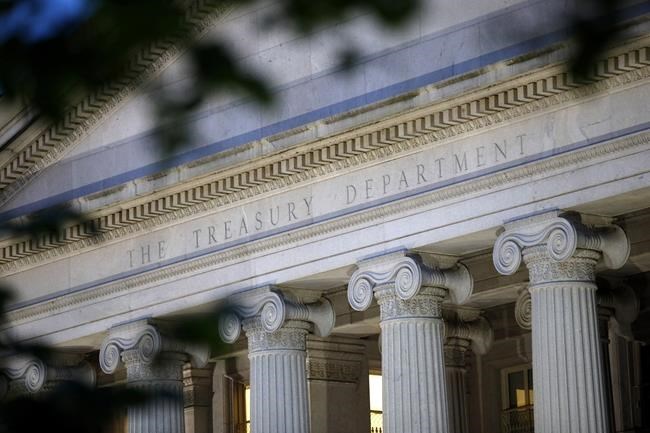
FILIE - This June 6, 2019, photo, shows the U.S. Treasury Department building at dusk in Washington. Fine art isn't just nice to look at. It's also attractive to criminals trying to launder money, finance terrorism and trade illegal drugs and arms. The agency issued a report on Feb. 4, 2022, recommending that financial firms and art dealers set up an information-sharing database to track how sales of fine art are linked to bad actors who make anonymous purchases. (AP Photo/Patrick Semansky, File)

Michael Greenwald, a former Treasury official and adjunct senior fellow at the Center for a New American Security, called the report “a critical first step for there to be a regulatory structure around the broader art market,” which he called one of the last unregulated markets.

“This puts illicit actors and people in the art market on notice that this is a serious issue and will also lead to regulation of the NFT digital art market space,” he said.

In issuing the report, the Treasury Department declined to take more robust steps toward creating new regulations on the art sales, after it found limited evidence of terrorist financing risk.

However, the department did find evidence of money laundering in the high-value art market. A common theme is that criminals use shell companies to buy art and hide behind a corporate veil.

The report cites Brazilian authorities’ seizure of former bank owner Edemar Cid Ferreira’s multimillion dollar art collection, after he was found to have unlawfully taken bank funds to purchase the art. A painting by Jean-Michel Basquiat called “Hannibal,” as well as a Roman Togatus statue had been illegally smuggled into the United States in violation of customs law.

Another example included Mark Bloom, an investment fund manager who pleaded guilty to investment fraud charges after misappropriating least $20 million from a $30 million partnership, which he used for the purchase of high-value art, among other items.

Maureen Bray, executive director of the New York-based Art Dealers Association of America, welcomed a study on the topic rather than immediate regulation, which she said could hurt smaller dealers.

On the recommendation encouraging information-sharing between firms, Bray said, “it’s an interesting idea in principle, but serious thought would be put into how that would work in practice.”

The Treasury study was required by Congress as a part of the Anti-Money Laundering Act of 2020.

It states that financial firms are most vulnerable to money laundering in the art market through art collections used as loan collateral. This sort of lending can be used to disguise the original source of money, the Treasury said.

Scott Rembrandt, who heads strategic policy in the Treasury’s Office of Terrorist Financing and Financial Crimes, said the need to tackle corporate transparency and “loopholes that allow criminals to abuse the financial system” is not just limited to the art world, but also real estate transactions.

In September 2021, Treasury’s financial crimes enforcement arm issued a notice of proposed rulemaking informing financial institutions about the new money-laundering law and reporting requirements related to antiquities, which the agency defines separately from high-value artwork.

“Certain characteristics of the trade in antiquities may be exploited by money launderers and terrorist financiers to evade detection by law enforcement,” the document said.

The issue has become so pervasive that the Group of 20 culture ministers’ meeting last summer included a session on protecting cultural heritage.
Report Error Submit a Tip

More Stories

Accused grandparent scammer charged with sex crimes involving minor

Free Press staff 3 minute read 12:11 PM CDT

An Edmonton man accused of defrauding several Winnipeg seniors in so-called grandparent scams has also been charged for allegedly sexually assaulting a teenage girl in the city.

Winnipeg Police Service financial crime investigators were alerted after three city residents, all in their 80s, were defrauded of more than $37,000 in August after receiving calls from someone posing as a grandchild who claimed to need cash to pay for bail, police said Tuesday.

The first victim received several phone calls between Aug. 17 and 22 from a caller who claimed the victim’s grandson had been arrested and needed cash bail. The victim agreed to pay and handed over cash and gold and silver coins to a man who showed up at their door four separate times.

On Aug. 18, another adult received a call from someone claiming to be their grandson who needed cash for bail and the victim obliged, paying a man who went to their home to pick up money.

Retiree sues neighbour over alleged dog attack

Scott Billeck 2 minute read 2:00 AM CDT

A Winnipeg man is suing his neighbour over an alleged dog attack he says occurred while he was helping him with a lawnmower.

Arthur Cabel, a retiree who lives on Selkirk Avenue, is seeking unspecified damages from neighbour Saisamone Saegone, according to a statement of claim filed in the Manitoba Court of King’s Bench last week.

Cabel claims he went to Saegone’s home in the afternoon on Sept. 23, 2024, to help him with his lawnmower.

According to the lawsuit, Saegone’s large dog, initially in a fenced backyard, escaped, approaching Cabel and “mauling, attacking and biting him.”

Manitoba PCs choose Narth as interim leader; Khan blasts former caucus colleagues

Carol Sanders 4 minute read Preview

Manitoba PCs choose Narth as interim leader; Khan blasts former caucus colleagues

Carol Sanders 4 minute read Updated: 1:59 PM CDT

Manitoba’s Progressive Conservatives have chosen Konrad Narth as their interim party leader after the sudden resignation of Obby Khan.

Narth, who represents La Vérendrye in the province’s southeast, was chosen in a closed-door caucus meeting Tuesday morning.

Khan announced late Monday afternoon that he was quitting caucus and will sit in the legislature as an independent MLA.

“We’re not fractured,” Narth said shortly after being selected and just hours before the legislature resumed sitting after a summer break of nearly four months.

Read
Updated: 1:59 PM CDT

Treasury urges closer watch on money laundering in fine art

Fatima Hussein, The Associated Press 4 minute read Preview

Treasury urges closer watch on money laundering in fine art

Fatima Hussein, The Associated Press 4 minute read Friday, Feb. 4, 2022

WASHINGTON (AP) — Fine art isn’t just nice to look at — it’s also attractive to criminals trying to launder money, finance terrorism and trade illegal drugs and arms. And the Treasury Department wants art dealers and financiers to do something about that.

The agency issued a 40-page report Friday recommending that financial firms and art dealers set up an information-sharing database to track how sales of fine art are linked to bad actors who make anonymous purchases.

The need to monitor art sales has become more complicated and necessary with the recent rise in sales of digital assets known as NFTs, or non-fungible tokens.

Michael Greenwald, a former Treasury official and adjunct senior fellow at the Center for a New American Security, called the report “a critical first step for there to be a regulatory structure around the broader art market,” which he called one of the last unregulated markets.

Read
Friday, Feb. 4, 2022

Dealing now with increasing judicial dangers

Ben Wickstrom 5 minute read 2:00 AM CDT

For years, the Manitoba Association of Crown Attorneys (“MACA”) has been engaged in a dispute with the Manitoba government over the workload of its lawyers. That dispute is expected to come to a head at the end of November, when two weeks of grievance hearings are scheduled.

We remain hopeful that we can reach an agreement with our employer. But if we cannot, our union’s lawyers are prepared to make our case. As those hearings approach, we want to explain how we got here, what is at stake, and why this dispute matters beyond the working conditions of our members.

These problems are longstanding and predate the election of Manitoba’s current government. Our concern with the current government is not that it created these problems, but that it is now responsible for addressing them.

Despite the evidence before it, the government has not meaningfully addressed the workload concerns we have raised throughout its time in office.

What’s open, what’s closed, what’s up in Winnipeg on National Day for Truth and Reconciliation Sept. 30, 2026

Free Press staff 4 minute read Preview

What’s open, what’s closed, what’s up in Winnipeg on National Day for Truth and Reconciliation Sept. 30, 2026

Free Press staff 4 minute read Sunday, Sep. 27, 2026

The National Day of Truth and Reconciliation, or Orange Shirt Day, as it's known in Manitoba, happens Sept. 30 with many commemorative community events scheduled.

Read
Sunday, Sep. 27, 2026