Old money, new money: Beaux Arts style gets attention on HBO

Advertisement

Advertise with us

NEW YORK (AP) — “What surroundings, Mrs. Russell. We could be at Tsarskoye Selo," exclaims Nathan Lane's snooty Ward McAllister at his first glance of her opulent Fifth Avenue mansion on "The Gilded Age.”

Read this article for free:


By clicking the button above, an account will be created and you will begin to receive some of our recommended newsletters. You may opt out of any newsletter by visiting your Email and Communication Preferences page or by clicking "unsubscribe" at the bottom of any email.

or

Already have an account? Log in here »

To continue reading, please subscribe:

Digital Subscription

One year of digital access for only $1.44 a week*

  • Enjoy unlimited reading on winnipegfreepress.com
  • Read the E-Edition, our digital replica newspaper
  • Access News Break, our award-winning app
  • Play interactive puzzles

*Billed as $5.77 plus GST every four weeks. After 52 weeks, price increases to the regular rate of $19.95 plus GST every four weeks. Offer available to new and qualified returning subscribers only. Cancel any time.

To continue reading, please subscribe:

Add Free Press access to your Brandon Sun subscription for only an additional

$1 for the first 4 weeks*

  • Enjoy unlimited reading on winnipegfreepress.com
  • Read the E-Edition, our digital replica newspaper
  • Access News Break, our award-winning app
  • Play interactive puzzles
Start now

*Your next Brandon Sun subscription payment will increase by $1.00 and you will be charged $17.95 plus GST for four weeks. After four weeks, your payment will increase to $24.95 plus GST every four weeks.

Hey there, time traveller!
This article was published 10/03/2022 (1688 days ago), so information in it may no longer be current.

NEW YORK (AP) — “What surroundings, Mrs. Russell. We could be at Tsarskoye Selo,” exclaims Nathan Lane’s snooty Ward McAllister at his first glance of her opulent Fifth Avenue mansion on “The Gilded Age.”

The social arbiter’s reference to an 18th century palace outside St. Petersburg, Russia, is lost on the new-money Bertha, but the point was made: The HBO Max series has brought alive America’s post-Civil War renaissance and New York City’s cultural awakening in all its Beaux Arts glory.

The term, which translates simply as “fine arts,” was anything but simple in the hands of the city’s wealthiest figures of the time — names like Astor, Carnegie, Frick, Morgan, Rockefeller, Vanderbilt and more. Thanks to this powerful ruling class and their architects, the period roughly spanning the 1870s to the 1930s produced some of New York’s finest structures.
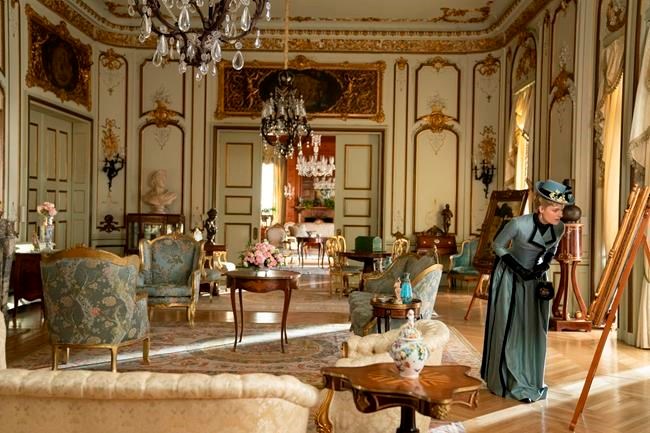
This image released by HBO shows Louisa Jacobson in a scene from
This image released by HBO shows Louisa Jacobson in a scene from "The Guilded Age." The popular HBO Max series has brought alive America's post-Civil War renaissance and New York City's cultural awakening in all its Beaux-Arts glory. (Alison Cohen Rosa/HBO via AP)

Beaux Arts at its best includes buildings like The Metropolitan Museum of Art, the Morgan Library & Museum, the Woolworth Building, Grand Central Terminal, Pennsylvania Station, the main branch of the New York Public Library, The Frick Collection, Grant’s Tomb and select mausoleums in Woodlawn Cemetery, where some of the players rest.

The structures, or pieces of them, survived the advent of Art Nouveau, Art Deco and the modernist movement as the country radically transformed.

“Architecture is always a clear guide to how individuals or whole societies think of themselves,” the HBO show’s creator, Julian Fellowes, told The Associated Press about why he needed to get the details right. “The princes of the American renaissance were no different. They saw themselves as giants, no longer inferior to the products of older cultures across the sea, but kings of the world.”

Just as Fellowes began work on “The Gilded Age” several years ago after his hit “Downton Abbey,” the architect, author and educator Phillip James Dodd began his passion project about the same era. His “An American Renaissance: Beaux-Arts Architecture in New York City” (Images Publishing) is a massive, meticulous book delving into the homes, monuments and public buildings that robber barons and industrialists ordered up in an over-the-top vein as the city gained its cultural footing.

The Beaux Arts style, characterized by classical forms, massive proportions and lavish, usually symmetrical, detailing, sprouted from the École des Beaux Arts in Paris. Some of the most sought-after American architects trained there before joining the gold rush for commissions amid New York’s sea of brownstones.

Their clients, the titans of banking, railroads and mining, were looking to flaunt their fortunes and better their social standing, and that of New York in the process. As they amassed art and antiquities in Europe, their architects, sculptors and muralists drew on a wide range of influences, including the ancient Greeks and Romans, along with the Renaissance and Baroque styles from Italy and France. Often, all at the same time.

While the Beaux Arts style in France was grand, in America it was “on steroids,” Dodd told the AP.

“They wanted to create cities that could rival the great cities. They needed monuments,” he said.
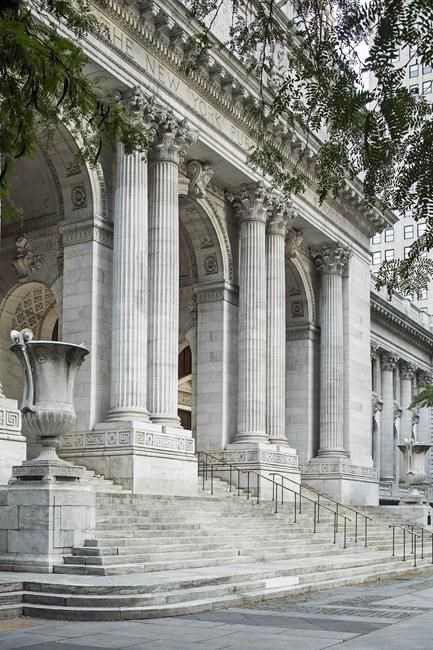
This 2017 photo from the book “An American Renaissance: Beaux-Arts Architecture in New York City,” published by the Images Publishing Group in 2021, shows the main branch of the New York Public Library. The architectural style Beaux-Arts translates simply as “fine arts.” It was anything but simple in the hands of New York City’s wealthiest and often infamous figures of the time. (Jonathan Wallen via AP)

Dodd’s book was released just four months before “The Gilded Age” series premiered. Fellowes wrote the foreword.

One of the top architectural firms of the day, McKim, Mead and White, makes an appearance on the show. Its ginger-haired and mustachioed partner Stanford White is hired by Bertha and her railroad magnate husband, George Russell, to create their lavish home (a fictionalized mansion on Fifth Avenue’s Millionaires Row).

The prolific White, designer of homes, college buildings and the marble arch at Washington Square, also made real-life headlines in 1906 for being fatally shot on the roof of Madison Square Garden. His murderer: enraged Pittsburgh millionaire Harry Thaw, who was married to one of the architect’s past teen paramours, Evelyn Nesbit.

When J.P. Morgan decided to build a new repository for his impressive book and art collections, he had passed over the flamboyant White and turned to his more proper partner, Charles Follen McKim. McKim, however, was already committed to overseeing a remodeling of the White House for President Theodore Roosevelt Jr. The Morgan and Roosevelt families were feuding at the time, and Morgan bribed McKim by offering lifetime funding of a pet project in Rome, Dodd writes. McKim continued his work for Roosevelt as well.

The four-room Morgan Library (now merged with other Morgan buildings) was far from McKim’s largest commission, but dealing with the mighty Wall Streeter brought on a nervous breakdown for the overwhelmed architect, according to Dodd.

It was just one example of the era’s titans using their buildings as weapons against each other.

Dutch-born Joseph Raphael De Lamar, a mining magnate, purchased a double lot on the corner of Madison Avenue and 37th Street in 1902, a surprising move for a newcomer looking to make his way into high society since most of the wealthy had decamped north to a stretch of Fifth Avenue between 59th and 96th streets.

The draw for De Lamar? His lots were opposite Morgan’s brownstone, and Morgan had regularly rebuffed the newcomer in business. De Lamar hired architect C.P.H. Gilbert to make his the largest home in the neighborhood and one of the most spectacular in the city but, most importantly, it must literally cast a shadow over Morgan’s home, Dodd writes.
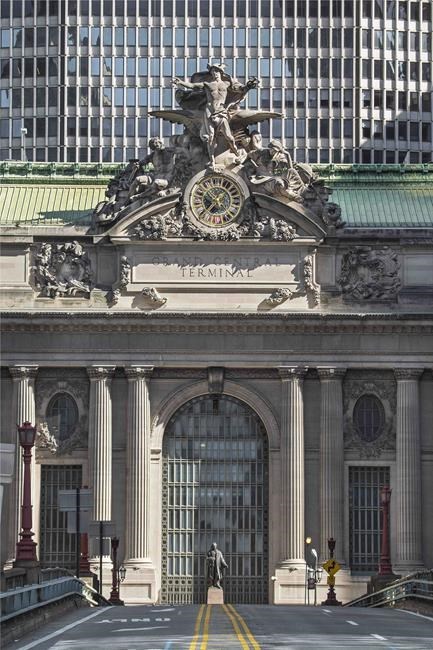
This 2017 photo from the book “An American Renaissance: Beaux-Arts Architecture in New York City,” published by the Images Publishing Group in 2021, shows Grand Central Terminal in Manhattan. The architectural style Beaux-Arts translates simply as “fine arts,” but it was anything but in the hands of New York City’s wealthiest and often infamous figures of the time. (Jonathan Wallen via AP

And it still does today, though De Lamar was never accepted into New York society, partly because his young wife was said to be too pretty to be tolerated by other married women, according to the book.

So what led to the Gilded Age’s decline? Many factors changed the mood, including the introduction of an income tax, World War I, a stock market plunge in 1893 and the antitrust bent of Theodore Roosevelt.

“The unparalleled joy was gone,” Dodd said. “In some ways, the elite who basically ruled the country were all of a sudden obsolete.”

___

Follow Leanne Italie on Twitter at http://twitter.com/litalie
Report Error Submit a Tip

More Stories

Family history, solo sojourns paved path for celebrated author’s latest novel

Ben Sigurdson 7 minute read Preview

Family history, solo sojourns paved path for celebrated author’s latest novel

Ben Sigurdson 7 minute read 2:01 AM CDT

It’s 1967 and Lee Clarke has just been kicked out of UCLA when he receives his draft letter in the mail. Rather than report for basic training, he hops in a car and sets off across America on an amphetamine-fuelled road trip to bid farewell to his fractured, dysfunctional family before crossing the border into Canada.

Such is the premise for B.C.-born, Portland-based Patrick deWitt’s sixth novel Dodge City, published in September by House of Anansi. He’s in Winnipeg tonight at McNally Robinson Booksellers’ Grant Park location to launch the book.

The 51-year-old deWitt came to prominence with his sophomore novel, 2011’s The Sisters Brothers. The book was a critical and commercial success, winning the author the Governor General’s Literary Award for Fiction, the Rogers Writers’ Trust Fiction Prize and the Stephen Leacock Medal for Humour, and was adapted for the big screen in a film starring John C. Reilly and Joaquin Phoenix.

His 2018 novel French Exit was also adapted for cinema, and his 2023 novel The Librarianist won deWitt the Leacock Medal for the second time. Dodge City is deWitt’s fourth novel to make the Giller Prize long list.

Read
2:01 AM CDT

Reynolds exerts ‘maximum effort’ to boost Winnipeg after quick meet with mayor

Gabrielle Piché 3 minute read Preview

Reynolds exerts ‘maximum effort’ to boost Winnipeg after quick meet with mayor

Gabrielle Piché 3 minute read Updated: Yesterday at 8:13 PM CDT

Ryan Reynolds wasn’t wearing his Deadpool suit, but that didn’t stop Mayor Scott Gillingham from wanting to talk about films with the Vancouver-born Hollywood movie star.

Reynolds, who appeared at IG Wealth Management's 100th anniversary celebration Wednesday at the RBC Convention Centre, took to social media afterward, sharing a photo of himself with Gillingham and trumpeting the province’s tax incentives.

“An incredible place to shoot,” the Instagram post read.

On Thursday, Gillingham said the actor, best known for portraying an irreverent, erratic anti-hero on the big screen, is a “really nice gentleman.”

Read
Updated: Yesterday at 8:13 PM CDT

Rocky Horror star prepared for a rude reception in all the best ways

Conrad Sweatman 5 minute read Preview

Rocky Horror star prepared for a rude reception in all the best ways

Conrad Sweatman 5 minute read 2:01 AM CDT

While it enjoys the longest theatrical release of any movie in history, The Rocky Horror Picture Show was all but ignored by critics when its revolutionary brand of camp first hit silver screens in 1975.

And before it whipped up a cult following, Rocky was a fringe theatre hit in London whose first run’s final night — which had attracted such luminaries as Mick and Bianca Jagger — was derailed by an unlikely culprit: glitter. According to the late Tim Curry (who died at 80 in August), the shiny stuff ended up where the sun don’t shine.

“Well, Rocky got some glitter down his trunks and it set up an irritation. When we arrived at the theatre, he was standing in the shower and the show couldn’t go on,” he told the press in 1974, after crossing the Atlantic to lead the show’s American theatre debut.

Glitter is one of the things audiences may not throw at the stage at The Rocky Horror Picture Show screening tonight at the Centennial Concert Hall. Unlike in the anarchic midnight screenings at the New York’s Waverly Theater beginning in 1976, where audiences chucked everything but the kitchen sink, a prop bag will be courteously supplied at the door.

Read
2:01 AM CDT

Outbreak should never have happened

Editorial 4 minute read Preview

Outbreak should never have happened

Editorial 4 minute read Yesterday at 2:00 AM CDT

The headline offered a vague sense that something had been accomplished, but it most certainly did not describe anything worth celebrating:

“Manitoba declares measles outbreak over.”

The news item in the Oct. 17 Free Press noted provincial public health officials had confirmed Manitoba’s last laboratory-confirmed case of measles was identified in August, and that the absence of any new cases since had allowed for the aforementioned declaration.

The end of the outbreak — which began in February 2025 and included a significant stretch this year during which Manitoba experienced more measles cases than any other province — is certainly worth noting. But it bears reminding that the real story here is that this province, and others across Canada, experienced a resurgence of this highly communicable but successfully eradicated disease in the first place.

Read
Yesterday at 2:00 AM CDT

Builder beefs up security after string of blazes

Morgan Modjeski 3 minute read 2:01 AM CDT

A Winnipeg builder said he’s had to beef up security around his developments after one of his projects sustained significant damage Wednesday in suspected arson cases.

“This is so bad for me,” said Rupinder Brar. “This is so sad.”

Firefighters were sent to the construction site at 297 Regal Ave., shortly before 4 a.m. Heavy smoke and flames were coming from the two homes on the site and threatened to jump to nearby buildings.

Winnipeg Police Service Const. Claude Chancy said police are investigating the blaze, as well as two fires in St. Boniface that were five days apart.

Police stop sex assault in progress

1 minute read Yesterday at 1:18 PM CDT

Police officers stopped a sexual assault in progress on Stanley Street on Wednesday evening.

A member of the public called 911 after they spotted a suspect assaulting a woman shortly after 7 p.m. on the 300 block of Stanley, the Winnipeg Police Service said.

Patrol officers responded almost immediately and found a suspect in the process of sexually assaulting an unconscious woman just after 7:10 p.m.

Police took the suspect into custody, while paramedics took the woman to hospital in stable condition.