Ronnie Hawkins, cross-border rockabilly legend and endearing showman, dies at 87
Advertisement
Read this article for free:
or
Already have an account? Log in here »
To continue reading, please subscribe:

Digital Subscription
One year of digital access for only $205*
- Enjoy unlimited reading on winnipegfreepress.com
- Read the E-Edition, our digital replica newspaper
- Access News Break, our award-winning app
- Play interactive puzzles
*First annual payment billed as $205.00 + GST for one year. This annual subscription will automatically renew at $233.00 + GST every 52 weeks (10% off the regular annual price of $259.35). Offer available to new and qualified returning subscribers only. Cancel any time.
To continue reading, please subscribe:
Add Free Press access to your Brandon Sun subscription for only an additional
$1 for the first 4 weeks*
- Enjoy unlimited reading on winnipegfreepress.com
- Read the E-Edition, our digital replica newspaper
- Access News Break, our award-winning app
- Play interactive puzzles
*Your next Brandon Sun subscription payment will increase by $1.00 and you will be charged $17.95 plus GST for four weeks. After four weeks, your payment will increase to $24.95 plus GST every four weeks.
Read unlimited articles for free today:
or
Already have an account? Log in here »
Hey there, time traveller!
This article was published 29/05/2022 (1591 days ago), so information in it may no longer be current.
TORONTO – Ronnie Hawkins, the southern U.S. rockabilly artist who sowed the seeds of Canada’s music scene after moving north, has died at 87.
His wife Wanda confirmed to The Canadian Press that Hawkins died Sunday morning at a hospital in Peterborough, Ont. He had faced various health issues in recent years.
“He went peacefully and he looked as handsome as ever,” she said in a phone interview from their home.
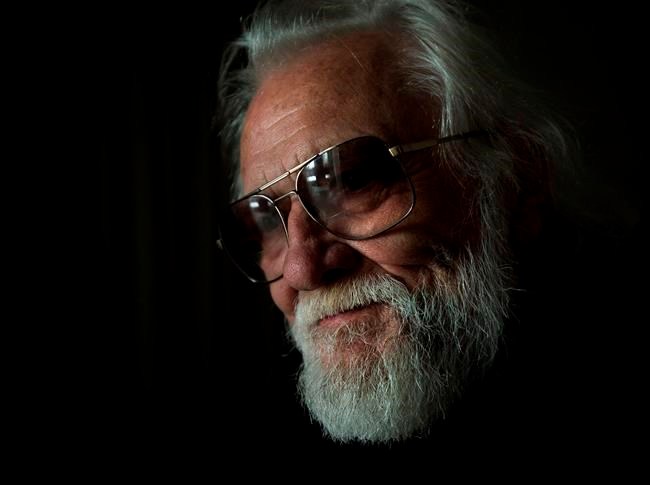
Known for his vivacious personality and enthusiastic stage presence, the singer of “Ruby Baby,” “Mary Lou” and Bo Diddley cover “Who Do You Love” earned several nicknames including Mr. Dynamo, Sir Ronnie, Rompin’ Ronnie and the Hawk.
Hawkins was godfather to a generation of influential artists, including musicians he enlisted for his backing band the Hawks, which would go on to play for Bob Dylan on his infamous 1966 tour when the folkster embraced the electric guitar.
Five members of the Hawks, including Levon Helm and Robbie Robertson, would later form the Band.
Though Hawkins clashed with some of his former bandmates, he joined the Band onstage as part of their iconic 1976 farewell show captured in Martin Scorsese’s concert film “The Last Waltz.” Robertson would later recall in his memoir “Testimony” that inviting Hawkins was, in part, a tribute to his influence.
“He was really good at gathering musicians that he thought were the best around,” Robertson said in a 2016 interview with The Canadian Press.
“It was like a bootcamp for musicians to go through, learn the music and when to do certain things and not do certain things. He just played a real pivotal part in all of it.”
Born in Arkansas in 1935, Hawkins joined the army reserve after high school while moonlighting in the Black Hawks, a band formed by fellow musician A.C. Reed.
After wrapping up his time in the military, he opened the Rockwood Club in Fayetteville, Ark., which became a popular stop for artists like Jerry Lee Lewis, Roy Orbison and Conway Twitty.
He eventually gave himself top billing and began playing as Ronnie Hawkins and the Hawks, crafting a bad-boy look with slicked black hair and sideburns.
Dismayed by several years of false starts in his own musical career, the singer-songwriter took advice from Twitty to launch a Canadian tour in 1958. He swore the country was thirsty for bands who were eager to play smaller cities.
Without a recording contract in his homeland, Hawkins saw Canada as “the promised land” — an untapped market to sell his Memphis sound and build his reputation to the point of crossover success in the United States. His instinct was right, and by the end of the decade Hawkins had two singles on the Billboard Top 100 and appeared on “Dick Clark’s American Bandstand.”
In his memoir, Robertson recounts first seeing Hawkins play at Toronto’s Dixie Arena. His local band the Suedes was hired to open the concert, but he acknowledges the show was easily stolen by the man who would become his mentor.
“It was the most violent, dynamic, primitive rock ‘n’ roll I had ever witnessed and it was addictive,” Robertson wrote.
Musician Gary Lucas, who met Hawkins when he was 16, lived with him and Wanda for eight years and became one of his closest friends, remembered how much of an impression the musician left with his performances.
“He was doing double backflips on a stage in the middle of a song — I’ve never seen that before or since,” Lucas said.
Many credit Hawkins — who had an affection for designer cars, large aviator sunglasses, women and parties — with laying the path for budding Canadian artists to enter the U.S. market.
“Most of them were starving to death,” said Hawkins. “Agents wouldn’t book a Canadian group.”
So Hawkins would lend his car, with U.S. licence plates, to band leaders with the goal of fooling agents and club owners into paying gigs.
“They’d tell them they were from Scarborough — Tennessee,” he added.
Some called Hawkins “the father of Canadian rock ‘n’ roll” partly because he welcomed the idea of bringing young musicians into his circle.
One of them was a teenage David Clayton-Thomas, who attended Hawkins’ shows at Le Coq d’Or Tavern on Yonge Street in Toronto with hopes the fiery musician might invite him to sit in with his band.
It happened one afternoon when Hawkins granted him an opportunity to “sing a tune” on stage. The performance led the bar’s owner to offer Clayton-Thomas a longer gig years before he’d become the Grammy-winning lead vocalist of Blood, Sweat & Tears.
“This is how everything started for me,” he said on Sunday. “Ronnie was very supportive.”
Later that year, following the dissolution of Clayton-Thomas’ teen band, Hawkins was quick to offer his support.
“It was Christmastime and Ronnie said, ‘Well, you can’t be out of work for Christmas. Come on, work with my band.’ It ended up turning into like a two-month gig at Le Coq d’Or singing with Ronnie’s band — Levon, Garth and the boys.”
Not everyone was so lucky. Hawkins also had a reputation for rejecting the underperformers or underlings who didn’t mesh well with his band.
Grammy-winning producer David Foster was one of many who was booted by Hawkins for falling short of expectations.
“He said, ‘You look like a cadaver on stage, I want people to look like they’re having fun. You’re not having any fun making my music,'” the Victoria-raised musician said during a 2017 interview.
“So he fired me, but we’ve remained great friends. He’s just one of those guys that attract good musicians … We all still bow to him. He’s not a great musician, he’s not a great singer, he’s not a great songwriter — he’s a great entertainer and he’s full of life and he taught us all a lot.”
In 1969, the year that John Lennon and Yoko Ono staged their famous “bed-in” in Montreal to campaign for peace, the couple stayed on Hawkins’s farm in Mississauga, Ont., for a couple of weeks. They later took Hawkins on a train ride to Ottawa to see then-prime minister Pierre Trudeau. Lennon also recruited Hawkins as a peace emissary, and Hawkins travelled to the China-Hong Kong border with journalist Ritchie Yorke carrying an anti-war message.
Throughout his career, Hawkins wrote roughly 500 songs and received numerous accolades and awards.
He won a Juno in 1982 for best country male vocalist for the album “Legend In His Spare Time.” He was honoured with a star on Canada’s Walk of Fame in October 2002, where the Tragically Hip’s Rob Baker thanked Hawkins because he took “aspiring musicians and marinated them.” He was also an Order of Canada recipient in 2014.
While Hawkins went back to Arkansas for many winters, he said he considered Canada his home — even though he was a landed immigrant.
“There’s no place in the world more beautiful than Canada. I’ve made a lot of good friends here. A lot of outlaws,” he said in 2000.
In 2002, Hawkins had a cancerous tumour removed from his pancreas, just three months after undergoing quadruple bypass heart surgery. The story was captured in the 2004 TV documentary “Ronnie Hawkins: Still Alive and Kickin'” in which he mused about one day meeting “the Big Rocker in the sky.”
Within a month of the singer announcing his recovery, former U.S. president and fellow Arkansan Bill Clinton, Foster and Paul Anka joined a slew of Hawkins’s friends for a party in Toronto. The trio sang a tribute version of “My Way” to the rocker.

Hawkins is survived by his wife Wanda, who he married in 1962, three grown children, Robbie, Leah and Ronnie Jr., as well as a raft of musicians who considered him a close friend.
“He took me and my band in like we were family,” actor and singer Kris Kristofferson said at a 2002 tribute to Hawkins.
“If there is a rock ‘n’ roll god, I know he looks just like this guy.”
This report by The Canadian Press was first published May 29, 2022.
Note to readers: This is a corrected story. A previous version said Ronnie Hawkins travelled to China with John Lennon. In fact, Hawkins travelled to the China-Hong Kong border with journalist Ritchie Yorke sharing Lennon’s anti-war message.