What can kids access on social media? Teen accounts, explained
Advertisement
Read this article for free:
or
Already have an account? Log in here »
To continue reading, please subscribe:

Digital Subscription
One year of digital access for only $205*
- Enjoy unlimited reading on winnipegfreepress.com
- Read the E-Edition, our digital replica newspaper
- Access News Break, our award-winning app
- Play interactive puzzles
*First annual payment billed as $205.00 + GST for one year. This annual subscription will automatically renew at $233.00 + GST every 52 weeks (10% off the regular annual price of $259.35). Offer available to new and qualified returning subscribers only. Cancel any time.
To continue reading, please subscribe:
Add Free Press access to your Brandon Sun subscription for only an additional
$1 for the first 4 weeks*
- Enjoy unlimited reading on winnipegfreepress.com
- Read the E-Edition, our digital replica newspaper
- Access News Break, our award-winning app
- Play interactive puzzles
*Your next Brandon Sun subscription payment will increase by $1.00 and you will be charged $17.95 plus GST for four weeks. After four weeks, your payment will increase to $24.95 plus GST every four weeks.
Read unlimited articles for free today:
or
Already have an account? Log in here »
Fed up with kids encountering dangers online or so addicted to screens they can’t pull themselves away from the infinite scroll, Canadian policymakers are looking to make social media safer.
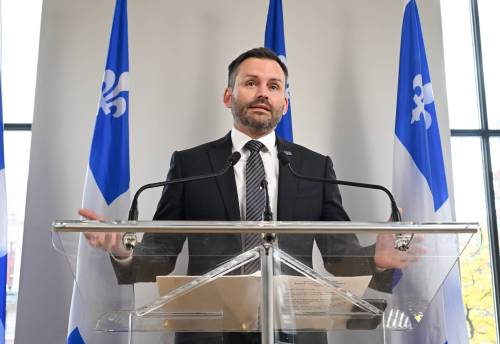
If Manitoba Premier Wab Kinew gets his way, kids will be banned from using social media and artificial intelligence chatbots.
Ontario Education Minister Paul Calandra has said he’s willing to take things even further by outlawing phones from school properties.
And federal Culture Minister Marc Miller is eyeing Australia’s recent move forbidding kids 16 and under from using platforms like TikTok and Instagram.
The platforms, whose business models rely on users frequenting apps where they can be fed advertising, say bans aren’t the answer and that they’re already taking steps to protect kids online.
Here’s what each of the big-name platforms says they’re doing and how they see the recent moves to rein in kids online:
———
What teen users get:
Instagram owner Meta started giving teens under 16 who sign up for the platform private accounts with limited capabilities as their default in 2024.
The default settings block teens from being messaged by people they aren’t connected with and minimize their exposure to sensitive content such as posts that depict violence or encourage cosmetic procedures.
Parental supervision tools baked into the accounts allow parents to see who their teen is messaging, when and how long they’re on Instagram, and set screen time limits. Those under the age of 16 can only change the settings with parental approval.
The company’s take on bans:
Meta, which also owns Facebook, Messenger, Threads and WhatsApp, is against social media bans because they’re “counterproductive,” spokesperson Julia Perreira told The Canadian Press in an email.
“They isolate teens from online communities and information, create inconsistent protections across the many apps they use, and they push teens to less regulated spaces of the internet that lack age-appropriate guardrails,” she wrote.
“We support legislation that empowers parents — not the government — to approve the apps their teens can download at the App Store level.”
———
Snapchat
What teen users get:
The platform’s website says anyone between the ages of 13 and 17 who signs up for Snapchat is placed in a teen account. The accounts let users communicate only with mutually accepted friends or those whose numbers they have already saved to their contacts.
Location sharing is off by default for these users and tagging is only available to them if they are mutual friends.
Sixteen and 17-year-olds have the option of making public any content they post to a “content page” within their profile.
The company’s take on bans:
Asked about Snapchat’s take on potential bans, spokesperson Tonya Johnson referred The Canadian Press to a February op-ed in the Financial Times. The piece was Snapchat CEO Evan Spiegel’s response to Australia banning kids under 16 from social media.
He argued that law doesn’t guarantee kids will be safer online.
“When teens lose access to their preferred messaging channel, they aren’t going to stop communicating — they are going to find other ways to talk, through lesser-known apps that offer fewer safety protections,” Spiegel wrote.
Like Meta, he favours a model where age verification happens at the app-store level.
———
TikTok
What teen users get:
Teen accounts on the social media platform are private by default. The app limits who can follow users between the ages of 13 and 17 as well as who views their videos and reads their bios, TikTok’s website shows.
The accounts can’t host live content, send or receive virtual gifts, or buy or sell products on TikTok Shop. They also don’t send push notifications at night and have a default screen time limit of 60 minutes.
Anyone between the ages of 13 and 15 has a more restrictive account that doesn’t allow direct messaging, keeps others from downloading their videos and limits commenting on their posts to friends only.
The accounts can also be set up so parents and guardians can restrict who can comment on their teen’s videos and send them private messages.
The company’s take on bans:
Danielle Morgan, a TikTok Canada spokesperson, declined to comment on how the company views potential bans.
———
YouTube
What teen users get:
For kids under the age of 12, the company offers accounts that provide access to a curated library of family-friendly videos with no public comments or private messaging.
Parents of tweens can enrol their kids into supervised accounts where the adults select settings that limit the videos and music children under 13 can find and play.
Anyone ages 13 to 17 gets an account that makes video uploads and autoplay private by default.
The company’s take on bans:
Clark Rabbior, YouTube Canada’s head of government relations and public policy, said in an email that “blanket bans like Australia’s risk forcing kids out of age-appropriate environments and into less safe services on the internet.”
“We’re committed to working with the federal government to establish higher safety standards for all platforms, so Canadian families have the confidence and control to choose better, safer online experiences for their children,” he said.
This report by The Canadian Press was first published May 7, 2026.
Related Articles
Premier has everyone’s attention on and about social media; now it’s time for some careful thought

Advertisement Advertise With Us
Advertisement Advertise With Us