These exiled journalists are covering their home countries without fear — from Canada
Advertisement
Read this article for free:
or
Already have an account? Log in here »
To continue reading, please subscribe:

Digital Subscription
One year of digital access for only $205*
- Enjoy unlimited reading on winnipegfreepress.com
- Read the E-Edition, our digital replica newspaper
- Access News Break, our award-winning app
- Play interactive puzzles
*First annual payment billed as $205.00 + GST for one year. This annual subscription will automatically renew at $233.00 + GST every 52 weeks (10% off the regular annual price of $259.35). Offer available to new and qualified returning subscribers only. Cancel any time.
To continue reading, please subscribe:
Add Free Press access to your Brandon Sun subscription for only an additional
$1 for the first 4 weeks*
- Enjoy unlimited reading on winnipegfreepress.com
- Read the E-Edition, our digital replica newspaper
- Access News Break, our award-winning app
- Play interactive puzzles
*Your next Brandon Sun subscription payment will increase by $1.00 and you will be charged $17.95 plus GST for four weeks. After four weeks, your payment will increase to $24.95 plus GST every four weeks.
Read unlimited articles for free today:
or
Already have an account? Log in here »
TORONTO – Until just a few years ago, Andersson Boscan ran La Posta, a digital media outlet he co-founded in Ecuador and helped grow into one of the country’s most influential online voices.
Boscan and his wife Monica Velasquez, both journalists, published explosive stories on how powerful politicians colluded with drug cartels and organized crime rings at the expense of ordinary people.
One of their investigations played a key role in bringing the presidency of Guillermo Lasso to an end in 2023, fuelling impeachment proceedings that were cut short when Lasso dissolved the National Assembly and declined to run in the resulting election.
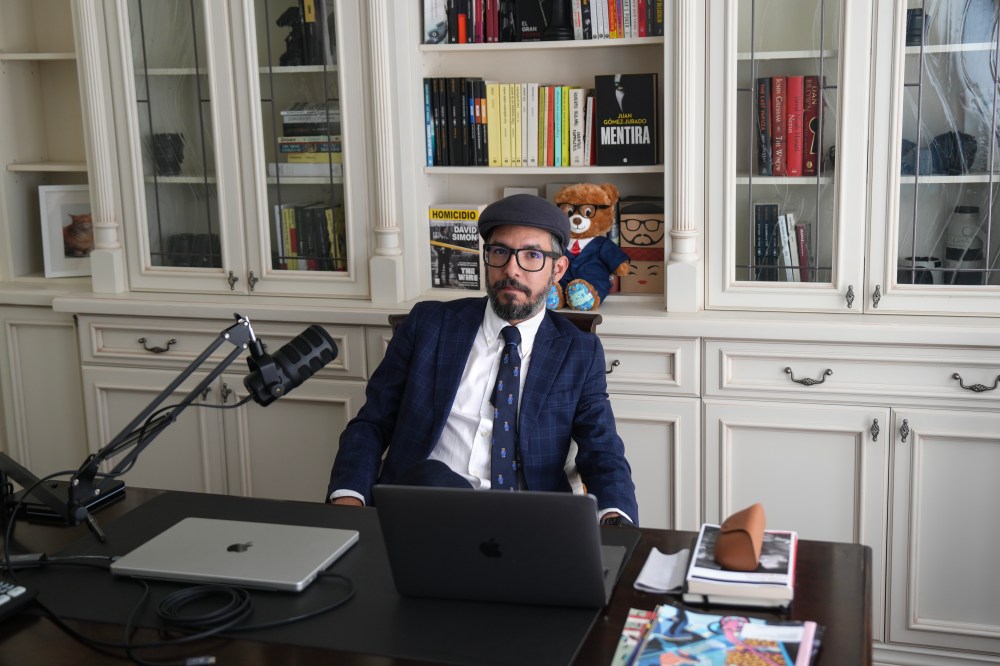
Exposing wrongdoings came at a hefty cost, however. The couple had to flee their home country out of concern for their safety and find a new base where they could continue their work without fearing for their lives.
That’s how the family of five ended up in Oakville, Ont., southwest of Toronto, in September 2024.
Boscan and Velasquez are part of what appears to be a growing community of exiled journalists from around the world who have chosen Canada, and the Greater Toronto Area in particular, as a home and hub to hold the rich and powerful in their home countries accountable as media freedom declines globally.
“Canada is allowing us with its security to do what we cannot do on the ground in Ecuador,” he said in a recent interview.
While Canada has historically welcomed journalists fleeing persecution, the range of funding available in the United States has served as a powerful draw, making the country a more popular destination for those looking to carry on with their work, advocates say.
That might be changing, they say.
Brent Jolly, the president of the Canadian Association of Journalists, said while there are no statistics on the number of exiled journalists in the GTA, several factors could be boosting the region’s appeal within those ranks.
Toronto’s famed ethnic diversity can make journalists from around the world feel at home, while the political climate south of the border could lead some to steer clear, Jolly said, pointing to growing hostility toward both media and immigrants in the United States.
“The idea of the free press in America is certainly something that’s being, well, under attack and being rethought,” he said. “If I were in the position of somebody looking to immigrate to another country, the United States would not be high on my list at the moment.”
Canada ranked 20th in this year’s World Press Freedom Index, an annual assessment of 180 countries carried out by Reporters Without Borders. The United States, meanwhile, placed 64th, with the organization saying President Donald Trump has “turned his repeated attacks on the press and journalists into a systematic policy.”
Still, Canada isn’t without reproach when it comes to press freedom, Jolly said. More needs to be done to address the online hate and harassment journalists face here, as well as the hurdles they encounter in trying to access government documents, he said.
The association plans to launch an exiled journalists’ caucus this summer to help people integrate Canadian newsrooms and support them in covering their respective countries, he said.
Boscan and his wife discussed ending their journalism careers when they came to Canada, fearing it would be impossible to report on organized crime from thousands of kilometres away.
Instead, he said, they soon discovered they could report more freely from suburban Ontario, and sources on the ground in Ecuador felt safer sharing information with them.
The distance nonetheless brought some challenges: Boscan said leading a newsroom with dozens of reporters from afar proved unsustainable, and he ended up having to sell La Posta.
Now, he wakes up every day at 5:30 a.m. to do research, read local news and make countless calls to prepare for a two-hour show livestreamed on social media, where he lays out his investigations, analyzes current events and invites guests to discuss key issues in his country.
“When I came here, I only had my camera and my laptop, and I had no colleagues, so I reinvented to be (a) simple and one-man show,” he said.
The family was under 24/7 police protection for years in Ecuador after reporting on organized crime’s grip on the country’s prison system, making even simple activities like going to the park, shopping for groceries or taking a taxi impossible, he said. The final straw came when Boscan found a document on a potential plot to assassinate them involving gangs and some members of government, he said.
It hasn’t been easy living in limbo as a refugee claimant in Canada, but Boscan said he is taking it in stride, relieved to finally be safe.
“I always say to my family, you know we are refugees, but we are refugees in such a nice country. We are not being refugees in a place where you’re in danger or where you’re mistreated,” he said.
Some 130 journalists and media workers were killed worldwide last year, according to the Committee to Protect Journalists, making it the deadliest year ever recorded by the organization. The committee said Israel accounted for two-thirds of those deaths, with the vast majority of journalists being killed in Gaza.
Meanwhile, 35 journalists and media workers are imprisoned in Israel and occupied Palestinian territories, the organization’s data shows.
In the West Bank, journalists constantly face harassment, violence and imprisonment by Israeli authorities and settlers, said Walid Batrawi, a veteran Palestinian journalist, media consultant and trainer.
The Israeli government has repeatedly denied killing or torturing journalists.
Batrawi’s close friend, journalist Ali al-Samoudi, was recently released after spending a year in administrative detention without any charges, he said. By then, al-Samoudi had lost more than 130 pounds and was “shocked” to see himself in the mirror, his friend said.
As for Batrawi, he now has an open work permit and lives in the Toronto area, where he writes a weekly column in Arabic for a Palestinian newspaper.
He is also working to create a subscription-based online directory connecting exiled journalists with Canadian media outlets, so they have access to a pool of reporters from different parts of the world they can hire when global crises hit their respective countries.
“The idea is to bring to the attention of the newsrooms that these people exist,” he said.
Batrawi is uncertain about his future in Canada. Despite the risks, he said he will most likely return to the occupied West Bank.
“Everyone dreams that one day they will go back to their homeland,” he said. “Even if it’s today, if it is tomorrow, if its in 10 years, you know, I will have to go back to Palestine.”
Canada welcomed hundreds of journalists and media workers from Afghanistan after the fall of the U.S-backed government in 2021.
There, the Taliban regime has systematically dismantled what was once a vibrant media landscape, forcing hundreds of radio stations, television networks and digital news websites to shut down while taking control of the others.
Women in Afghanistan have especially seen their rights eroded, including the right to education, with new restrictions regularly imposed.
Zan Times, or Women Times, has been documenting that shift since its launch in 2022, first from Toronto and more recently from Edmonton. Its editor-in-chief, Zahra Nader, came to Canada from Afghanistan in 2017.
Working from Canada grants her safety and freedom, she said, but that’s not the case for her reporters and sources still in Afghanistan. That’s why Zan Times uses pseudonyms, she said.
“They are in a very, very difficult situation,” she said of her reporters on the ground. “They don’t even tell their own relatives, friends that they are working as a journalist for Zan Times because this will bring risk for them and for their families.”
Money is another hurdle, she said. At first, Nader used her own savings to support the publication, then received funding from different sources, including Internews, a non-profit with headquarters in the United States.
Those grants have largely dried up, she said, forcing Zan Times to rely on voluntary donations and online fundraising. With the publication’s future uncertain, Nader said she needs a short-term economic lifeline as she explores various business models to build a self-sustaining newsroom.
“I am sure we will get there,” she said of her publication’s financial sustainability. “We just need a little bit of support and that little bit support is not yet there for me in Canada.”

Lack of grants for media has long been a problem in Canada despite its global reputation as a “stable beacon of democracy and free expression,” said Jesse Clarke, a board member for the Free Speech Centre, a Toronto-based non-profit founded by an Afghan journalist in 2024.
The federal government has been working to attract academics and researchers, and should extend those efforts to journalists, Clarke said.
Journalists who come from abroad “really rely on other support … to be able to look back on what’s happening in their countries to sort of maintain a bit of a flame of critical review and scrutiny from the outside,” he said.
“I think there’s an opportunity there for Canada to really support that work a lot more.”
This report by The Canadian Press was first published June 3, 2026.