Swiss collector wants thousands of Indigenous artifacts returned to communities

Advertisement

Advertise with us

WINNIPEG - A Swiss collector who has amassed thousands of Indigenous artifacts said he is eager to have his collection repatriated back to the communities it came from.

Read this article for free:


or

Already have an account? Log in here »

To continue reading, please subscribe:

Subscribe and receive a limited-edition Free Press branded hat or tote.

Digital Subscription

One year of digital access for only $205*

  • Enjoy unlimited reading on winnipegfreepress.com
  • Read the E-Edition, our digital replica newspaper
  • Access News Break, our award-winning app
  • Play interactive puzzles

*First annual payment billed as $205.00 + GST for one year. This annual subscription will automatically renew at $233.00 + GST every 52 weeks (10% off the regular annual price of $259.35). Offer available to new and qualified returning subscribers only. Cancel any time.

To continue reading, please subscribe:

Add Free Press access to your Brandon Sun subscription for only an additional

$1 for the first 4 weeks*

  • Enjoy unlimited reading on winnipegfreepress.com
  • Read the E-Edition, our digital replica newspaper
  • Access News Break, our award-winning app
  • Play interactive puzzles
Start now

*Your next Brandon Sun subscription payment will increase by $1.00 and you will be charged $17.95 plus GST for four weeks. After four weeks, your payment will increase to $24.95 plus GST every four weeks.

WINNIPEG – A Swiss collector who has amassed thousands of Indigenous artifacts said he is eager to have his collection repatriated back to the communities it came from.

Vincent Escriba has accumulated 3,500 ceremonial and traditional items, including cradleboards, sacred pipes and firearms, believed to be associated with the period of the Battle of the Little Bighorn.

The 67-year-old previously housed the items in a museum he ran in Switzerland that closed last year after Escriba decided to retire.
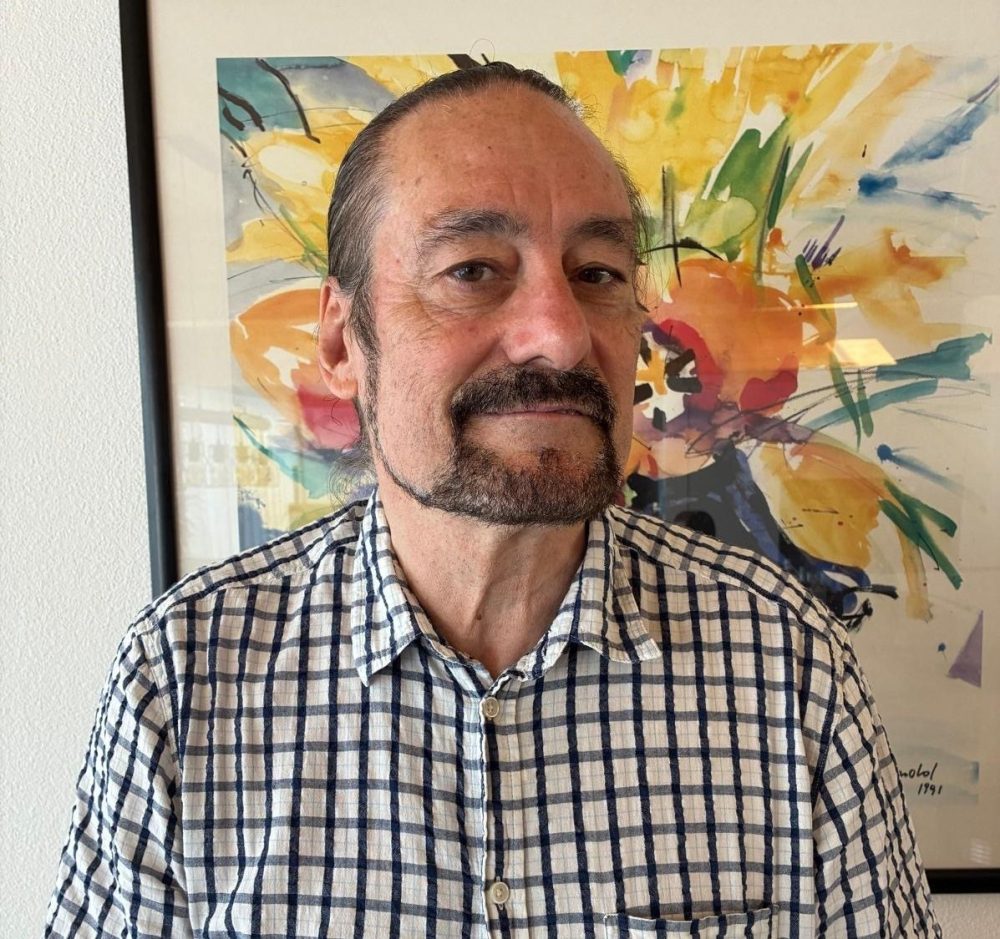
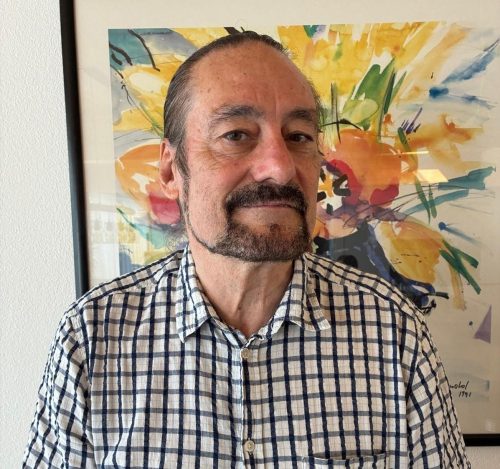
Vincent Escriba is shown in this undated handout photo taken in Zurich, Switzerland. THE CANADIAN PRESS/Handout - Vincent Escriba (Mandatory Credit)

Escriba has been speaking with a group of First Nations leaders and advocates in Manitoba about transferring the collection to Indigenous groups in the United States and Canada for a cost.

“I don’t have any successors, no children, nothing. So I have to do something with the whole museum,” Escriba said in a phone interview with The Canadian Press, at times speaking through an interpreter in German.

“I decided to sell that to a good place where they should belong.”

Bettina Schmocker, Escriba’s interpreter and museum assistant, further explained that he does not want to his collection “ripped apart by private collectors.”

She said Escriba wants the items to “go back to the other side of the ocean to the people where it really belongs to.”

The Zurich-based man has purchased the items from other Swiss collectors, communities he has visited in North America and from pawnshops.

He started collecting in the 1970s, with the first item he bought being a pair of children’s moccasins from 1860.

Other items he as accumulated since then include a bandolier, or a belt worn across the shoulders. It stretches about 20 centimetres wide and consists of thousands of beads that create a floral design typically seen in Ojibwa and Cree designs.

Additional artifacts include large, feathered headdresses and sewn, leather moccasins believed to come from Sioux tribes.

He estimates the collection is valued at up $14 million.

A delegation travelled to Switzerland to visit the museum before it closed, and is urging federal, First Nations and tribal governments in Canada and the United States to intervene to help bring these artifacts back.

The group said it needs to raise approximately $20 million, which includes the estimated cost of the artifacts and additional funds to hire experts to authenticate the items.

For some First Nations, Inuit and Métis communities, ceremonial and cultural items are viewed as a living extension of nations – ones that still have an active role in teaching and connecting community members.

“Money cannot replace anything that is live and healthy. Whatever it takes to bring these items back, we’re willing to give it a try,” Karl Stone, a councillor in Dakota Tipi First Nation, Man., who was part of the delegation to Switzerland, previously told reporters.

Cody Groat, an assistant professor of history and Indigenous studies at Western University and a member of Six Nations of the Grand River, said private collections, such as the one Escriba amassed, are common around the world.

The collection-based mentality kicked off in the 1920s when institutions and governments would lead large collecting expeditions across the United States and Canada.

“They were really trying to market Indigenous people as being exotic, as being still representative of a dying race,” he said.

Groat said collectors may be have good intentions when they purchase these items, but it remains a complex issue as more Indigenous groups push back and say these artifacts were often taken under duress.

Conversations around the subject are progressing, said Groat. He pointed to recent positive examples of repatriation efforts, including the Vatican returning more than 60 Indigenous items to Canada.

In some cases, these initiatives may require corporate intervention, like in the case of the HBC Royal Charter, which is on display at the Manitoba Museum after the Weston and Thomson families bought it for $18 million last year, Groat said.

This report by The Canadian Press was first published June 24, 2026.

Report Error Submit a Tip

More Stories

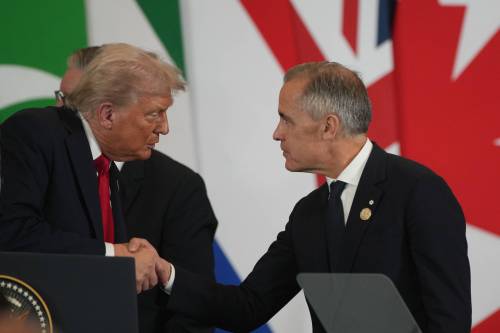
Canada-U.S. trade relationship is broken, but the damage can — and will — be repaired

Tom Brodbeck 5 minute read Preview

Canada-U.S. trade relationship is broken, but the damage can — and will — be repaired

Tom Brodbeck 5 minute read Thursday, Sep. 17, 2026

Canada needs to get serious about diversifying its trade beyond the United States. But at the same time, Canadians should expect relations with the U.S. to normalize after Donald Trump is no longer in the White House.

For generations, Canada-U.S. trade was considered almost a fact of geography. The two countries share the world’s longest undefended border, deeply integrated supply chains and a century of commercial relationships.

Canadian manufacturers depend on American customers. American manufacturers depend on Canadian suppliers. Energy, agriculture, automotive production and countless other industries operate across the border as though it barely exists.

That isn’t going to change dramatically, even in the midst of a bitter trade war unleashed by the U.S. president.

Read
Thursday, Sep. 17, 2026

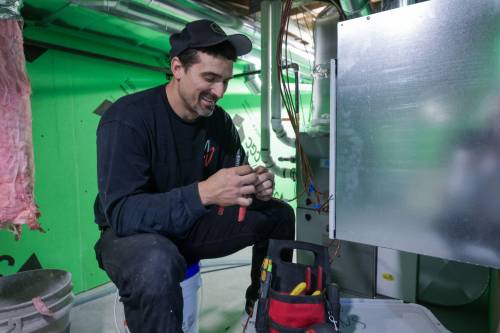
Former Bombers linebacker Gauthier enjoying career as electrician

Taylor Allen 6 minute read Preview

Former Bombers linebacker Gauthier enjoying career as electrician

Taylor Allen 6 minute read Yesterday at 12:44 PM CDT

Most professional football players don’t ride off into the sunset on their own terms.

Shayne Gauthier was well aware of that, but it didn’t make it sting any less when the Winnipeg Blue Bombers informed the veteran linebacker that they weren’t bringing him back for 2026.

“I was really hoping to play one more (season) because it would have been my 10th season, so, I’d say it didn’t really end the way I wanted,” Gauthier recently told the Free Press.

“It left a little sour taste in my mouth, but that’s part of pro sports. If everybody got the ending that they wanted, then it wouldn’t really work.”

Read
Yesterday at 12:44 PM CDT

Swiss collector wants thousands of Indigenous artifacts returned to communities

Brittany Hobson, The Canadian Press 4 minute read Preview

Swiss collector wants thousands of Indigenous artifacts returned to communities

Brittany Hobson, The Canadian Press 4 minute read Wednesday, Jun. 24, 2026

WINNIPEG - A Swiss collector who has amassed thousands of Indigenous artifacts said he is eager to have his collection repatriated back to the communities it came from.

Vincent Escriba has accumulated 3,500 ceremonial and traditional items, including cradleboards, sacred pipes and firearms, believed to be associated with the period of the Battle of the Little Bighorn.

The 67-year-old previously housed the items in a museum he ran in Switzerland that closed last year after Escriba decided to retire.

Escriba has been speaking with a group of First Nations leaders and advocates in Manitoba about transferring the collection to Indigenous groups in the United States and Canada for a cost.

Read
Wednesday, Jun. 24, 2026

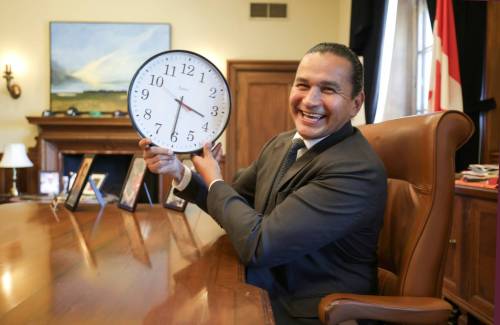
Manitoba abandoning spring, fall clock changes

Carol Sanders 8 minute read Preview

Manitoba abandoning spring, fall clock changes

Carol Sanders 8 minute read Updated: Yesterday at 8:48 AM CDT

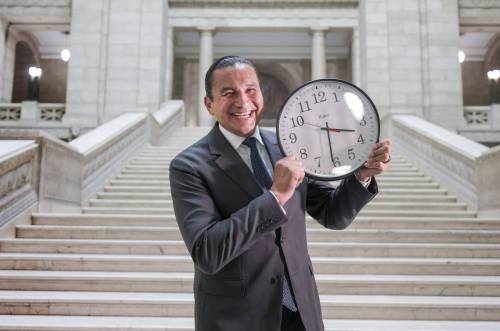
Time’s up for the time change in Manitoba.

Manitobans won’t be setting their clocks back an hour in November. The province has decided to permanently stay on daylight time after surveying residents on the twice annual clock adjustment.

“We heard from Manitobans loud and clear — no more changing the clocks in Manitoba,” Premier Wab Kinew said in a news release Thursday.

Most of the 72,000 votes submitted in an online EngageMB survey — 92 per cent — said they would like to see the practice end. The survey asked if they preferred earlier sunrises in winter with standard time or the later sunsets in summer with daylight time. More than half of survey participants (58 per cent) indicated a preference to stay on permanent daylight time; 34 per cent voted to eliminate the time change but stay on standard time.

Read
Updated: Yesterday at 8:48 AM CDT

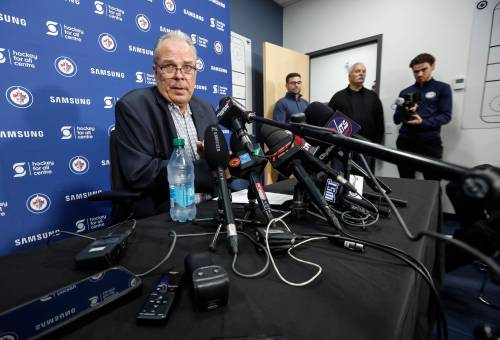
Jets GM insists club’s not working under any deadline in netminder’s trade request

Mike McIntyre 7 minute read Preview

Jets GM insists club’s not working under any deadline in netminder’s trade request

Mike McIntyre 7 minute read Thursday, Sep. 17, 2026

Connor Hellebuyck and his family were subject to so much post-Olympic vitriol that both the Winnipeg Jets security team and even police had to get involved.

Read
Thursday, Sep. 17, 2026

Kinew delivered what most of us wanted; now we’ll have to deal with the consequences

Dan Lett 5 minute read Preview

Kinew delivered what most of us wanted; now we’ll have to deal with the consequences

Dan Lett 5 minute read Updated: Yesterday at 8:43 AM CDT

Premier Wab Kinew has decided to adopt permanent daylight savings time, which means a permanent end to the spring forward, fall back tradition of adjusting our clocks. And absolutely no one is surprised.

Read
Updated: Yesterday at 8:43 AM CDT