Ottawa to ‘eliminate’ streamers’ CanCon payments, provide government funding instead
Advertisement
Read this article for free:
or
Already have an account? Log in here »
To continue reading, please subscribe:

Digital Subscription
One year of digital access for only $205*
- Enjoy unlimited reading on winnipegfreepress.com
- Read the E-Edition, our digital replica newspaper
- Access News Break, our award-winning app
- Play interactive puzzles
*First annual payment billed as $205.00 + GST for one year. This annual subscription will automatically renew at $233.00 + GST every 52 weeks (10% off the regular annual price of $259.35). Offer available to new and qualified returning subscribers only. Cancel any time.
To continue reading, please subscribe:
Add Free Press access to your Brandon Sun subscription for only an additional
$1 for the first 4 weeks*
- Enjoy unlimited reading on winnipegfreepress.com
- Read the E-Edition, our digital replica newspaper
- Access News Break, our award-winning app
- Play interactive puzzles
*Your next Brandon Sun subscription payment will increase by $1.00 and you will be charged $17.95 plus GST for four weeks. After four weeks, your payment will increase to $24.95 plus GST every four weeks.
Read unlimited articles for free today:
or
Already have an account? Log in here »
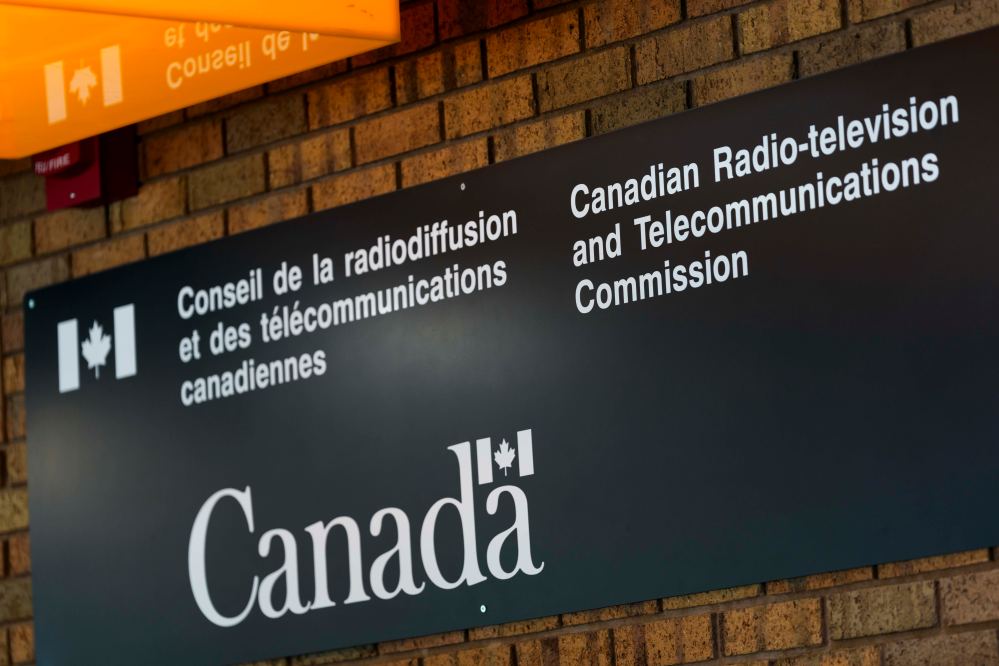
OTTAWA – Ottawa will “eliminate” the financial contribution requirement for streamers set by the CRTC and replace it with government funding, says a court document — though the culture minister’s office is refusing to confirm the government’s plans.
“We are instructed to inform the court that the government’s intention is to eliminate the base contribution requirement on streaming services and to provide government funding to replace those contributions,” the attorney general’s office said in a document on July 17.
The Canadian Association of Broadcasters said Wednesday it has heard a different message from government.
“The language in the letter does not align with what we have heard from the government, and we believe it would be premature to reach any definitive conclusions from this administrative communication between the court and one of the respondents,” Kevin Desjardins, the association’s president, said in a media statement.
The office of Culture Minister Marc Miller declined to comment when asked to clarify the government’s stance. A spokesperson also did not respond when asked whether the government plans to eliminate the contribution requirement permanently or temporarily.
“As announced in June, we are developing a new policy direction. We have nothing further to share at this time,” Hermine Landry said in an email.
In early June, the government said it would issue a new policy directive to the CRTC after the broadcast regulator increased the contribution requirement for large streaming services from five per cent to 15 per cent of their Canadian revenues.
The government said at the time it would instead provide the industry with $600 million in annual funding.
The July 17 court document said the government would publish the new policy directive for the CRTC in the coming weeks. It was submitted in a Federal Court of Appeal challenge of the CRTC’s rules by streamers.
While Ottawa changed course on the streaming rules after the U.S. identified the enabling legislation as a trade irritant, the United States trade representative said recently Canada wouldn’t “really get credit” for the move.
Canada-U.S. Trade Minister Dominic LeBlanc is in Washington this week after United States President Donald Trump threatened new tariffs on an array of Canadian goods.
On Tuesday, he attended a baseball game between the Washington Nationals and Toronto Blue Jays. The “Canada-U.S. Friendship Day” event was sponsored by Google, Netflix and Amazon.
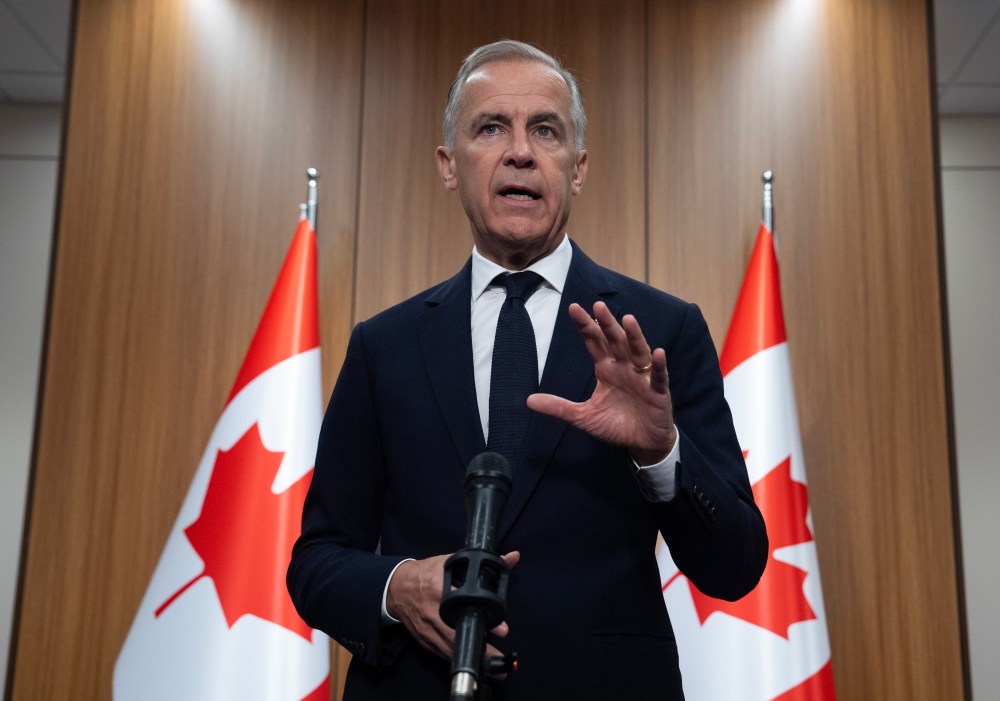
At a press conference Monday, Prime Minister Mark Carney was asked about the decision on streamer contributions in the context of LeBlanc attending the game.
“We made that decision two months ago,” Carney said, interrupting the question.
He said the government made that move because of concerns about affordability.
“Most Canadians have one or two or so of these streamers … this stuff adds up,” he said.
“We took the judgment there was a better way to to it, made the investment in culture, and we’ll give the direction accordingly.”
Reynolds Mastin, president and CEO of the Canadian Media Producers Association, said in an emailed statement that “we’re still waiting on the specifics of the policy direction, but the Canadian government must continue to stand up for Canadian stories.”
“That means requiring foreign streamers to invest a portion of the significant revenue they generate from Canadian audiences back into Canadian content,” Mastin said.
Recalling what he said were exchanges with government officials, Desjardins said that “it seems clear to us that the long-term intent is for the streamers that are operating in Canada and generating revenues in Canada … to contribute back into the system in some way.”
He said there is “no way” the government could completely eliminate contributions from foreign streamers but keep them in place for Canadian players.
Hélène Messier, francophone co-chair of the Coalition for the Diversity of Cultural Expressions, said in a statement the government “will have to permanently guarantee the funding that the audiovisual and music sectors had every reason to expect under the base contribution requirement, estimated at no less than $200 million annually.”
“Simply replacing the amounts currently at stake will not be enough: this funding must also grow in step with the revenues of online streaming services,” Messier said.
In an emailed statement, NDP MP Heather McPherson said the Liberals are “cancelling the fees charged to U.S. companies, forcing Canadians to subsidize the U.S. tech and media companies that directly compete with Canadian media.”
“This is nothing more than an act of appeasement to placate Donald Trump and his tech billionaire supporters and it threatens the future of Canadian media and content,” she added.
Conservative culture critic Rachael Thomas said her party opposes the CRTC’s rules imposing contributions on streamers.
She said in a statement the Liberals “are letting American streamers off the hook and making Canadians pay for a massive $600 million subsidy instead.”
This report by The Canadian Press was first published July 29, 2026.