Dutch broadcaster to boycott Eurovision for a second year, calling it a ‘platform for division’
Advertisement
Read this article for free:
or
Already have an account? Log in here »
To continue reading, please subscribe:

Digital Subscription
One year of digital access for only $205*
- Enjoy unlimited reading on winnipegfreepress.com
- Read the E-Edition, our digital replica newspaper
- Access News Break, our award-winning app
- Play interactive puzzles
*First annual payment billed as $205.00 + GST for one year. This annual subscription will automatically renew at $233.00 + GST every 52 weeks (10% off the regular annual price of $259.35). Offer available to new and qualified returning subscribers only. Cancel any time.
To continue reading, please subscribe:
Add Free Press access to your Brandon Sun subscription for only an additional
$1 for the first 4 weeks*
- Enjoy unlimited reading on winnipegfreepress.com
- Read the E-Edition, our digital replica newspaper
- Access News Break, our award-winning app
- Play interactive puzzles
*Your next Brandon Sun subscription payment will increase by $1.00 and you will be charged $17.95 plus GST for four weeks. After four weeks, your payment will increase to $24.95 plus GST every four weeks.
Read unlimited articles for free today:
or
Already have an account? Log in here »
THE HAGUE, Netherlands (AP) — A Dutch broadcaster announced Monday it is boycotting the Eurovision Song Contest for a second year, calling it a “platform for division” because of tensions over Israel’s involvement.
The decision by AVROTROS comes after broadcasters in the Netherlands, Iceland, Ireland, Slovenia and Spain refused to take part in this year’s contest because of Israel’s participation.
“AVROTROS will not participate in the Eurovision Song Contest in 2027 because the event can no longer be considered neutral, with a participating country still involved in a large-scale military conflict,” it said.
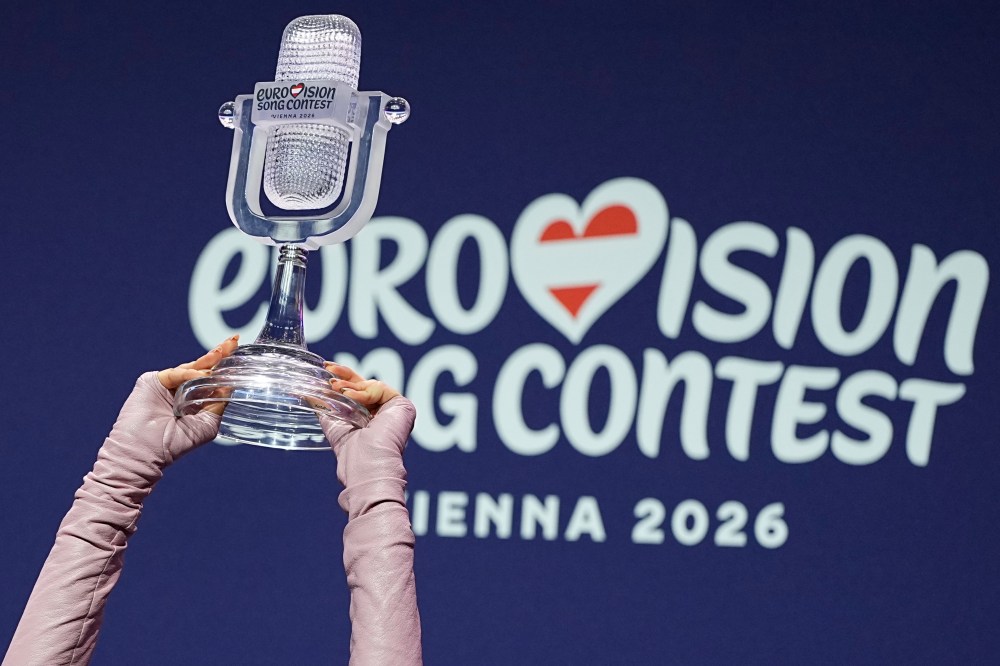
The Dutch broadcaster, which has a long history of involvement with the competition, said it was leaving it up to the public network NPO to decide on any Dutch involvement.
“The Eurovision Song Contest was originally created to bring people and countries together. It is undeniable that international conflicts are increasingly affecting the contest, undermining its neutral character,” AVROTROS director-general Taco Zimmerman said in a statement. “The Eurovision Song Contest has therefore become a platform for division.”
Eurovision Song Contest Director Martin Green said in a statement that the organization regretted the move, but respects the views of member broadcasters. The contest is run by the Geneva-based European Broadcasting Union (EBU) — a group of public broadcasters from 56 countries.
“The Eurovision Song Contest has always been a place to bring people together, celebrate diverse communities, and show that a better world is possible even in the most difficult times,” Green said in a statement sent to The Associated Press.
“We will now continue our dialogue with NPO, the umbrella organization for Dutch public service media, regarding the opportunities for another broadcaster to participate. We very much hope that audiences and artists in the Netherlands can continue to be represented in the Eurovision Song Contest,” he added.
In a statement, the NPO said it recognized that “geopolitical tensions are having a divisive effect. That’s why this hasn’t been an easy decision for our colleagues. We will reflect on the upcoming edition and will come back to this at the right moment.”
NPO said it was “too early to comment on the next steps at this point; we’re currently deliberating on that.”
AVROTROS said it has called on the EBU to establish transparent rules for the participation of countries involved in military conflicts. “However, the recently announced changes by the EBU do not provide sufficient confidence that the independent and neutral character of the Eurovision Song Contest has been restored,” it said.
While AVROTROS did not mention Israel by name, it said the network will boycott Eurovision in 2027 “because the event can no longer be considered neutral, with a participating country still involved in a large-scale military conflict.”
It added: “The severe humanitarian suffering in Gaza and the ongoing restrictions on press freedom have contributed to increasing divisions surrounding the Eurovision Song Contest in recent years.”
The contest was founded in 1956, in part to help unite a shattered continent after World War II. It pits acts from dozens of countries against one another for the continent’s musical crown. Bulgarian singer Dara won the event this year with her infectious party anthem “Bangaranga.”
A number of performers and countries have called for the exclusion of Israel, which has taken part in Eurovision since 1973, one of a few non-European countries to compete.
___
Associated Press journalist Jamey Keaten in Geneva contributed.