Inside Canadian newsrooms’ triumphs — and regrets — while covering the 9/11 attacks
Advertisement
Read this article for free:
or
Already have an account? Log in here »
To continue reading, please subscribe:

Digital Subscription
One year of digital access for only $205*
- Enjoy unlimited reading on winnipegfreepress.com
- Read the E-Edition, our digital replica newspaper
- Access News Break, our award-winning app
- Play interactive puzzles
*First annual payment billed as $205.00 + GST for one year. This annual subscription will automatically renew at $233.00 + GST every 52 weeks (10% off the regular annual price of $259.35). Offer available to new and qualified returning subscribers only. Cancel any time.
To continue reading, please subscribe:
Add Free Press access to your Brandon Sun subscription for only an additional
$1 for the first 4 weeks*
- Enjoy unlimited reading on winnipegfreepress.com
- Read the E-Edition, our digital replica newspaper
- Access News Break, our award-winning app
- Play interactive puzzles
*Your next Brandon Sun subscription payment will increase by $1.00 and you will be charged $17.95 plus GST for four weeks. After four weeks, your payment will increase to $24.95 plus GST every four weeks.
Read unlimited articles for free today:
or
Already have an account? Log in here »
TORONTO – Like every other journalist working in a Canadian newsroom on Sept. 11, 2001, Michelle Shephard recalls the moment she learned a plane had struck the World Trade Center in New York City.
Then a crime reporter at the Toronto Star, she barely stopped to grab her passport and a notebook before rushing to the airport, which had already grounded flights and switched off television screens.
Shephard quickly switched gears and jumped into a car headed for New York with other Star reporters, joining scores of other journalists and volunteers hustling toward Ground Zero as thousands were trying to escape it.
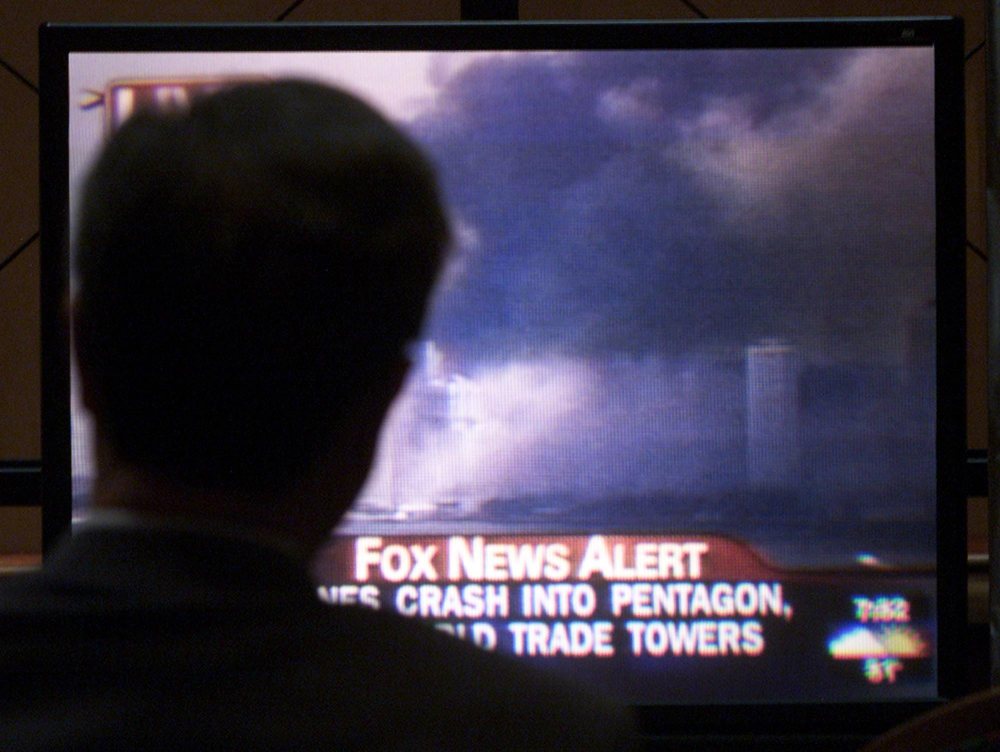
Reporting on the 9/11 attacks required an extraordinary collective effort at a time when verifiable facts and explanations were scarce and the world was gripped with fear. The attacks also pushed journalists to their physical and emotional limits, exposing the risks of reporting on traumatic events.
Twenty-five years later, prominent journalists reflected on their triumphs and regrets in covering 9/11, and how newsroom decisions shaped Canadians’ understanding of the events that changed global security and international politics.
REPORTING FROM A TRAUMATIZED CITY
During their “crazy fast” drive to New York, Shephard and her colleagues got lucky.
She said her laminated Toronto Star press pass “looked like it was made in someone’s basement,” but it was enough for one official to let them into a lane marked for emergency responders.
They arrived in the eerily quiet city that night and the sight of a firefighter slumped over on the ground, weary after digging for bodies in the rubble, stopped Shephard in her tracks.
Other details from the scene are still seared in her mind a quarter-century later. The mountain of papers that fell in a blizzard from the collapsed office towers, which Shephard initially mistook for a snowbank. Thousands of eyes staring out from posters of missing people plastered across Manhattan. The repulsive, metallic smell hanging in the air.
“It was an entire city that was traumatized,” Shephard said in a recent interview.
Every other aspect of her life quickly fell by the wayside.
Shephard’s husband, fellow Star reporter Jim Rankin, had rushed off to Boston, where the flights that crashed into the towers originated. The pair realized within a few hours that in the chaos, neither had made plans for someone to look after their new kitten.
For three days, Shephard wore the same shirt and pants she had arrived in, washing off thick dust in the sink each night and blasting the clothes dry with a hotel hair dryer in the morning.
Shephard, who subsequently authored the book “Decade of Fear” about national security since 9/11, said she is proud of her coverage but might make some small changes if she could go back.
She recalled there being pressure in the newsroom to get emotionally charged photos, such as of a grieving wife crying. The journalism industry has since become more mindful of retraumatizing sources, she added.
Shephard believes that meeting people who became victims of post-9/11 policies early in her national security reporting career strengthened her journalism. She said many of her early stories about Islamophobia were relegated to the back of the paper, but eventually “the pendulum swung the other way.”
Despite covering funeral after funeral in the days after 9/11, Shephard said she found solace knowing her reporting was a public service.
She believes some journalists who weren’t reporting from New York may have been even more traumatized, including editors who had to watch footage of people jumping from the towers over and over.
She recalled breaking down at the end of an interview with a Red Cross official, who asked Shephard who was looking after the reporters.
“I remember that when I would put my head down, I would be teary about all that I had seen,” she said.
THE VOICE MAIL THAT CHANGED PETER MANSBRIDGE’S PERSPECTIVE
CBC News anchor Peter Mansbridge was at his doctor’s office when he got a call about the 9/11 attacks.
As the veteran journalist drove toward CBC headquarters in Toronto, not yet knowing that day would be the biggest of his 50-year career, he turned the fundamentals of reporting over and over in his mind: “You’re going to hear all kinds of things. There are going to be all kinds of rumours. You have to deal with fact.”
Forty-four hours of wall-to-wall coverage from the public broadcaster would follow.
Mansbridge said he was running on adrenalin and he got his first “real break” around 4 a.m. on Sept. 12, when he ducked into his private dressing room to change and take a shower.
A short voice mail from his daughter, then a university student in Winnipeg, was waiting for him.
“I just want you to know that I’m watching you,” she told her father. “And I love you.”
Hearing her voice, Mansbridge felt the emotional weight of the attacks for the first time since he sat down behind the anchor desk the day before.
“Sometimes, when you sit in the studio, it’s almost like watching a movie,” he said. “You’re watching a monitor, and sometimes as real as you know it is, it doesn’t feel real.”
The voicemail “was one of the things I used that night to remind me how big the impact of this thing was for families literally around the world — wanting to reach out and connect with each other.”
Mansbridge said the CBC’s 44 hours of intensive coverage weren’t perfect, but overall he is proud of what the broadcaster achieved.
He said the network was careful not to hazard guesses about the death toll and was judicious about replaying footage of the plane crashes.
Mansbridge said the CBC relied on experts to “keep feeding the beast” and find new ways to convey information to audiences as interns sprinted back and forth through the newsroom, hands full of marked-up scripts.
One especially helpful person was introduced as a retired pilot, and he gave detailed explanations of cockpit operations to fill airtime, inferring the planes had been hijacked.
Mansbridge said he found out weeks later that the man’s background in aviation was fabricated. Perhaps just as strangely, he recalled, “everything he said was right.”
The CBC apologized to viewers, and Mansbridge said the incident was another reminder of the importance of verification in a chaotic situation.
Mansbridge said he barely left the newsroom for a week after the attacks.
“The world would never be the same after that,” he said.
Few journalists, including those at the CBC, adequately covered the rampant Islamophobia following the attacks, Mansbridge said.
“I’m not sure that enough of us in western journalism understood what was happening (with Islamophobia),” he said. “Some did, but they were kind of lonely voices in the midst of all this.”
HOW THE CANADIAN PRESS COVERED THE UNFATHOMABLE
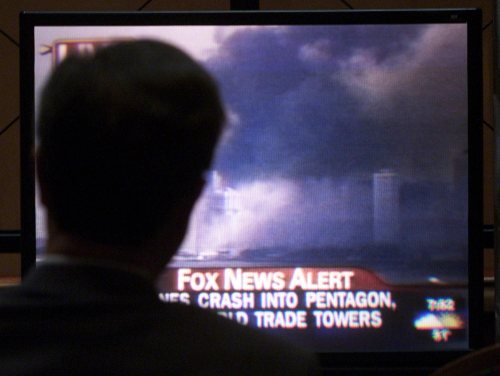
The bustling Canadian Press newsroom in downtown Toronto fell completely silent as journalists watched on live television another plane crash into the second tower, sending ash and debris onto the streets below.
“It was a ‘holy s—‘ moment,” recalled Scott White, then the news agency’s editor-in-chief. “You’re seeing it happen, right in front of you, and it just changed everything.”
Reporters mobilized as quickly as they could, hurtling south by car in fear that the border would close. The Canadian Press even paid for a traffic ticket that one reporter incurred as he sped through Pennsylvania, White said.
In New York City, Canadian Press journalists arrived at a hellscape where the iconic World Trade towers were now a tangle of steel, and watched as workers shovelled mountains of sludge and knee-deep ash.
“We saw the bodies come out and we cheered because we thought they were alive,” one worker told The Canadian Press at the time.
“But then they brought in the chaplain to read his last rites.”
In one frightening moment, a panicked Canadian Press reporter phoned a colleague to say she had heard a rumour that another plane attack was imminent. It was quickly confirmed to be a hoax, but she ran for her life for several minutes, White said.
“She was terrified, and rightly so,” he said. “That was the first time I remember worrying that something was going to happen to one of our reporters.”
As the dust at Ground Zero settled, one of the iconic post-9/11 images came from Canadian Press photojournalist Andrew Vaughan.
The photo shows Rachel Uchitel pleading for information about her fiancé, who was working on the 104th floor of the second tower when it was obliterated. Her face contorted with grief, Uchitel is almost unrecognizable from the beaming picture of her pressed against James Andrew O’Grady on his missing person poster.
Twenty-five years later, White no longer works in journalism but he’s still haunted by a correction the wire had to issue on the day of the attacks. The Canadian Press reported that borders were closing based on a tip from an official that turned out to be inaccurate.
White said it was a reminder that being right is always more important than being first.
“It still, to this day, bothers me that we misreported that element,” White said. “I don’t think we were the only ones who did it, but that’s still no excuse.”
White, who led the wire’s transition to multimedia journalism, added there were many 9/11 storylines and not enough reporters and resources to cover them all.
White said he was in constant discussions with various bureau chiefs at CP to ensure the wire avoided speculation or fearmongering at a time when even military and government officials were flailing in the same information vacuum.
“These are high-stress times, the terrible things and emotions — seeing people fall out of the World Trade Center,” White said.
“But you have to press on. You have a job to do.”
This report by The Canadian Press was first published Sept. 4, 2026.