Glitz, glamour and geopolitical anxiety as TIFF gets underway
Advertisement
Read this article for free:
or
Already have an account? Log in here »
To continue reading, please subscribe:
Digital Subscription
One year of digital access for only $1.44 a week*
- Enjoy unlimited reading on winnipegfreepress.com
- Read the E-Edition, our digital replica newspaper
- Access News Break, our award-winning app
- Play interactive puzzles
*Billed as $5.77 plus GST every four weeks. After 52 weeks, price increases to the regular rate of $19.95 plus GST every four weeks. Offer available to new and qualified returning subscribers only. Cancel any time.
To continue reading, please subscribe:
Add Free Press access to your Brandon Sun subscription for only an additional
$1 for the first 4 weeks*
- Enjoy unlimited reading on winnipegfreepress.com
- Read the E-Edition, our digital replica newspaper
- Access News Break, our award-winning app
- Play interactive puzzles
*Your next Brandon Sun subscription payment will increase by $1.00 and you will be charged $17.95 plus GST for four weeks. After four weeks, your payment will increase to $24.95 plus GST every four weeks.
Read unlimited articles for free today:
or
Already have an account? Log in here »
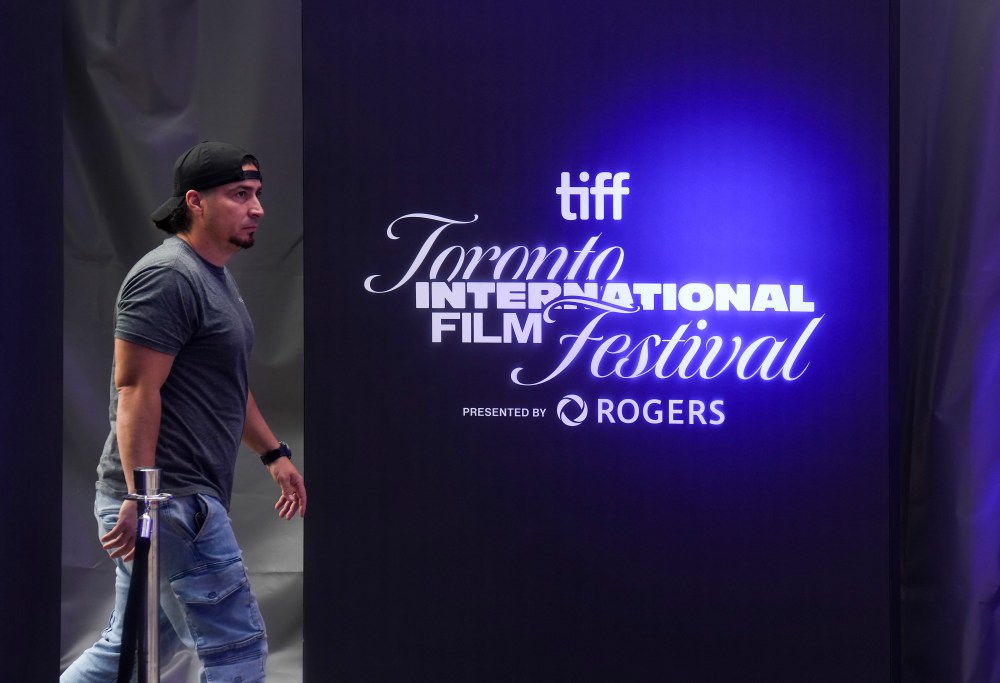
TORONTO – As film fans filed into star-studded screenings Thursday for the first day of the Toronto International Film Festival, a larger-than-ever contingent of industry players gathered nearby to find partners and make deals.
The two factions of the film world converged at parallel events — TIFF and TIFF: The Market — in Canada’s most populous city as Prime Minister Mark Carney identified the country’s culture as a “red line” in trade negotiations with the United States.
More than 200 feature-length and short films from dozens of countries across six continents are due to screen over the 10-day festival. Their countries of origin range from Iran and Ireland to Rwanda and Romania — and, of course, the United States.
President Donald Trump has pushed for Hollywood films to be shot domestically instead of being outsourced to other countries, a practice that has become increasingly common in recent years.
The opening-night film — American director Sian Heder’s “Being Heumann” — was shot in Toronto despite being set in San Francisco and Washington, D.C.
“We shot San Francisco in a field in Pickering,” she told the sold-out crowd at the film’s world première, adding that bringing the film back to Toronto felt like a homecoming.
TIFF CEO Cameron Bailey said he understands Trump’s protectionist impulse, though he argued that Hollywood is richer for Canada’s contributions.
“Hollywood is obviously the leading film industry in the world, but it makes for a stronger industry when it’s able to work with talent from every corner of the planet,” he said on a recent video call.
As tensions with the United States rise, Canada’s film industry is looking to partner with other so-called “middle powers.”
“There’s definitely a lot of attention on what’s going to happen south of the border right now but what we have to do is really take pride in what TIFF has been able to build, which is a world-class marketplace that is going to bring everyone together,” said producer Damon D’Oliveira, who sits on the boards of TIFF and the Canadian Media Producers Association.
“This is where we have a real edge. We’ve got countries from around the world that are here at the market right now for the first time.”
Paul Spurrier, who represents the Thailand Pavilion at TIFF: The Market, said he senses a new openness to collaborating with countries other than the United States.
“It may be that rather than simply saying, well, we can get everything within this great big lump of land, that maybe there are things out there we should be exploring, new markets, new alliances,” he said.
Julie Roy, executive director and CEO of Telefilm Canada, was just in France for the Lumiere Summit focused on international cinema, hosted by France and South Korea.
“I feel very energized about that because more and more with this context, international co-operation and collaboration is a necessity,” she said by phone. “And Canada is the leader in that field. I mean, we are having treaties of co-production with 57 different countries.”
Telefilm has the largest pavilion at TIFF: The Market, where they’ll facilitate meetings between Canadian creators and international financiers.
She likened it to Team Canada at the Olympic Village — but in the audiovisual sector.
As the business people geared up for a week of wheeling and dealing, crews were — quite literally — rolling out the red carpet for the public-facing festival.
Guilherme Bonamigo was walking along King Street, taking in the first-day atmosphere. Originally from Brazil, he has lived in Toronto for the last 10 years and said he looks forward to this event every year.
“It’s a fact that anyone can come,” he said. “Of course, there’s some very buzzy sessions, but anyone can buy a ticket. Even today there’s still tickets for some of the screenings … I don’t think in any other festival, I would have the chance to watch so many movies.”
He plans to attend about 30 films at this year’s fest.
In addition to “Being Heumann,” a biopic about American disability rights activist Judy Heumann, hot tickets include “Fjord,” this year’s Palme d’Or winner, which dissects what religious tolerance looks like in secular Norway. It stars Sebastian Stan as a devoutly Christian father of five.

Stan was among the celebrities in attendance Thursday.
So too was Jodie Comer, who plays a mortician-turned-taxidermist in the musical rom-com “Stuffed,” and Naomi Watts, who stars in the historical drama “The Housewife” by Canadian director Ben Shirinian.
Canadian actor Anna Lambe, who stars in the film “In the Heart of the South,” said at the TIFF première that the arts have suffered because of Canada-U.S. tensions.
Lambe has forthcoming roles in big Hollywood productions, including “The Social Reckoning” and “Heart of the Beast,” starring Brad Pitt.
She said Canada’s strained relationship with the United States hasn’t changed her stance on continuing to work in Hollywood.
She added that she loves working in the Canadian film and TV industry.
“It’s so open. It’s so generous. And I think it’s growing and changing in ways that … the next five to 10 years is so exciting and we’re creating a Canadian star system where we recognize our stars, where we appreciate our stars.”
Waiting in line for rush tickets Thursday was Rachel Helzerman, 22, a visitor from Ann Arbor, Mich., where she studies film.
Helzerman, who hopes to be a film critic, said she was here as part of a study abroad program.
She said she was aware of the recent tensions between the neighbouring nations, and hoped that Canadians realized they don’t reflect an American’s overall view of Canada.
“(They) are just solely the fault of the current administration,” Helzerman said.

“More now than ever it’s really important as an American to continue going out into the world and trying to put our best foot forward, showing that no, we’re not the administration, we’re not like what you see in the news.”
Meanwhile, Julia Wigdor of Toronto said she specifically sought out Canadian-made productions when buying tickets.
“With the rise of ‘Heated Rivalry’ and ‘Yaga’ coming, and more and more Crave originals as well … it’s just a really, really cool time to support Canadian art,” said Wigdor, 29.
This report by The Canadian Press was first published Sept. 10, 2026.
— with files from Kaitlyn McGrath and Diana Mussina
Related Articles
Manitoba artists in TIFF spotlight as fest begins





Advertisement Advertise With Us
Advertisement Advertise With Us