Vancouver General Hospital to make custom splints using 3D printing, saving time

Advertisement

Advertise with us

VICTORIA - British Columbia's largest hospital will become the first health care facility in North America to produce custom splints using 3D printing technology on site.

Read this article for free:


or

Already have an account? Log in here »

To continue reading, please subscribe:

Subscribe and receive a limited-edition Free Press branded hat or tote.

Digital Subscription

One year of digital access for only $205*

  • Enjoy unlimited reading on winnipegfreepress.com
  • Read the E-Edition, our digital replica newspaper
  • Access News Break, our award-winning app
  • Play interactive puzzles

*First annual payment billed as $205.00 + GST for one year. This annual subscription will automatically renew at $233.00 + GST every 52 weeks (10% off the regular annual price of $259.35). Offer available to new and qualified returning subscribers only. Cancel any time.

To continue reading, please subscribe:

Add Free Press access to your Brandon Sun subscription for only an additional

$1 for the first 4 weeks*

  • Enjoy unlimited reading on winnipegfreepress.com
  • Read the E-Edition, our digital replica newspaper
  • Access News Break, our award-winning app
  • Play interactive puzzles
Start now

*Your next Brandon Sun subscription payment will increase by $1.00 and you will be charged $17.95 plus GST for four weeks. After four weeks, your payment will increase to $24.95 plus GST every four weeks.

VICTORIA – British Columbia’s largest hospital will become the first health care facility in North America to produce custom splints using 3D printing technology on site.

Health Minister Ravi Kahlon said Tuesday that printing splints at the hospital would make the process more efficient, faster and accurate, allowing patients to recover more quickly and freeing up time for direct patient care. 

He said the province’s overall health system also needed to become faster and more efficient.
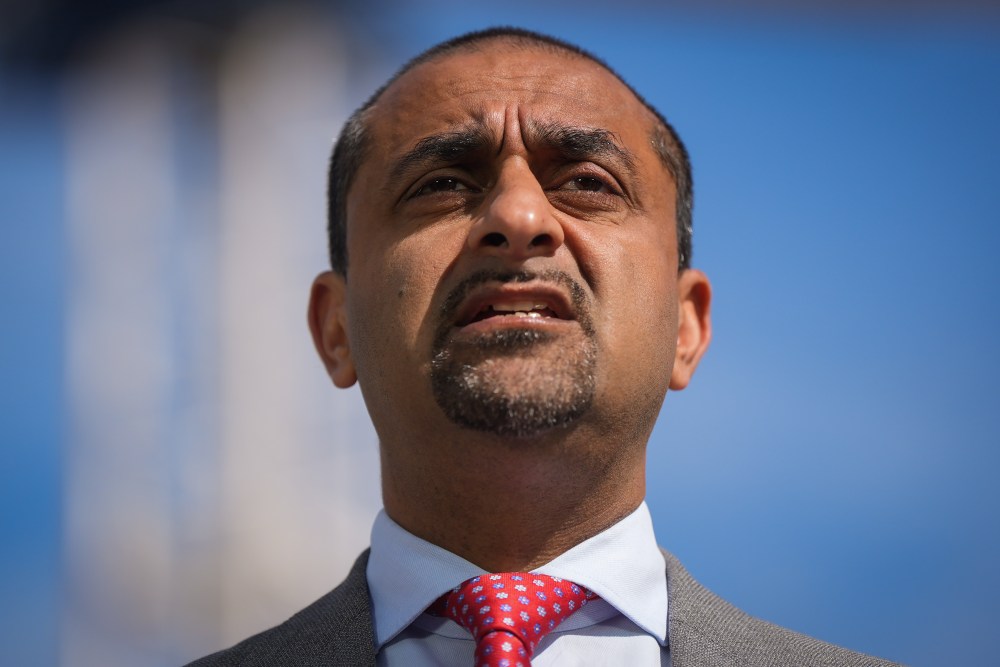
Ravi Kahlon speaks during an announcement, in Delta, B.C., on Wednesday, July 2, 2025. THE CANADIAN PRESS/Darryl Dyck

“But what is perfectly important for us is that our health care professionals … have the flexibility and the tools to be able to use their time to help people in the best way possible,” he said. 

“This type of innovation enables occupational therapists to do that.”

The Health Ministry said in a news release that traditional custom splints can take up to two hours to make, while a 3D-printed splint takes about 30 minutes of a clinician’s time.

The process was announced at Vancouver General Hospital, where Kahlon was joined by officials from Vancouver Coastal Health, which is rolling out the technology in collaboration with B.C.-based 3D printing company PolyUnity. 

Miriam Wickett, occupational therapy practice leader with Vancouver Coastal Health said such innovations were about “supporting patient recovery, helping them maintain their independence and return to the activities that matter most to them.”

“This new approach allows us to deliver customized, evidence-based splints more efficiently and consistently while freeing up valuable clinical time that can be redirected to patient care,” she said in the news release.

Kahlon, a former Olympic field hockey player, said splints play a critical role in the rehabilitation of patients with injuries or burns. 

“I can say I’m excited about it because I have had my fair share of splints in my last few years,” he said.

“For patients, this means you will get customized splints sooner, helping them get treatment earlier and supporting the recovery and mobility and independence.”

Kahlon said the system is unique in North America, and the government planned to roll out the technology across the province as it continues to look for innovative ways to improve patient care. 

“It’s coming soon to a community near you,” he said, without giving a time frame.

The minister said the technology would also make the provincial health care system less dependent on international suppliers.

Jacqueline Lee, CEO of PolyUnity, said in the news release that custom splinting depended on “skilled hands and limited hours” and demand outpaced what clinics could make with traditional methods.

She said the firm has worked with Vancouver Coastal Health to create a digital workflow.

“Clinicians measure the way they always have. We handle the design, the fabrication and the regulatory responsibility,” she said.

“What it changes is simple: More people will now be able to receive a custom splint.”

This report by The Canadian Press was first published Sept. 15, 2026.
Report Error Submit a Tip

More Stories

Canadian manufacturers look to North

Aaron Epp 4 minute read 7:58 PM CDT

Canadian manufacturers should be “big players” in building major projects in Canada, the leader of an advocacy group representing small- and medium-sized sector members said Monday evening at a national policy conference in Winnipeg.

Catherine Swift, president of the Coalition of Concerned Manufacturers and Businesses of Canada, spoke during the opening panel at the conference, organized by the Frontier Centre for Public Policy, a think tank headquartered in the Manitoba capital.

The conference, which continued throughout the day on Tuesday, brought together leaders and experts from defence, Indigenous communities, energy, transportation, business and public policy to explore what it would take to move northern strategic utility corridors from proposal to construction.

“The fact that we’ve struggled as a country with building major projects such as utility corridors in the North has been particularly punitive to manufacturing because, naturally, they should be big players in any such project,” said Swift, who was a senior economist at TD Bank before serving as chief executive at the Canadian Federation of Independent Business from 1987 to 2012.

Police cracking down on gangs, organized crime in bars and lounges

Nicole Buffie 4 minute read Preview

Police cracking down on gangs, organized crime in bars and lounges

Nicole Buffie 4 minute read Updated: 6:56 PM CDT

Patrons can expect to see more police officers in and around bars and lounges in the coming months as the Winnipeg Police Service plans to crack down on gangs and organized crime.

Uniformed officers will be patrolling bars, lounges and other licensed establishments, targeting gang members and people associated with organized crime. Priority will be given to those who pose the greatest risk to public safety, WPS said in a news release Tuesday.

“We’ve seen — time and time again — where people involved in gangs, in organized crime, attract violence or commit violence, on people who they would perceive as their rivals,” Insp. Josh Ewatski, who heads the service’s organized crime unit said, noting the plan was in the works for a while.

He said while there was no specific incident that resulted in the new push, but said violence — including stabbings, assaults and shootings — over the years is behind the move.

Read
Updated: 6:56 PM CDT

Man serving time for 2018 second-degree murder pleads guilty to manslaughter in 2024 prison slaying

Dean Pritchard 3 minute read Preview

Man serving time for 2018 second-degree murder pleads guilty to manslaughter in 2024 prison slaying

Dean Pritchard 3 minute read 4:32 PM CDT

A Manitoba man is now serving his second life sentence in prison after an unexplained technical mistake resulted in a fatal seven-on-one attack on another inmate.

Randal Hastings pleaded guilty Monday to manslaughter for his part in the July 2024 killing of 37-year-old Dean Tyler Young at Stony Mountain Institution.

Hastings, 33, was previously convicted of second-degree murder for a 2018 killing in Thompson and, at the time of Young’s death, was serving a life sentence with no chance of parole until 2033. His latest sentence comes with a seven-year period of parole ineligibility.

“It may be a very long time before any parole board is asked to consider whether you can and ought to be safely released into the community,” Court of King’s Bench Justice Sarah Inness told Hastings.

Read
4:32 PM CDT

Health system would suffer during extended Dynacare strike, board told

Chris Kitching 5 minute read Preview

Health system would suffer during extended Dynacare strike, board told

Chris Kitching 5 minute read 6:50 PM CDT

A prolonged strike at Dynacare labs would lead to unsustainable pressure on the public health-care system alongside testing and treatment delays for some patients, the Manitoba Labour Board was told Tuesday.

Dr. AbdulRazaq Sokoro, chief operating officer of diagnostic services at Shared Health, outlined the potential effect on blood, urine and other tests if the provincial authority has to implement a strike contingency plan that would give priority to patients deemed more vulnerable.

“We know from evidence and we know from medical fact that any patient that has complaints will get a worsening of their disease if they’re unattended to,” Sokoro said during a labour board hearing to determine whether unionized employees of Dynacare — a private, American-owned company — provide an essential service.

“We also know that in order for physicians to attend to complaints, they need to be able to diagnose the patient’s disease.

Read
6:50 PM CDT

Puzzles Palace

1 minute read Monday, Jul. 27, 2026

To solve our puzzles, please subscribe with this special offer: |

Rogers, Telus deny blame for June twister alert barrage

Malak Abas 3 minute read Preview

Rogers, Telus deny blame for June twister alert barrage

Malak Abas 3 minute read Updated: 7:21 AM CDT

Telecom companies say they aren’t to blame for the barrage of tornado alerts Manitobans received during severe thunderstorms in early June.

The Canadian Radio-television and Telecommunications Commission announced in August it would investigate the unusually high number of alerts, and called on the Pelmorex Corp., which operates the national Alert Ready system, along with telecom companies Bell, Rogers and Telus to respond to a number of questions.

They were given until last Friday to describe their possible roles in the creation, receipt, processing or distribution of alerts issued from Environment and Climate Change Canada in the midst of the June 9 storm.

Telus said in its response that it received 133 alert requests targeted to Manitoba created by Environment Canada and forwarded by Pelmorex between 2:35 p.m. June 9 and 3:29 a.m. the following day. While the majority of those messages contained identical information and were automatically suppressed, 17 were ultimately sent out as alerts in Winnipeg.

Read
Updated: 7:21 AM CDT