Patrick deWitt on the long drives that helped him write ‘Dodge City’
Advertisement
Read this article for free:
or
Already have an account? Log in here »
To continue reading, please subscribe:

Digital Subscription
One year of digital access for only $205*
- Enjoy unlimited reading on winnipegfreepress.com
- Read the E-Edition, our digital replica newspaper
- Access News Break, our award-winning app
- Play interactive puzzles
*First annual payment billed as $205.00 + GST for one year. This annual subscription will automatically renew at $233.00 + GST every 52 weeks (10% off the regular annual price of $259.35). Offer available to new and qualified returning subscribers only. Cancel any time.
To continue reading, please subscribe:
Add Free Press access to your Brandon Sun subscription for only an additional
$1 for the first 4 weeks*
- Enjoy unlimited reading on winnipegfreepress.com
- Read the E-Edition, our digital replica newspaper
- Access News Break, our award-winning app
- Play interactive puzzles
*Your next Brandon Sun subscription payment will increase by $1.00 and you will be charged $17.95 plus GST for four weeks. After four weeks, your payment will increase to $24.95 plus GST every four weeks.
Read unlimited articles for free today:
or
Already have an account? Log in here »
These days, long drives are a big part of Patrick deWitt’s writing process.
The Canadian-American author regularly takes odd routes from his home in Portland, Ore., down to Los Angeles — a 1,500-kilometre journey that he can do in two or three days, or many more, depending on how he’s feeling.
“I use the word ‘therapeutic’ with a bit of a retch, but there is something healthy about spending that much time alone,” he said on a recent video call from his parents’ place in Portland.
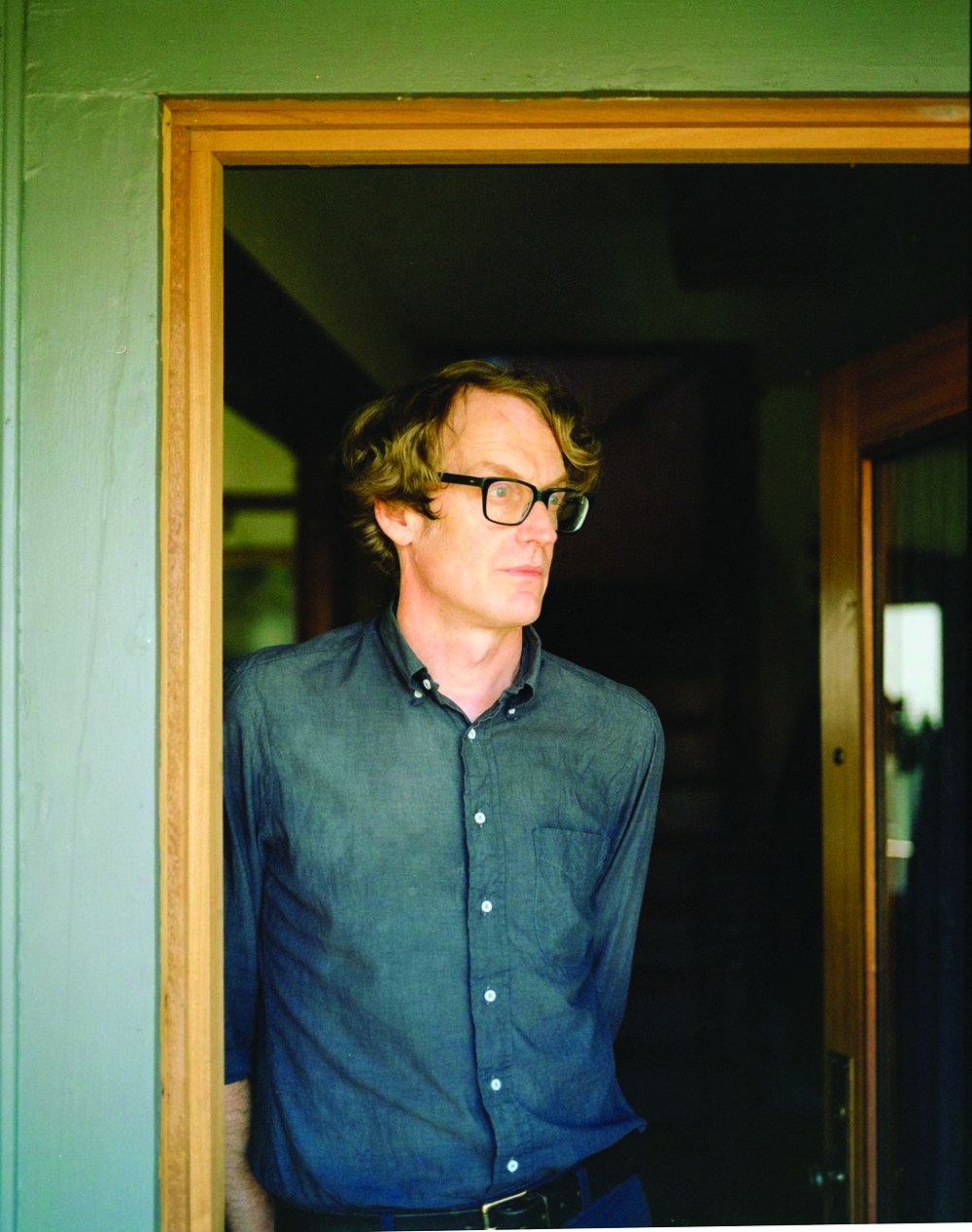
“Something happens for me when I drive long distances alone, and you’re listening to your music and you’re seeing familiar and unfamiliar sights and stopping randomly and having these little interactions.”
It’s perhaps unsurprising, then, that the award-winning writer’s latest book “Dodge City” is a road trip novel — even if he wasn’t planning on writing one.
“Before I started it, I just thought… the world does not need another road trip novel, my God. But then I found myself doing it,” he said.
The book follows Lee Clarke, a young man whose expulsion from UCLA leads to him being drafted for the Vietnam War.
Lee, unwilling to risk his life for a cause he doesn’t believe in, decides to dodge the draft. He sets out for Canada by way of New York, stopping to visit disparate family members along the way.
The idea for the novel came from deWitt’s father, who was originally from Fort Erie, Ont., but moved to California in the mid-1960s. But then he got his draft notice, and to avoid the war he returned to Canada — which is where he met deWitt’s mother.
“If he hadn’t been drafted, I wouldn’t be here,” said deWitt, whose first novel “Ablutions” was published in 2009.
He followed it up with “The Sisters Brothers,” a dark comedy of errors about a pair of assassins in the Wild West. The novel was a critical and commercial success, nabbing the Governor General’s Award for Fiction, the Writers’ Trust Fiction Prize, the Prix des libraires du Quebec and the Stephen Leacock Memorial Medal for Humour.
It was also shortlisted for the Booker Prize, the Giller Prize and the Walter Scott Prize, and was turned into a movie starring John C. Reilly and Joaquin Phoenix.
He was shortlisted for the Giller again for 2018’s “French Exit” and won the Leacock a second time in 2021 for “The Librarianist.”
Already, “Dodge City” is garnering awards buzz. It’s been longlisted for the Giller, with the short list due to be announced next week.
The book didn’t start out being about a road trip, deWitt said. Initially he planned to write more about Lee’s decision to dodge.
“It wasn’t a particularly interesting question, and it’s not one that’s easily answered, but it’s one that’s sort of briefly answered for me. Do you want to take part in this war? No, I do not. There’s not that much more to say about it,” he said.
And so, instead of being about the decision, the book became about the process.
“It is more about saying goodbye to your life rather than your country,” he said.
This, deWitt said, came from long hours imagining the emotional experience of leaving your life behind.
“These are things that you can’t really look into. It’s more about sort of sitting and pondering … sitting and waiting and wondering what these people are feeling,” he said. “And then you arrive at a place that feels true.”
He started taking long drives shortly before he started writing “Dodge City,” he said. His son was getting older and could fend for himself for a few days — and take care of the dog, too.
“I did it once, and I did it twice, and now it’s just something that I do,” he said.
“There was something about being in a strange new room and then just the landscape as you drive and hotel rooms. And so I started thinking about just driving — a protagonist driving long distances by himself.”
In “Dodge City,” Lee drives east. As he was writing the book, deWitt said, he did the opposite, going from New York to Portland. It was the first time he drove cross-country since he was in his 20s, when he was selling T-shirts for a band “just seeing the insides of unpleasant hotel rooms and dank clubs.”
This time was different.
“I’m really comfortable in solitude and quiet, and the idea of sitting alone in my car for a week or more isn’t daunting,” he said.
“Each time I do it, something happens or I arrive at some location — an emotional location — where I’m ready to return to work (and) I feel sort of energized or inspired.”
This report by The Canadian Press was first published Oct. 1, 2026.