At Toronto event, Margaret Atwood reiterates need for due process in Galloway case
Advertisement
Read this article for free:
or
Already have an account? Log in here »
To continue reading, please subscribe:
Digital Subscription
One year of digital access for only $1.44 a week*
- Enjoy unlimited reading on winnipegfreepress.com
- Read the E-Edition, our digital replica newspaper
- Access News Break, our award-winning app
- Play interactive puzzles
*Billed as $5.77 plus GST every four weeks. After 52 weeks, price increases to the regular rate of $19.95 plus GST every four weeks. Offer available to new and qualified returning subscribers only. Cancel any time.
To continue reading, please subscribe:
Add Free Press access to your Brandon Sun subscription for only an additional
$1 for the first 4 weeks*
- Enjoy unlimited reading on winnipegfreepress.com
- Read the E-Edition, our digital replica newspaper
- Access News Break, our award-winning app
- Play interactive puzzles
*Your next Brandon Sun subscription payment will increase by $1.00 and you will be charged $17.95 plus GST for four weeks. After four weeks, your payment will increase to $24.95 plus GST every four weeks.
Read unlimited articles for free today:
or
Already have an account? Log in here »
TORONTO – As Steven Galloway concluded his testimony in his defamation trial in Vancouver, in Toronto, author Margaret Atwood reiterated her stance as a defender of due process in his case.
Atwood, who was receiving an award at a Journalists for Human Rights event, spoke about her decision to sign an open letter in November 2016 calling for an investigation into how the University of British Columbia handled the Galloway case.
Atwood faced intense backlash and scrutiny from the public after expressing support for the former UBC professor, comparing the online criticism to the French Revolution.
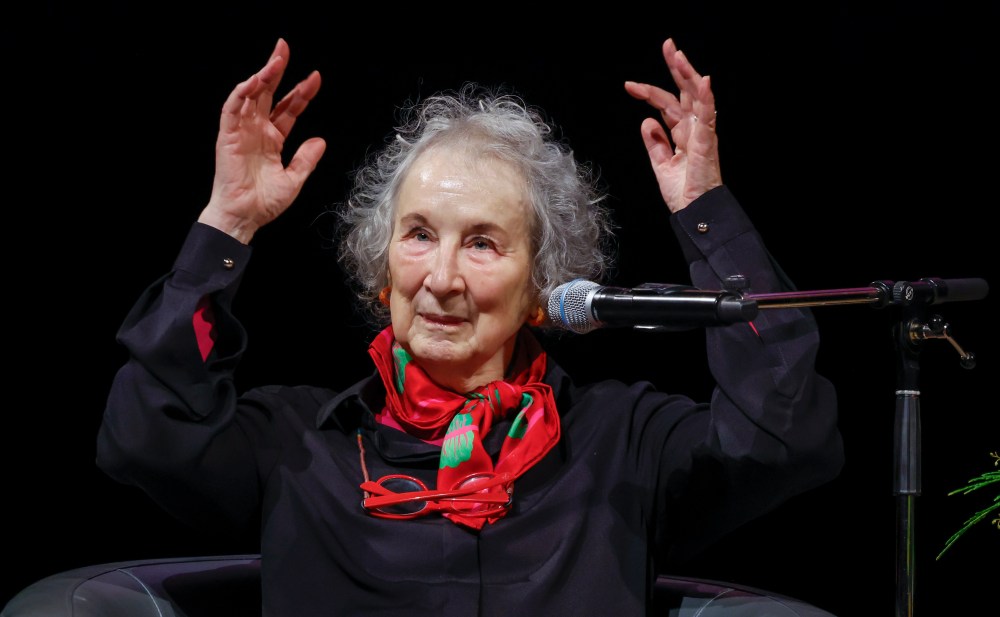
“Luckily, I couldn’t be fired from the university or blacklisted from festivals,” she said. “Or if I was, I didn’t notice.”
She also referred to Article 10 of the Universal Declaration of Human Rights, which calls for “the right of every human being to a fair, open and impartial trial.”
She lamented the Canadian media’s reluctance to cover the case over the last eight years.
“Finally, the Canadian press is covering it after eight years of mostly not,” she said. “As one of those attacked online, trashed and derided as a due processor for asking for an open investigation with information and evidence from the University of British Columbia, I’m happy to see that.”
Atwood has written opinion articles, most recently in the Vancouver Sun this week, in support of Galloway. She added that legacy media publications face growing pressures and dwindling revenue, which make it difficult to “defend against lawsuits.”
“This has made them more cautious,” she added.
Atwood also worried that social media has made the public more distrustful with a growing tendency to believe anything posted online.
“There’s a youngish place where something resembling news can appear and even be believed by the uncautious,” she said. “As you know, that place is social media.”

Galloway, known for the award-winning novel “The Cellist of Sarajevo,” is in the middle of a defamation trial against several people who he alleges published unproven allegations of sexual assault.
One of the defendants includes a former student, known as A.B., who made sexual assault allegations against him that later spread on social media. Galloway was fired from UBC shortly after rumours of the accusations spread in late 2015.
He was a tenured professor and the former chair of UBC’s creative writing program.
A report produced by a former judge for the university concluded that the accusations against Galloway were unsubstantiated.
This report by The Canadian Press was first published Oct. 15, 2026.