The light fantastic
Canadian photographer Yousuf Karsh's portraits go beyond black and white
Advertisement
Read this article for free:
or
Already have an account? Log in here »
To continue reading, please subscribe:

Digital Subscription
One year of digital access for only $205*
- Enjoy unlimited reading on winnipegfreepress.com
- Read the E-Edition, our digital replica newspaper
- Access News Break, our award-winning app
- Play interactive puzzles
*First annual payment billed as $205.00 + GST for one year. This annual subscription will automatically renew at $233.00 + GST every 52 weeks (10% off the regular annual price of $259.35). Offer available to new and qualified returning subscribers only. Cancel any time.
To continue reading, please subscribe:
Add Free Press access to your Brandon Sun subscription for only an additional
$1 for the first 4 weeks*
- Enjoy unlimited reading on winnipegfreepress.com
- Read the E-Edition, our digital replica newspaper
- Access News Break, our award-winning app
- Play interactive puzzles
*Your next Brandon Sun subscription payment will increase by $1.00 and you will be charged $17.95 plus GST for four weeks. After four weeks, your payment will increase to $24.95 plus GST every four weeks.
Read unlimited articles for free today:
or
Already have an account? Log in here »
Hey there, time traveller!
This article was published 24/09/2009 (6201 days ago), so information in it may no longer be current.
They’re iconic faces of the 20th century.
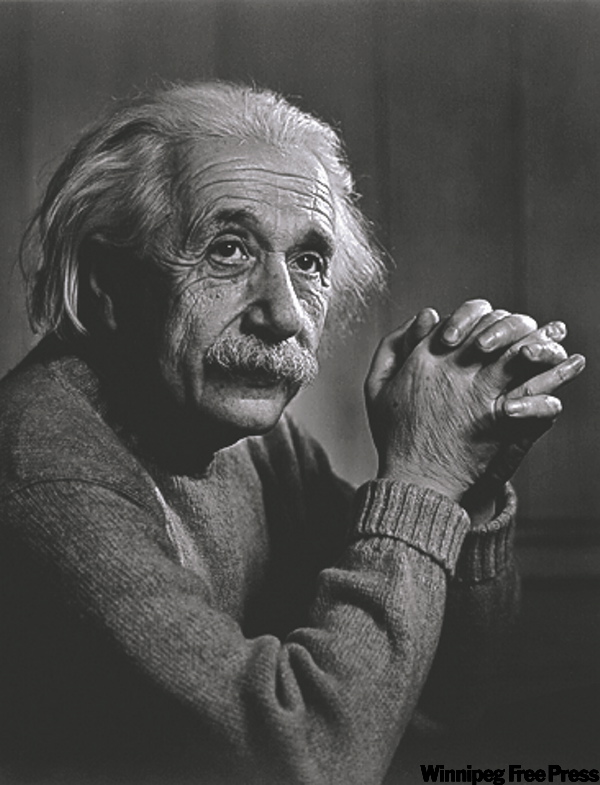
Kennedy. Castro. Einstein. Churchill. Mandela. Picasso. Schweitzer. Khrushchev. Bogart.
The world-renowned Canadian photographer who captured unforgettable portraits of these giants is recognized — as they are — by a single name: Karsh.
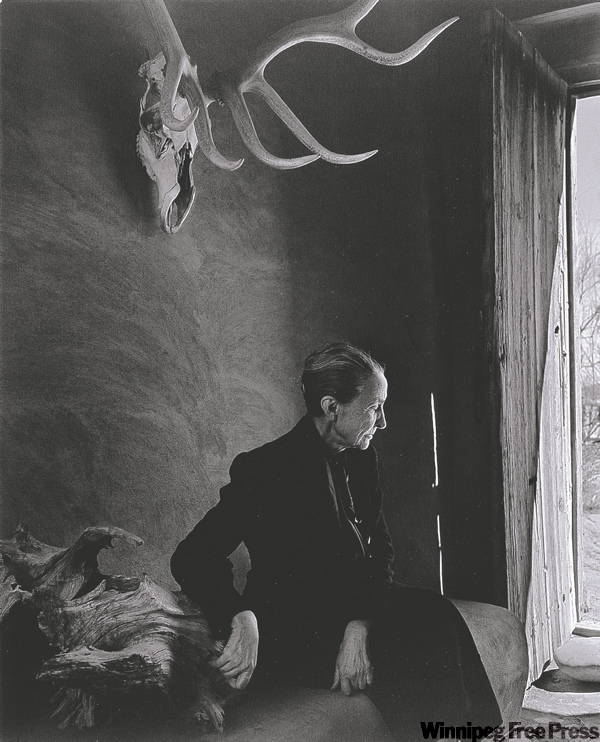
Last year, to mark the centenary of Yousuf Karsh’s birth, the Art Institute of Chicago organized an exhibition of 100 of his greatest gelatin silver (black-and-white) prints.
The touring show, Yousuf Karsh: Regarding Heroes, opens Saturday at the Winnipeg Art Gallery and runs to Jan. 3.
Drawn from an estate collection of portraits that Karsh chose as his best before his death in 2002, the show ranges chronologically from his iconic 1936 character study of Grey Owl to his 1990 image of Nelson Mandela.
Karsh, who arrived in Canada in his teens as a penniless Armenian immigrant, had a portrait studio in Ottawa for 60 years. As a young man, he set his heart on "photographing those men and women who leave their mark on the world."
If the high achievers couldn’t come to his studio, he travelled to their turf.
"When the famous start thinking of immortality, they call for Karsh of Ottawa," London’s Sunday Times once declared.
The photographer said his goal was to capture the "inward power" of each subject. He sought to catch an instant in which the person’s mask was lifted and something of the inner self was revealed.
The subject’s hands are often prominent. Ballet star Rudolf Nureyev’s hands, for instance, conceal his mouth. Mime Marcel Marceau seems to be speaking with his fingers.
A number of subjects, such as journalist Edward R. Murrow, hold lit cigarettes, adding to the show’s Mad Men-like flavour of Cold War nostalgia.
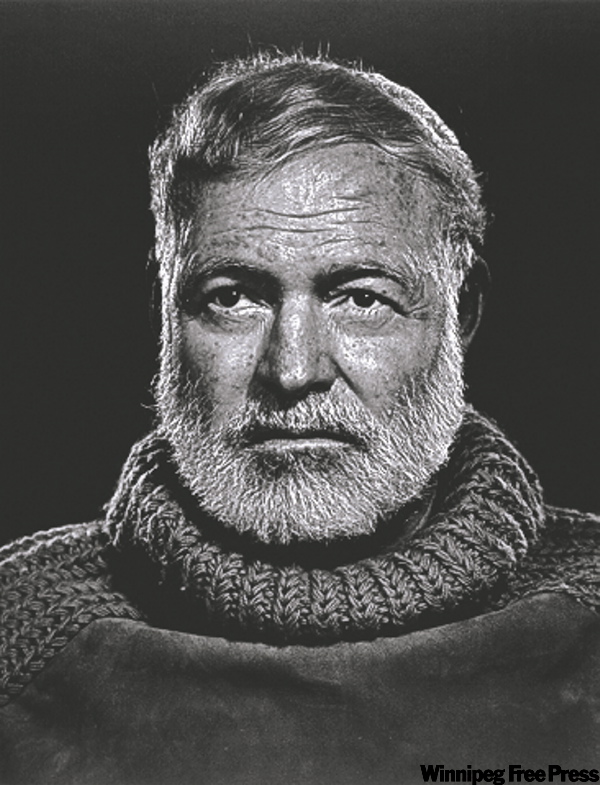
The show includes Karsh portraits of many artists, writers, musicians, designers and architects: Pablo Picasso, Andy Warhol, Ernest Hemingway, Aaron Copland, Christian Dior and Frank Lloyd Wright, to name only a few.
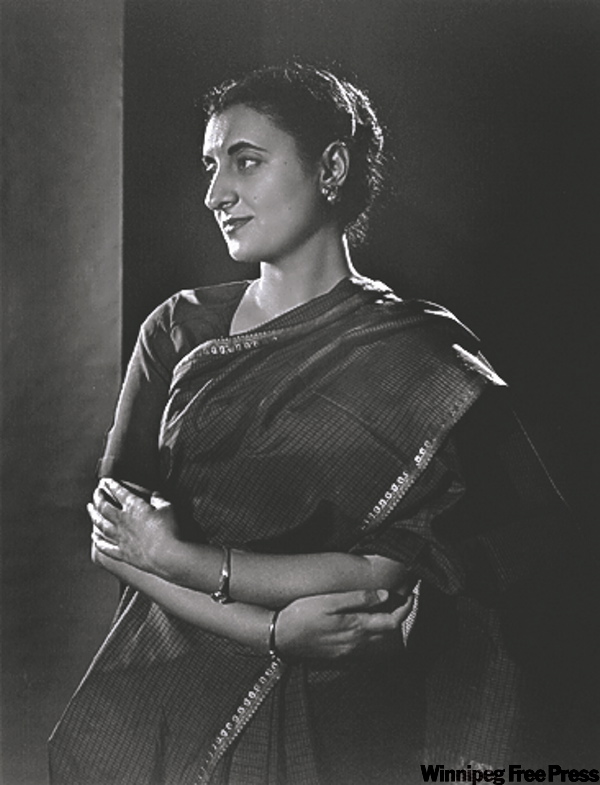
There’s royalty, from Queen Elizabeth to Prince Rainier and Princess Grace. There are world leaders including Fidel Castro, Indira Gandhi and Pierre Trudeau. There are scientists like Robert Oppenheimer and actors such as Audrey Hepburn, Ingrid Bergman, Clark Gable and Humphrey Bogart.
The show’s curator, David Travis — who is coming to Winnipeg to give WAG talks on Oct. 28 and 29 — regards Karsh as an optimist who genuinely believed in heroism and approached his subjects with generosity.
"Travis argues that Karsh wanted to find goodness in people," says WAG curator Andrew Kear, who is overseeing the exhibition. "(The photos) are attempts to honour the individual."
Karsh, says Kear, was "this wizard of lighting," admired for the range of tones in his black-and-white prints, "from rich dark to pure white and everything in between."
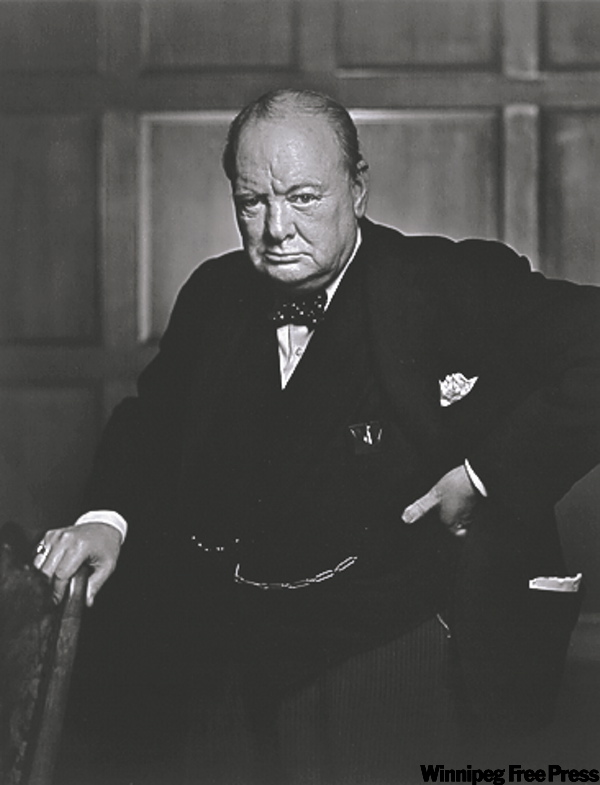
His most iconic work is his 1941 portrait of Winston Churchill, taken just after Churchill gave a speech in the House of Commons. Karsh had only minutes to get the shot. Churchill was already scowling, and when Karsh snatched the cigar from between his teeth, "the Churchillian scowl deepened, the head was thrust forward belligerently, and the hand placed on the hip in an attitude of anger," Karsh wrote.
The photo became an era-defining image of British leadership and character. What most people don’t realize, says Kear, is how much preparation Karsh did for the shot’s lighting and composition.
"The night before, he went to the (House of Commons) chamber and got somebody who looked like Churchill, and lit him and set it up."
In his books, Karsh often included the stories behind the photo shoots, from drinking rum with Castro to convincing Khrushchev to pose in a fur coat. Along with each image in the WAG show, viewers can read a short biography of the subject, and in most cases a tidbit from Karsh’s account.
He described the novelist Hemingway, for example, as "the shyest man I ever photographed" and saw in the image he captured "the face of a giant cruelly battered by life, but invincible."
Kear says he personally finds some of Karsh’s stories "a bit syrupy." There are critics, he says, who feel that Karsh’s huge reputation resulted from him piggy-backing on the already-famous and "heroicizing" them.
Hero worship is, of course, out of fashion these days. Late in life, Karsh wrote about "this era of antiheroes."
But Karsh was not solely attracted to the famous and powerful. There’s another touring show called Yousuf Karsh: Industrial Images.
It’s drawn from photos of auto and steel workers that Karsh took in 1951. Though the photos were commissioned by Ford, the company refused to publish many of them. In retrospect, they seem deeply, revealingly human.
"He was interested in people," says Kear.
alison.mayes@freepress.mb.ca
Yousuf Karsh was born in 1908 to Armenian parents in what is now Turkey. His family was persecuted in the Armenian Genocide. In 1925, when Karsh was 17, his family sent him to Quebec, where he had a photographer uncle.
Karsh’s uncle arranged for him to apprentice with eminent portrait photographer John Garo in Boston. Karsh later called this "my university." He returned to Canada and in 1932 opened a studio in Ottawa’s Chateau Laurier Hotel.
While Garo’s photography was done with natural light, Karsh learned theatrical lighting at the Ottawa Little Theatre in the 1930s. He became a master of studio lighting, influenced by Hollywood techniques.
Prime Minister Mackenzie King discovered Karsh and arranged for him to photograph dignitaries. The turning point of Karsh’s career came in 1941, when he photographed British prime minister Winston Churchill. The image vaulted Karsh to international prominence and became one of the most reproduced photos in history.
Many of the leading figures of the 20th century — popes, kings and queens, statesmen, civil rights leaders, movie stars, scientists, artists, adventurers — sat for Karsh. He was known for his gracious, old-world manners and for "doing his homework" to learn all he could about his subjects.

Karsh retired in 1992. In total, he took more than 15,000 portraits and published 15 books of photographs.
Of the 100 most notable people of the 20th century, as named in 2000 by International Who’s Who, Karsh had photographed 51. Karsh was the only Canadian to make the list.
In the late 1990s the photographer moved to Boston with his second wife. He died in 2002 at the age of 93. He is buried in Ottawa.