Stimulating work proves painting alive, well
Advertisement
Read this article for free:
or
Already have an account? Log in here »
To continue reading, please subscribe:

Digital Subscription
One year of digital access for only $205*
- Enjoy unlimited reading on winnipegfreepress.com
- Read the E-Edition, our digital replica newspaper
- Access News Break, our award-winning app
- Play interactive puzzles
*First annual payment billed as $205.00 + GST for one year. This annual subscription will automatically renew at $233.00 + GST every 52 weeks (10% off the regular annual price of $259.35). Offer available to new and qualified returning subscribers only. Cancel any time.
To continue reading, please subscribe:
Add Free Press access to your Brandon Sun subscription for only an additional
$1 for the first 4 weeks*
- Enjoy unlimited reading on winnipegfreepress.com
- Read the E-Edition, our digital replica newspaper
- Access News Break, our award-winning app
- Play interactive puzzles
*Your next Brandon Sun subscription payment will increase by $1.00 and you will be charged $17.95 plus GST for four weeks. After four weeks, your payment will increase to $24.95 plus GST every four weeks.
Read unlimited articles for free today:
or
Already have an account? Log in here »
Hey there, time traveller!
This article was published 01/04/2014 (4526 days ago), so information in it may no longer be current.
Painting is dead! This claim has been made many times throughout art history, usually alongside a healthy dose of intellectual posturing.
Paul Delaroche, the 19th-century painter, is believed to have first declared the death of painting when he saw early technological inventions in photography. Painting was given a funeral many times in the decades that followed, most recently in the 1960s with the rise of performance and video art.
Even today, an art critic will occasionally announce that painting is dead, or at the very least, that it is faltering. But, it does seem as though making the announcement has simply become a good way to generate debate about the state of painting today.
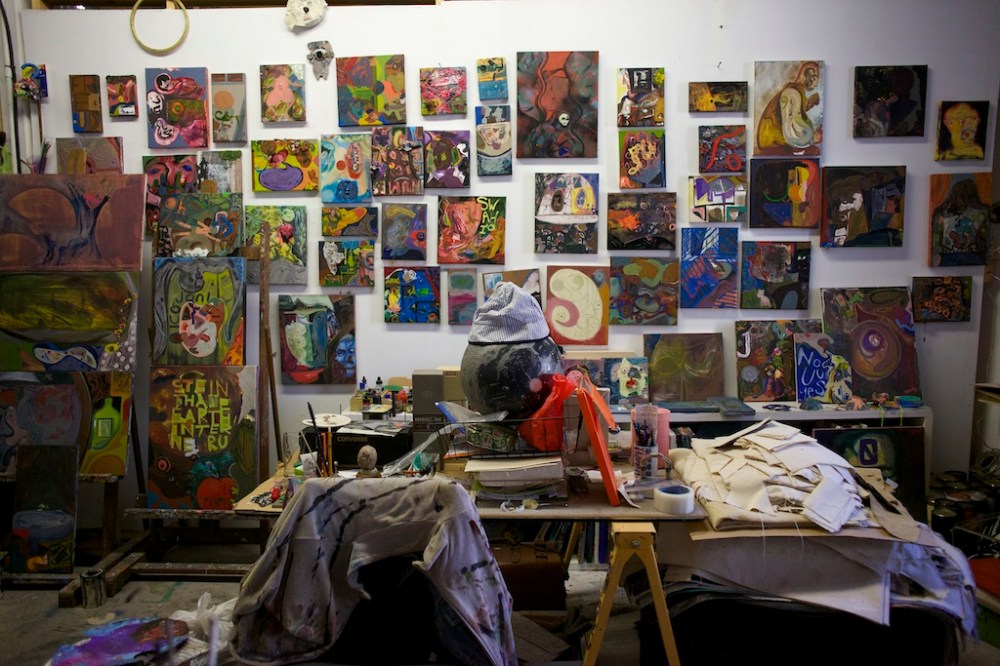
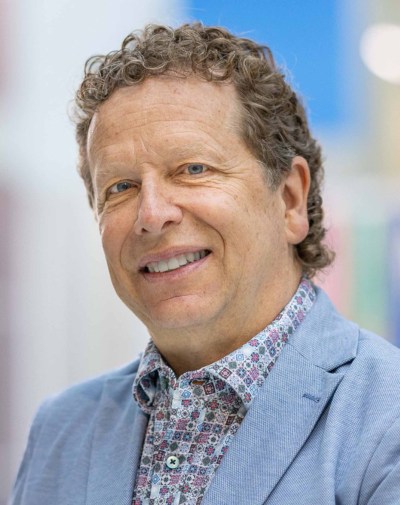
On Friday at the Free Press News Café, artist Craig Love will come out swinging in defence of painting. Love will work his way through several arguments against the medium, ultimately making the case that painting is alive and well. Afterwards, patrons will be invited to see Love’s paintings in person at his Exchange District studio.
Love is a mid-career artist who has been painting for 16 years. He earned his master’s of fine arts at Parsons School of Design in New York City and has taught at the School of Art at the University of Manitoba. Love paints because he was seduced by the medium.
“The smell, feel, flexibility, stubbornness seemed ‘right,’ or suited me somehow. I gave into the material and later on became more analytical about it.”
Talking about art with Love is a bit like running to catch up with a train. The ideas come fast and furious. It makes sense then, that Love makes paintings that are about the act of thinking. He doesn’t plan his paintings prior to beginning but paints in an improvisational way. His paintings are crammed with colour and imagery, are even muddled at times. In his work you can see ducks, plants, breasts, machinery, philosophic texts, explosions, brick walls, pianos, amoebas, and even a squirrel or two. Some of his paintings are purely abstract and some resemble the complex doodles of an intensely preoccupied mind.
Says Love, “I like to make paintings that are generous. I am against the one-note, easy punchline. I hope to make work that you want to live with and that continues to stimulate over time.”
For Love, painting is an incredibly dynamic art form and so he takes issue with the negative stance some critics adopt. Recently, for example, American critics Jed Pearl, Jerry Saltz and James Elkins have hit painters with some pretty heavy rhetoric. Pearl wrote that painting “has fallen from grace,” having lost its original mystery and potency. Saltz, fond of scolding artists for being unoriginal, laments the fact that so much of painting has become “anemically boring.” Elkins feels that painting is being crushed by the weight of its own history. In a certain reading of Elkins, the message seems to be that every visual trick has been played out.
Love prefers to look at painting’s relationship with art history as positive.
“One of the greatest things about painting is that it has a long, rich, varied and multi-faceted history. And it is somehow always identified as art. I like this about it very much. This always being art tends to mean that people have some notion of how to engage with it.”
Painting, says Love, is so dynamic because of the conversations it starts about our present visual culture and about how we see history as well. “People want to participate in history and painting is a good way to do that. It’s got everything. Beauty, colour, fashion, sex.”

Love concedes that there are a lot of paintings out there that are derivative. In his own work it is possible to see Gorky and De Kooning influences. In some works there is a tip of the hat to Mirò’s surrealism. But, far from being imitative, he has made an exciting visual language that resists trends.
Besides, if art history is over and if it has all been done before, then painters today get to start from scratch and should feel more free than ever to paint what and how they want.
Says Love, “Painting is an amazing, rigorous and enjoyable thing to do. All I know is that making paintings and looking at paintings is the best way to exercise my mind.”
Sarah Swan is a Winnipeg artist and writer. She will host Art Talk/Art Walk at the Free Press News Café on Friday at 6 p.m. Call 204-697-7069 for tickets to the event.