Animal instincts
Two exhibitions by emerging local artists examine our complicated relationships with other living creatures
Advertisement
Read this article for free:
or
Already have an account? Log in here »
To continue reading, please subscribe:

Digital Subscription
One year of digital access for only $205*
- Enjoy unlimited reading on winnipegfreepress.com
- Read the E-Edition, our digital replica newspaper
- Access News Break, our award-winning app
- Play interactive puzzles
*First annual payment billed as $205.00 + GST for one year. This annual subscription will automatically renew at $233.00 + GST every 52 weeks (10% off the regular annual price of $259.35). Offer available to new and qualified returning subscribers only. Cancel any time.
To continue reading, please subscribe:
Add Free Press access to your Brandon Sun subscription for only an additional
$1 for the first 4 weeks*
- Enjoy unlimited reading on winnipegfreepress.com
- Read the E-Edition, our digital replica newspaper
- Access News Break, our award-winning app
- Play interactive puzzles
*Your next Brandon Sun subscription payment will increase by $1.00 and you will be charged $17.95 plus GST for four weeks. After four weeks, your payment will increase to $24.95 plus GST every four weeks.
Read unlimited articles for free today:
or
Already have an account? Log in here »
Hey there, time traveller!
This article was published 09/10/2014 (4309 days ago), so information in it may no longer be current.
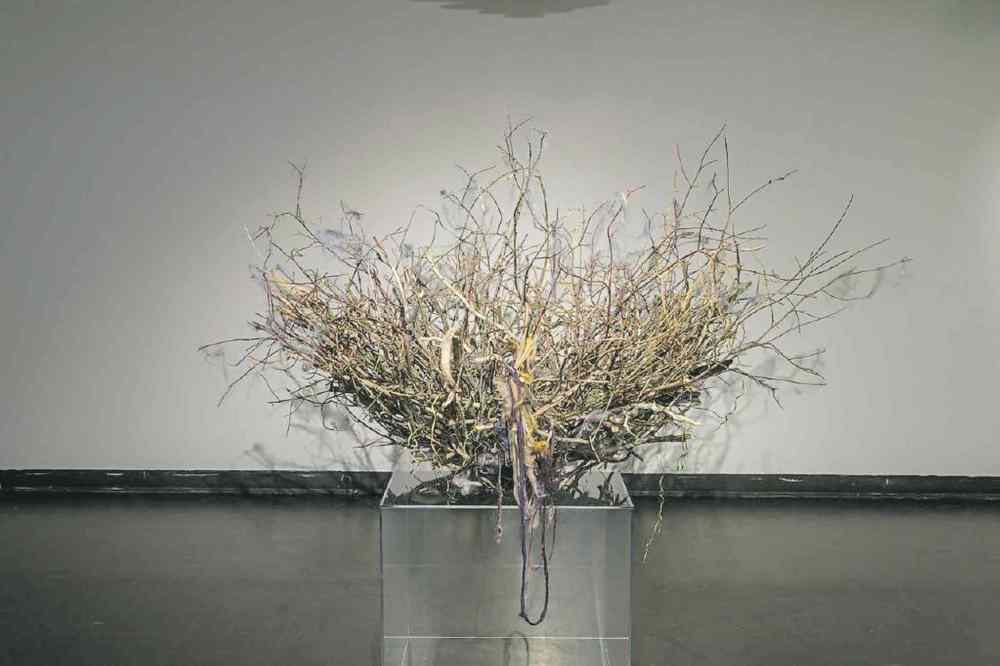
Most of us can relate to other, non-human animals on some level, to the extent that we like to think they have human traits and motivations. We can’t know for sure what (or even if) they actually think and feel like we do, but animals populate our myths and movies, serve as emblems for countries and sports franchises, and become cherished members of human families. The way we regard and relate to animals is shaped by cultural norms and practical concerns (namely the need to feed and clothe ourselves), but it also shows us the limits of our ability to empathize, something at the heart of solo exhibitions by two very different emerging artists.
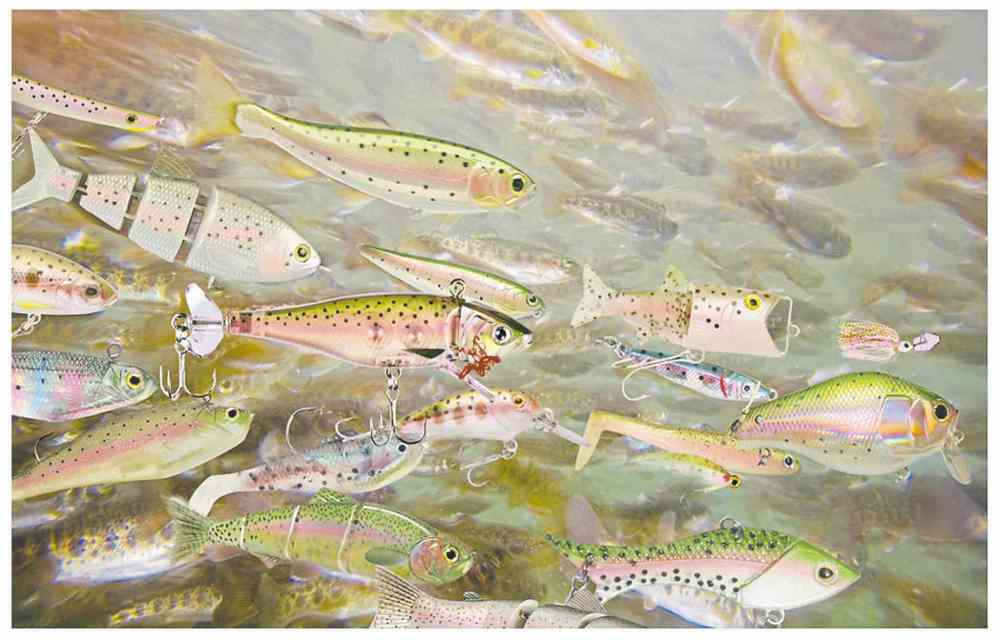
In Émouvoir (“to move”), which closes this week at the Maison des Artistes, Yvette Cenerini’s slick digital collages illustrate animal behaviours that seem to suggest familiar, human-like emotions. Each composite image depicts a specific research finding or field observation, case study in “joy,” “fear,” “hope,” or “pain.” A grieving mother gorilla cradles her infant’s corpse for days after it dies. Brain-damaged rats lose their fear of cats and laboratory mice lose their will to live. Cockatoos find May-December romance and military dogs develop post-traumatic stress disorders.
Cenerini looks to provoke an emotional response, and the imagery isn’t exactly subtle, but her inventive digital printing techniques give the work an uncanny illusion of depth. Stacked layers of printed Mylar lend a school of silvery fishing lures a scaly verisimilitude, but they also separate out the collaged layers, revealing the work’s constructed nature. The admission of artifice is a reminder that, however things might look from our perspective, the inner lives of other animals remain frustratingly off limits.
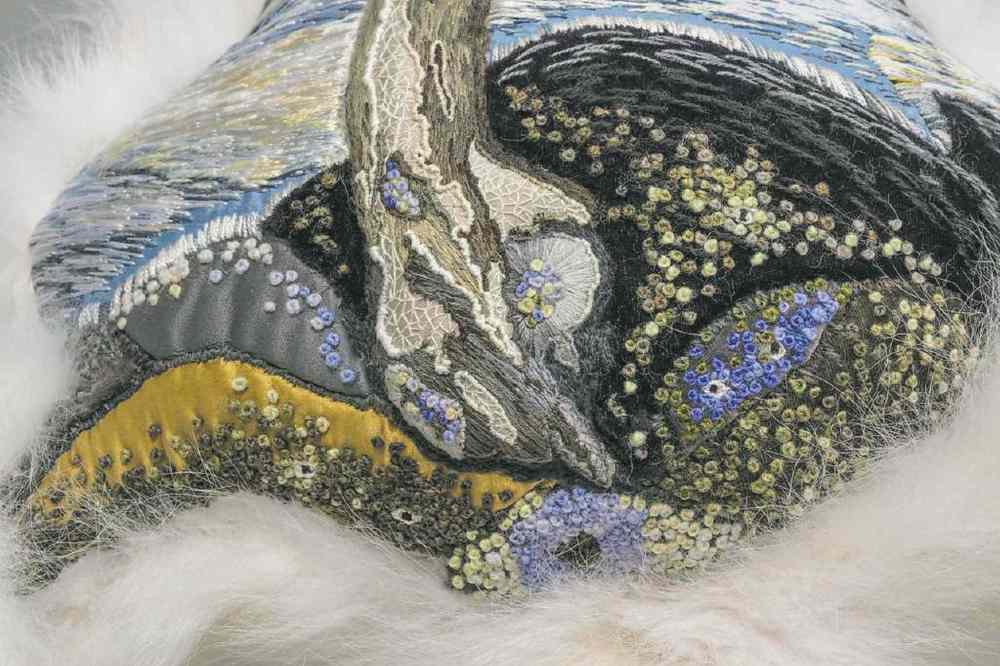
In Trapped, an exhibition at Gallery 1C03, Willow Rector offers a view of our relationship with animals and the landscape they inhabit that’s both panoramic in scope and shockingly intimate. Her richly embroidered animal pelts — skunk, ermine, otter, lynx — combine references to the fur trade, to Canadian modernist landscape painting (specifically the Group of Seven), and to historically overlooked, gendered forms of expression (namely needlework). She loosely translates the Group’s iconic vistas into dense fields of compacted satin stitches, affixing the embroidered panels to the underside of each skin. In the darkened gallery, the spotlit sculptures hang suspended from monofilament as if caught in free fall, casting human-like shadows on the wall.
Made on-location in a style that broke with the staid conventions of colonial painting, the Group of Seven landscapes that Rector quotes were firsthand impressions of the Canadian wilderness. With time and exposure, they would evolve into kind of neutral, decorative shorthand for “Canadianness.” By stitching them onto a canvas of hide and fur, she seeks to reunite the images with their “wild,” embodied and tactile origins while acknowledging that, one some level, they remain “trapped” and dead.
We can imagine that Rector’s landscapes offer glimpses of what each animal might have experienced in life, but this is a confabulation, a projection and, in any case, they’re dead now. She memorializes the animals, repairing wounds and punctures with crystal beads, even as she reduces them to convenient metaphors and, quite literally, raw material. The works are pointedly ambivalent, both tender and cruel, luxurious and morbid, beautiful objects that nevertheless speak to violence and exploitation — in the name of national identity, in the service of art. They test our willingness to identify with other animals, showing us the limits of our empathy.

Steven Leyden Cochrane is a Winnipeg-based artist, writer and educator.