‘Take me to your speaker’

Advertisement
Read this article for free:
or
Already have an account? Log in here »
To continue reading, please subscribe:

Digital Subscription
One year of digital access for only $205*
- Enjoy unlimited reading on winnipegfreepress.com
- Read the E-Edition, our digital replica newspaper
- Access News Break, our award-winning app
- Play interactive puzzles
*First annual payment billed as $205.00 + GST for one year. This annual subscription will automatically renew at $233.00 + GST every 52 weeks (10% off the regular annual price of $259.35). Offer available to new and qualified returning subscribers only. Cancel any time.
To continue reading, please subscribe:
Add Free Press access to your Brandon Sun subscription for only an additional
$1 for the first 4 weeks*
- Enjoy unlimited reading on winnipegfreepress.com
- Read the E-Edition, our digital replica newspaper
- Access News Break, our award-winning app
- Play interactive puzzles
*Your next Brandon Sun subscription payment will increase by $1.00 and you will be charged $17.95 plus GST for four weeks. After four weeks, your payment will increase to $24.95 plus GST every four weeks.
Read unlimited articles for free today:
or
Already have an account? Log in here »
Hey there, time traveller!
This article was published 10/11/2016 (3620 days ago), so information in it may no longer be current.
Spectacle takes a back seat to emotional resonance in Arrival, a film that marks the science-fiction debut of Quebec director Denis Villeneuve (Enemy, Prisoners).
In a way, Arrival is to sci-fi what Villeneuve’s Sicario was to the cop movie. In the context of their genres, the stakes are raised through the perspectives of sensitive, keenly intelligent female protagonists.
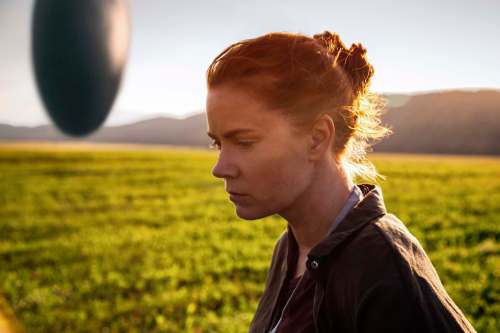
In Arrival, that would be Dr. Louise Banks (Amy Adams), a linguist whom we first encounter in fresh anguish following the death of her daughter.
In a lonely house near the university where she works, Louise bears mute witness to a weird, potentially cataclysmic event: the Earth has been visited by 12 spaceships that have parked themselves in 12 countries around the world.
We are unsure of their motives, but some TV pundits, in the habit of stoking paranoia, assume they’re on a mission of conquest. (When Louise gets on the phone to tell her distraught mom to stop watching a particular news channel, we all know what fear-mongering network she means.)
Before long, Louise gets a midnight knock at her door. Col. Weber (Forest Whittaker) from army intelligence plays her a tape consisting of a baffling array of noises. The noises have come right from the alien source, and Louise is enlisted to translate in a co-ordinated effort of countries from around the world.
Louise is paired with cunning, good-natured scientist Ian Donnelly (Jeremy Renner) to crack the alien code, which involves travelling to a foggy, verdant countryside where the spacecraft is hover-parked in defiance of the laws of gravity. When Louise and Ian are escorted onto the ship, more gravitational hijinks ensue, an early indication that with this particular race of aliens, normal rules won’t apply whether to the concept of up and down or when it comes to the fundamentals of communication.
While interactions are kept under wraps, the aliens appear to be multi-armed entities that wouldn’t look out of place in War of the Worlds. Louise sees past the frightening appearances to step up efforts to translate a written language that resembles those rings of moisture left by particularly moist drinking glasses, begging the question: Have the aliens come for our coasters?
In fact, their intent is more serious. The secret of their language is connected to a way of thinking that is radically different from the linear human mode.
How interesting it is that an outbreak of violence erupts at a pivotal moment, but Villeneuve doesn’t feel compelled to portray it beyond the perspective of the scientists on the remote periphery of the action. It’s a high-minded approach true to the cerebral nature of the story, and it carries through to the movie’s surprising revelations.
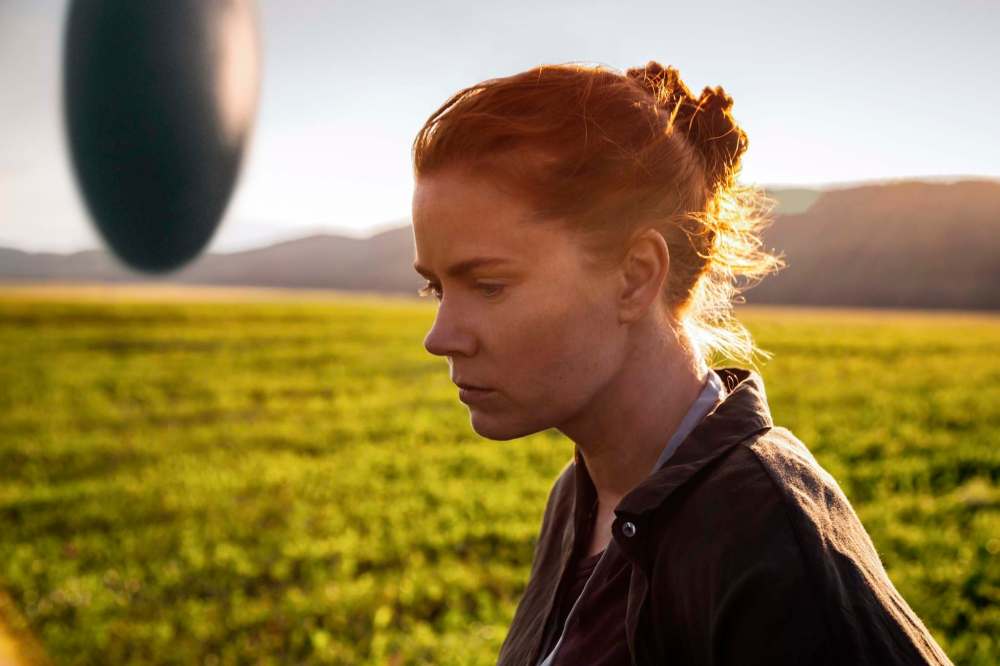
Many science fiction films — even some high-minded ones — feel the need to stack their decks with big visuals, but Villeneuve knows good acting can be the best special effect. In that capacity, Adams is the Close Encounters mothership, in a thespian sense, offering a demonstration that intellect and emotion aren’t mutually exclusive qualities.
We need more science fiction films like this. And given that Villeneuve is currently filming the long-awaited sequel to Blade Runner, we should now feel assured that project is in the right hands.
randall.king@freepress.mb.caTwitter: @FreepKing
Our newsroom depends on a growing audience of readers to power our journalism. If you are not a paid reader, please consider becoming a subscriber.
Our newsroom depends on its audience of readers to power our journalism. Thank you for your support.
MOVIE REVIEW

Arrival
● Starring Amy Adams and Jeremy Renner
● Grant Park, McGillivray, Polo Park, St. Vital.
● PG
● 117 minutes
4 stars out of five
Our newsroom depends on a growing audience of readers to power our journalism. If you are not a paid reader, please consider becoming a subscriber.
Our newsroom depends on its audience of readers to power our journalism. Thank you for your support.
Related Articles
Alien tongue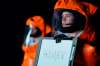
Advertisement Advertise With Us
Advertisement Advertise With Us