Halifax filmmaker’s Black Cop questions complacency
Halifax filmmaker makes eastern back drop universal

Advertisement
Read this article for free:
or
Already have an account? Log in here »
To continue reading, please subscribe:

Digital Subscription
One year of digital access for only $205*
- Enjoy unlimited reading on winnipegfreepress.com
- Read the E-Edition, our digital replica newspaper
- Access News Break, our award-winning app
- Play interactive puzzles
*First annual payment billed as $205.00 + GST for one year. This annual subscription will automatically renew at $233.00 + GST every 52 weeks (10% off the regular annual price of $259.35). Offer available to new and qualified returning subscribers only. Cancel any time.
To continue reading, please subscribe:
Add Free Press access to your Brandon Sun subscription for only an additional
$1 for the first 4 weeks*
- Enjoy unlimited reading on winnipegfreepress.com
- Read the E-Edition, our digital replica newspaper
- Access News Break, our award-winning app
- Play interactive puzzles
*Your next Brandon Sun subscription payment will increase by $1.00 and you will be charged $17.95 plus GST for four weeks. After four weeks, your payment will increase to $24.95 plus GST every four weeks.
Read unlimited articles for free today:
or
Already have an account? Log in here »
Hey there, time traveller!
This article was published 31/05/2018 (3044 days ago), so information in it may no longer be current.
In Canadian dramatic film, it is a bit of a cliché that filmmakers will hedge when it comes to setting the action within the specific Canadian locations on their films. Rendering locations deliberately nebulous is generally done so that their films have sales potential in the vast American film marketplace.
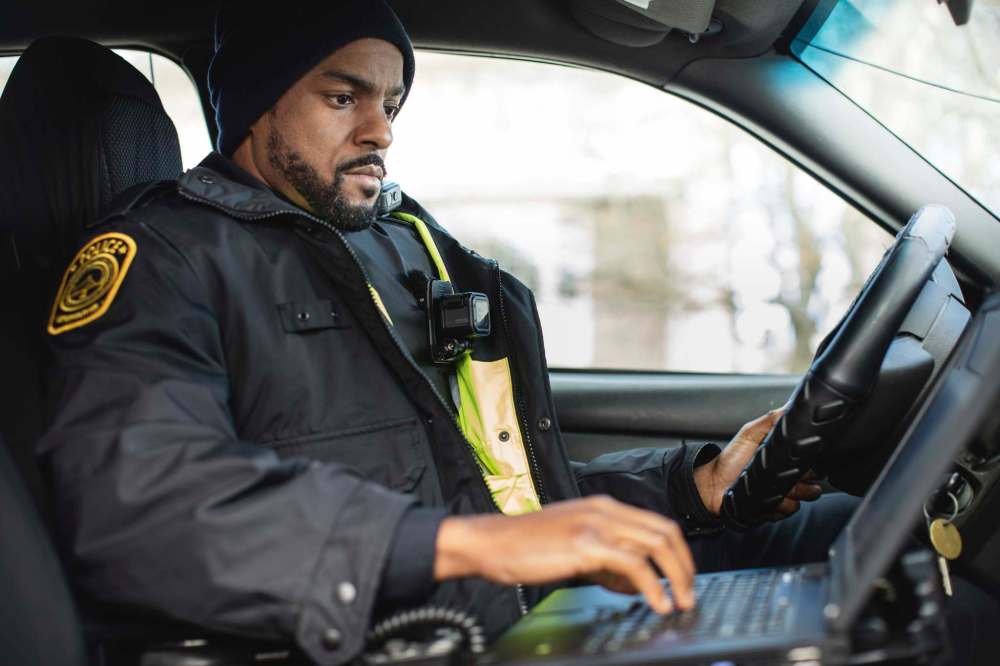
But it’s best not to paint filmmaker Cory Bowles with that particular brush. He had good reason to be vague about the Halifax location of his movie Black Cop, a story about a black police officer driven over the edge by the racism of his fellow officers, compounded by the complacency of the white citizenry he serves. The officer, played by Ronnie Rowe, embarks on a campaign of vengeance, treating white citizens with the same casual violence white officers may mete out to black citizens.
Born in Montreal before his family moved to Truro, N.S., Bowles (who divides his residences between Halifax and Toronto) acknowledges Halifax has “had its fair share of racial tension from the riots in the ’90s to (the ’60s demolition of) Africville, to the current studies we’ve had where it was discovered that minorities in Halifax are more likely to be pulled over.”
“It kind of goes without saying that those kinds of interactions are pretty universal, at least here in North America,” Bowles says in a phone interview. “We’ve all had our moments of being profiled or intimidated or having things happen to us in that situation.”
Bowles chose not to set his story specifically in Halifax, however.
“It was deliberate because I find when you make movies like this, it tends to put the responsibility on the place you’re setting it,” he says. “So if I make it specific to Halifax, it’s a Halifax problem.”
“I find it’s weirdly dismissive when you do that,” he says, adding that decision has paid off when the film was screened throughout North America.
“A lot of the places where we showed it, everywhere from St. Louis to New York, they were feeling like it was their town,” he says. “So that was kind of interesting.”
The film invokes the Black Lives Matter movement within the first few seconds of the film, and Bowles says Canadians cannot be too complacent about that movement reflecting a solely American issue.
“Of course, it’s a little different in the States, there’s a lot more tragedies there,” he says. “But we have our tragedies here when things escalate quickly.”
Bowles, 44, who might be most easily recognized for his acting role of Cory in the series Trailer Park Boys, says his experience taking the film to festivals has been “all over the board, from one end of the spectrum to the other.
“Most of it has been good. Some of it has been sad,” he says. “People have shared a lot of their own stories.”
“But other times, I think it was in Kansas where we had a gentleman who was quite adamant to tell me that he bled what he called ‘Republican red’ and he said the film was not enjoyable for him, but it changed his perspective.
“And I’m not setting out to do that with anyone, but that was really impressive,” he says. “It’s great if (the film) could create empathy.”
randall.king@freepress.mb.ca Twitter: @FreepKing
Our newsroom depends on a growing audience of readers to power our journalism. If you are not a paid reader, please consider becoming a subscriber.
Our newsroom depends on its audience of readers to power our journalism. Thank you for your support.
MOVIE PREVIEW
Black Cop
Starring Ronnie Rowe
Starting Friday at McGillivray VIP Cinemas
Subject to classification
91 minutes
Our newsroom depends on a growing audience of readers to power our journalism. If you are not a paid reader, please consider becoming a subscriber.
Our newsroom depends on its audience of readers to power our journalism. Thank you for your support.
Advertisement Advertise With Us
Advertisement Advertise With Us