Examining the role of today’s art school
Upcoming Art Talk/Art Walk to look at balance between creativity and academia

Advertisement
Read this article for free:
or
Already have an account? Log in here »
To continue reading, please subscribe:

Digital Subscription
One year of digital access for only $205*
- Enjoy unlimited reading on winnipegfreepress.com
- Read the E-Edition, our digital replica newspaper
- Access News Break, our award-winning app
- Play interactive puzzles
*First annual payment billed as $205.00 + GST for one year. This annual subscription will automatically renew at $233.00 + GST every 52 weeks (10% off the regular annual price of $259.35). Offer available to new and qualified returning subscribers only. Cancel any time.
To continue reading, please subscribe:
Add Free Press access to your Brandon Sun subscription for only an additional
$1 for the first 4 weeks*
- Enjoy unlimited reading on winnipegfreepress.com
- Read the E-Edition, our digital replica newspaper
- Access News Break, our award-winning app
- Play interactive puzzles
*Your next Brandon Sun subscription payment will increase by $1.00 and you will be charged $17.95 plus GST for four weeks. After four weeks, your payment will increase to $24.95 plus GST every four weeks.
Read unlimited articles for free today:
or
Already have an account? Log in here »
Hey there, time traveller!
This article was published 04/09/2018 (2955 days ago), so information in it may no longer be current.
During the medieval period, artists in the West trained through a guild system that emphasized manual skills. Later, art academies gave aspiring painters and sculptors a firm grounding with a curriculum that included drawing from plaster casts and copying works by master artists.
By the 1960s, art school was often viewed as a crucible of creativity and coolness, a place where you learned not just how to make art but also, in some essential way, how to live.
The idea of art education continues to shift in the 21st century. Faced with what feels like an unimaginably complex and anxious future, teachers and students are reconsidering what art school can and should do.
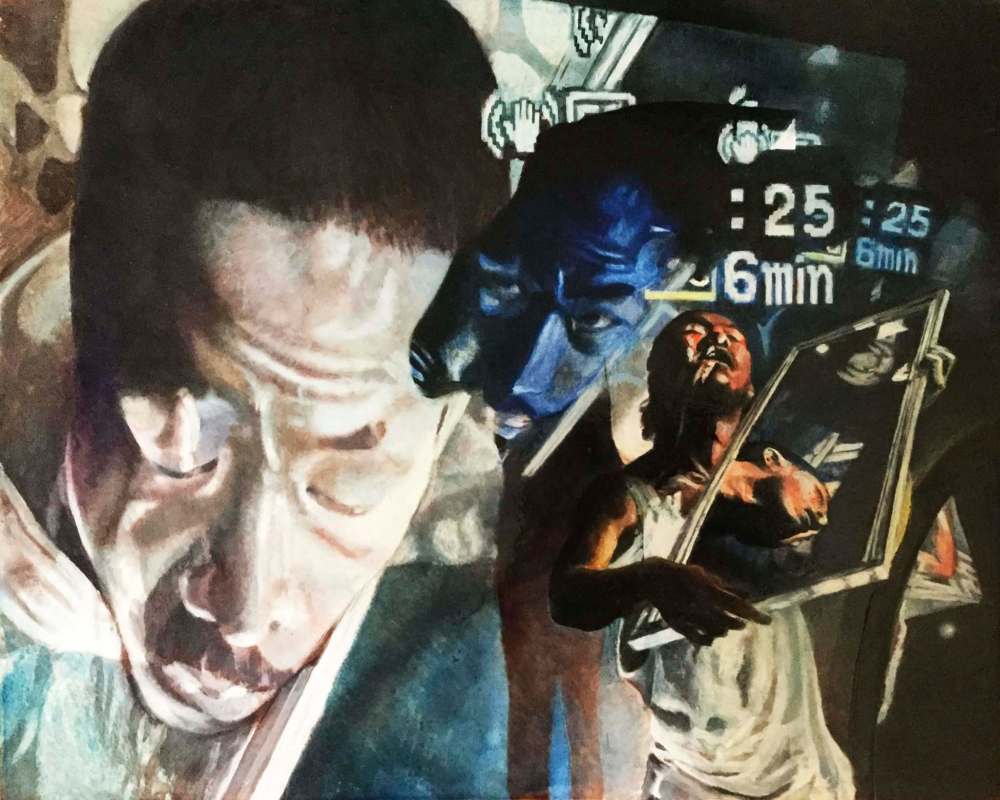
Should art schools teach students more about the business of art and the nitty-gritty realities of branding, networking and marketing? How can art schools engage with emerging technologies and urgent social issues? Can you teach creativity, innovation and individuality? Can you teach talent?
At this Friday’s Art Talk/Art Walk, we’ll look at some of these questions and controversies with Derek Brueckner, a Winnipeg artist who studied at the University of Manitoba’s School of Art and now teaches there as a studio instructor, and Oliver Botar, a professor of art history at the school, whose field of study includes the Bauhaus, perhaps the most influential art school of the last century.
For Botar, one of the central challenges for the contemporary art school is “how to strike the balance between an environment that nurtures — let’s face it — eccentricity and non-conformity, with an academic education and the necessity for grades and GPAs.”
It can be tricky combing a vision of art school as “a fun environment where students party and hang out” with “the drudgery and greyness of a bureaucratic institution,” Botar acknowledges.
“When it comes to studio classes, how do you balance structure and play?” Brueckner wonders. “I think you need both.”
In the popular mind, art school is often seen as a hothouse of unbridled self-expression, a creative free-for-all. Most art school courses deal with complicated technical skills, from traditional fields such as drawing, painting, printmaking, sculpting and ceramics, to photography and video and even emerging cross-disciplinary fields like digital art, robotics and computer programming.
Increasingly, there are also courses that teach practical skills such as how to grind out grant applications.
For Botar, it’s also about “the need to be strike a balance between facilitating a student’s ideas and challenging them.”
“Sometimes it’s about jolting them out of their comfort zone.”
Brueckner agrees. Students often come to art school thinking they’ll just do more of what they’re already doing, he suggests, only to find their profs encouraging them to try all sorts of other things.
“Sometimes it means leaving what you’re doing and then coming back to it with what you’ve learned. Once you get through the four years, you go back to what you were doing and see how it dovetails with what you were experiencing through art school,” Brueckner says.
Art school can encourage students to develop their own vision while considering how their practice fits into the larger context of art history and the contemporary art scene.
“You want to be able to position yourself in the current discourse,” Botar says.
“On the other hand, very successful artists are often innovators, who maybe out of ignorance or sheer obstinance want to do something different.
“A good example of that is (Winnipeg collective art group) the Royal Art Lodge. They weren’t really following any trends in the late ’90s. They were just doing their own thing, and then suddenly they became this big thing.”
If this all sounds like a lot of work and a little bit of toeing the line, the romantic notion of art school as life-changing, anarchistic and yes, even fun, has persisted into our bureaucratic age.
Even for students who don’t go on to make their living as practising professional artists — and many will not — art school can be transformative, according to both Botar and Brueckner. It can change a student’s way of seeing and thinking. It can provide lasting connections to a creative community. The experience of art school can change your life.
“It’s a romantic idea, but for me it did. It really did.” Brueckner recalls.
“I remember coming into art school as a 19-year-old and thinking, this is the first time the education system fits for me. For the first time, I felt like an educational structure was working for me and not against me.
“At that level, art school kind of saved my life.”
At this Art Talk/Art Walk, we’ll be covering art school questions and controversies with Derek Brueckner and Oliver Botar.
The talk takes place at the Free Press News Café at 237 McDermot Ave., with a guided art tour of the Exchange afterwards. Doors open at 5:30 p.m., with dinner starting at 6 p.m. Call 204-421-0682 or email wfpnewscafe@gmail.com to reserve tickets, which include dinner and cost $20.
alison.gillmor@freepress.mb.ca
Studying at the University of Winnipeg and later Toronto’s York University, Alison Gillmor planned to become an art historian. She ended up catching the journalism bug when she started as visual arts reviewer at the Winnipeg Free Press in 1992.
Our newsroom depends on a growing audience of readers to power our journalism. If you are not a paid reader, please consider becoming a subscriber.
Our newsroom depends on its audience of readers to power our journalism. Thank you for your support.
Studying at the University of Winnipeg and later Toronto’s York University, Alison Gillmor planned to become an art historian. She ended up catching the journalism bug when she started as visual arts reviewer at the Winnipeg Free Press in 1992.
Our newsroom depends on a growing audience of readers to power our journalism. If you are not a paid reader, please consider becoming a subscriber.
Our newsroom depends on its audience of readers to power our journalism. Thank you for your support.
Advertisement Advertise With Us
Advertisement Advertise With Us