Spy series script not committed to the cause, betraying Baron Cohen’s serious-acting mission

Advertisement
Read this article for free:
or
Already have an account? Log in here »
To continue reading, please subscribe:

Digital Subscription
One year of digital access for only $205*
- Enjoy unlimited reading on winnipegfreepress.com
- Read the E-Edition, our digital replica newspaper
- Access News Break, our award-winning app
- Play interactive puzzles
*First annual payment billed as $205.00 + GST for one year. This annual subscription will automatically renew at $233.00 + GST every 52 weeks (10% off the regular annual price of $259.35). Offer available to new and qualified returning subscribers only. Cancel any time.
To continue reading, please subscribe:
Add Free Press access to your Brandon Sun subscription for only an additional
$1 for the first 4 weeks*
- Enjoy unlimited reading on winnipegfreepress.com
- Read the E-Edition, our digital replica newspaper
- Access News Break, our award-winning app
- Play interactive puzzles
*Your next Brandon Sun subscription payment will increase by $1.00 and you will be charged $17.95 plus GST for four weeks. After four weeks, your payment will increase to $24.95 plus GST every four weeks.
Read unlimited articles for free today:
or
Already have an account? Log in here »
Hey there, time traveller!
This article was published 14/09/2019 (2576 days ago), so information in it may no longer be current.
It can be interesting to watch comedians take on dramatic roles. Often there’s an ache or an edge to their comedy that makes it into the drama.
Robin Williams’ comedy always had a certain neediness, and that quality informed his serious portrayals both good (One Hour Photo) and bad (Patch Adams). Adam Sandler’s comedic knack for frustration, irritation and outright rage has been transmuted, by skilled directors, into the tremendous sadness of anger turned inward (Punch Drunk Love, The Meyerowitz Stories).
Sacha Baron Cohen is known for extreme cringe comedy, which at its worst is unwatchable and at its best is revolutionary performance art. He takes on outlandish personae — Ali G, Borat, Bruno — and then gets into unscripted encounters with actual people. He’s ambushed everyone from Noam Chomsky to Dick Cheney, using improvised faux-idiocy to corner and coax people into revealing themselves. The results are often illuminating and/or appalling.
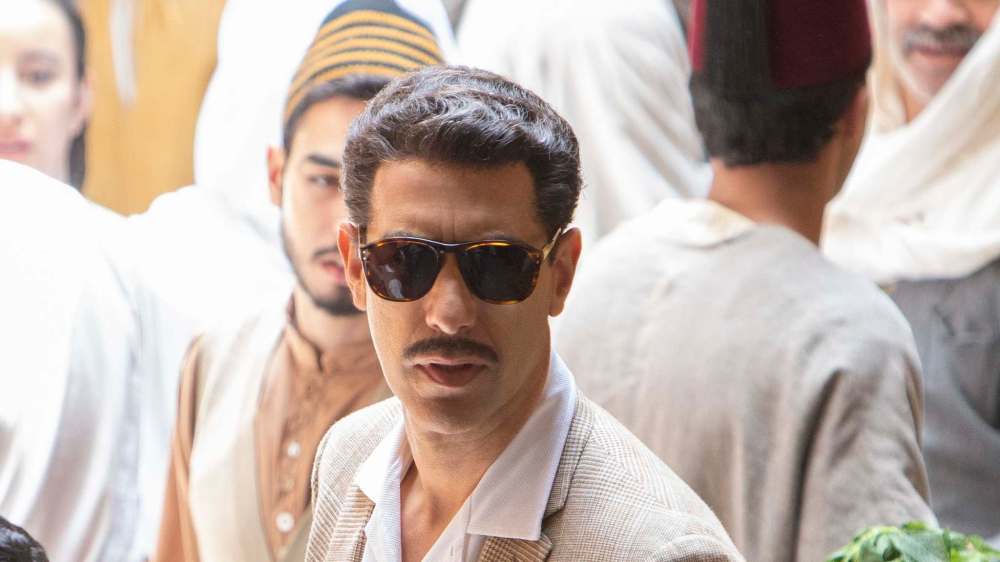
In The Spy, a six-episode limited series now streaming on Netflix, Baron Cohen is getting serious with the fact-based story of Eli Cohen, an Egyptian-born Jew who became an Israeli agent in the 1960s. This file clerk and family man pretended to be a flashy, high-living import-exporter named Kamel Amin Thaabet, eventually infiltrating the Syrian government and military.
As many critics have pointed out, Baron Cohen is basically exploring espionage as improv.
In a safehouse in Zurich, we watch Eli shed one identity and take on another, his real clothes hanging in one closet and his costumes — the slick, expensive suits of Kamel — hanging in another.
Eli has been trained by his handler Dan Peleg (Noah Emmerich of The Americans, struggling mightily with the Israeli accent) and given strict orders to avoid risks. Once he’s in the field, though, setting up his cover in Buenos Aires and later moving to Damascus, he’s on his own. Like any good improv artist, he has to trust his instincts. He has to be in the moment. He has to respond “Yes, and…” — as the improv kids like to say —when a friend proposes a dangerous infiltration of a secure Syrian military site.
As with Baron Cohen’s comic process, Eli uses elaborate falsehoods to uncover the truth. But Eli’s improvisations have life or death consequences. As one of his handlers tells him as he embarks on his double life, he has to stop thinking of himself as Eli: “You are either Kamel, or you’re dead.”
Baron Cohen, who is listed as an executive producer on The Spy, clearly wants to claim these higher stakes. He’s already tried the espionage genre as crass, rude raunch comedy in The Brothers Grimsby. In The Spy he’s playing it straight.
There is a moment at the beginning of the show when a hardcore Baron Cohen fan might be distracted by Eli’s Borat-flashback-inducing moustache. The script almost seems to acknowledge this possibility, with Eli’s wife, Nadia (Hadar Ratzon Rotem), teasing him about his “silly moustache.”
Baron Cohen quickly dispels anything remotely Borat-like with a committed and credible dramatic performance. He easily embodies the room-filling flair that allows Eli to draw in Syrian military and government officials – no surprise there — but he also works in subtler dramatic shades, suggesting the psychological strain and isolation of living undercover.

Unfortunately, The Spy lacks the complexity to back up Baron Cohen’s serious ambitions. Creator Gideon Raff (the man behind Prisoners of War, the Israeli series that inspired Homeland) never really gets to the core of his subject.
The series isn’t about the tortured geopolitics of the region, or even much about the intricate suspense of spycraft. Like The Americans, The Spy is really about the nature of identity. The series often juxtaposes the worlds of Nadia and Eli, as she goes through the domestic routines of work and childcare in Tel Aviv while he lives it up at his bachelor pad as “our man in Damascus,” splashing around money and throwing sex parties. What happens to Eli when he takes on the words, the actions, even the feelings of another man for months at a time? Who does he become?
The Spy isn’t quite willing to follow up these dark questions, downplaying both the conflicted motivations and terrible emotional costs of Eli’s work.
“I’ve never met anyone so sure of his abilities and so eager to prove he could do it,” Dan says of Eli at one point.
The same could apply to Baron Cohen, who’s eager to prove himself as a serious leading man. He’s always taken risks with his comedy, and he wants to take risks here. Too often, however, the scripting plays its safe.
Studying at the University of Winnipeg and later Toronto’s York University, Alison Gillmor planned to become an art historian. She ended up catching the journalism bug when she started as visual arts reviewer at the Winnipeg Free Press in 1992.
Our newsroom depends on a growing audience of readers to power our journalism. If you are not a paid reader, please consider becoming a subscriber.
Our newsroom depends on its audience of readers to power our journalism. Thank you for your support.
Studying at the University of Winnipeg and later Toronto’s York University, Alison Gillmor planned to become an art historian. She ended up catching the journalism bug when she started as visual arts reviewer at the Winnipeg Free Press in 1992.
Our newsroom depends on a growing audience of readers to power our journalism. If you are not a paid reader, please consider becoming a subscriber.
Our newsroom depends on its audience of readers to power our journalism. Thank you for your support.
Advertisement Advertise With Us
Advertisement Advertise With Us