Black, white and intense
FBI tale set in turbulent late-'60s Chicago sizzles with racial unrest reverberating more than 50 decades later

Advertisement
Read this article for free:
or
Already have an account? Log in here »
To continue reading, please subscribe:

Digital Subscription
One year of digital access for only $205*
- Enjoy unlimited reading on winnipegfreepress.com
- Read the E-Edition, our digital replica newspaper
- Access News Break, our award-winning app
- Play interactive puzzles
*First annual payment billed as $205.00 + GST for one year. This annual subscription will automatically renew at $233.00 + GST every 52 weeks (10% off the regular annual price of $259.35). Offer available to new and qualified returning subscribers only. Cancel any time.
To continue reading, please subscribe:
Add Free Press access to your Brandon Sun subscription for only an additional
$1 for the first 4 weeks*
- Enjoy unlimited reading on winnipegfreepress.com
- Read the E-Edition, our digital replica newspaper
- Access News Break, our award-winning app
- Play interactive puzzles
*Your next Brandon Sun subscription payment will increase by $1.00 and you will be charged $17.95 plus GST for four weeks. After four weeks, your payment will increase to $24.95 plus GST every four weeks.
Read unlimited articles for free today:
or
Already have an account? Log in here »
Hey there, time traveller!
This article was published 05/02/2021 (2048 days ago), so information in it may no longer be current.
In the year 1969, most Americans’ view of the Federal Bureau of Investigation came from the TV series The FBI, in which straitlaced fed Lew Erskine (Efram Zimbalist Jr). fought crime in his by-the-book fashion, tidily arresting various psychopaths and other malefactors every week. (If you saw Once Upon a Time in Hollywood, you get the gist of the show.)
The truth about the FBI at that time probably hews closer to the way the agency is portrayed in Judas and the Black Messiah, which culminates in the Hoover-approved murder of Chicago Black Panther chairman Fred Hampton. Directed by Shaka King, the film continually shifts focus between the fiery, charismatic Hampton (Daniel Kaluuya), new Panther recruit William O’Neal (LaKeith Stanfield) and federal agent Roy Mitchell (Jesse Plemons), the FBI agent who compels the lifelong criminal O’Neal to infiltrate the Panthers with such success, he actually becomes the Chicago branch’s security chief.
Also an important relationship in the mix is the burgeoning relationship between Hampton and Deborah Johnson (Dominique Fishback), a Panther volunteer who advises the fiery Hampton on when to temper his angry rhetoric with a conciliatory touch. Hampton’s ability to unite disparate communities into a “Rainbow coalition” is ultimately what made him more of a threat in the eyes of reactionary FBI chief J. Edgar Hoover (Martin Sheen), who famously focused the FBI’s attention on black/student radicals instead of more salient threats such as the Mafia.
In the late 1960s, it’s a given that the Black Panthers radicalization was an inevitable product of police brutality, the political violence of the Jim Crow laws in the South, and the ongoing assassinations of black leaders including Martin Luther King, Malcolm X and Medgar Evers. Law enforcement — then as now — was equally radicalized, especially at the FBI. Hence, corn-fed agent Mitchell comes to O’Neal after the car thief has been busted for a scam in which he has impersonated an FBI agent in a bid to steal a vehicle. (Asked why he chose to impersonate an FBI agent instead of just taking a car at gunpoint, O’Neal pointedly replies, “the badge is scarier than the gun.”)
O’Neal, facing up to eight years in prison, agrees to the infiltration and eventually earns the trust of Hampton.
The relationship between O’Neal and Mitchell has a touch of Stockholm Syndrome to it: O’Neal comes to covet Mitchell’s middle-class wife-and-three-kids prosperity and his co-operation is touched with O’Neal’s aspirations to a good, straight life.
But at the same time, O’Neal is also touched by Hampton’s intelligence, charisma and his ambition to shake up America’s power structure. O’Neal’s betrayal (which is teased in the beginning of the film as O’Neal tells his story in the 1990 documentary series Eyes on the Prize II) is revealed as a series of compromises that take him deeper and deeper into true criminality. This is also true of Agent Mitchell, who is horrified to learn of the FBI’s criminality in its pursuit of “Black Messiahs” (Hoover’s term for black leaders) but evidently not horrified enough to risk his career. Mitchell, who says he investigated the killing of three civil rights workers in Mississippi by Ku Klux Klan members, insists the Klan and the Panthers are “all the same” without considering the possibility that the Klan and the Bureau have more in common.
Director Shaka King has previously worked on TV series and a 2013 stoner comedy titled Newlyweeds, so his effort here is surprising in its detail in its production, the fluidity of the narrative and the gravitas of its themes, which are, alas, as timely as ever.
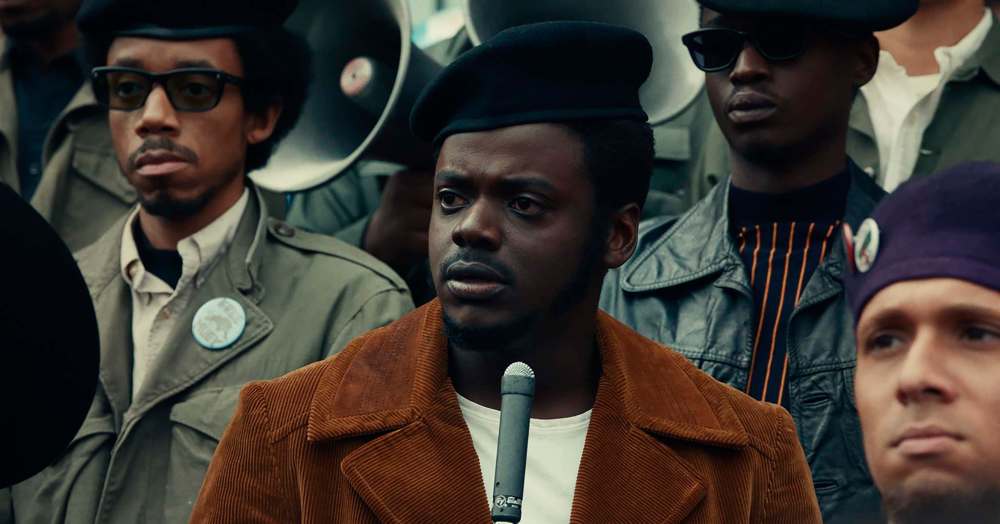
Daniel Kaluuya, a more passive presence in Jordan Peele’s excellent horror film Get Out, exhibits a considerable range here: his Hampton is a force of nature on the podium, but admirably cool negotiating a treaty with a faction of Chicago gangsters. It’s a hell of a good performance, though Kaluuya is obviously older than Hampton, who died at the age or 21. He has excellent support from Fishback who sensitively facilitates a look at Hampton’s tender side.
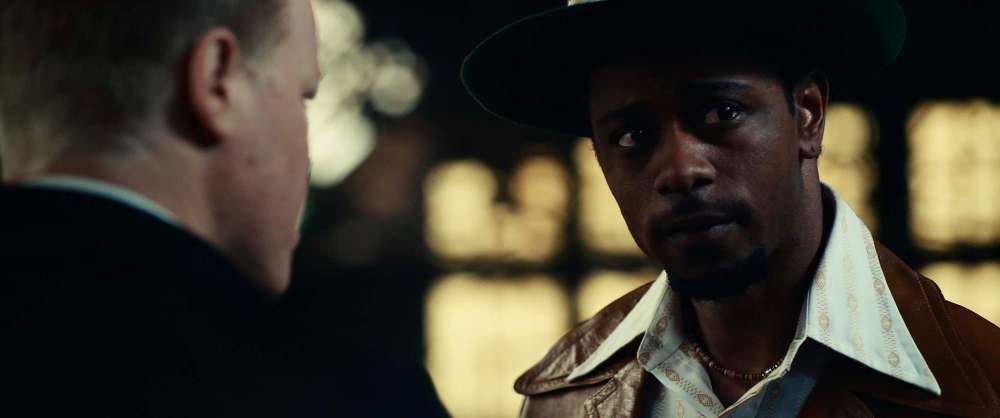
LaKeith Stanfield (who was also in Get Out) provides a provocative counterpoint to Kaluuya, trapped between his self-serving aspirations and Hampton’s idealism. He has a haunted quality that, it turns out, syncs with the real-life O’Neal, glimpsed for a minute or two in the end of the film, delivering the film’s final casualty: a shock, but not a surprise.
randall.king@freepress.mb.ca
Twitter: @FreepKing
Our newsroom depends on a growing audience of readers to power our journalism. If you are not a paid reader, please consider becoming a subscriber.
Our newsroom depends on its audience of readers to power our journalism. Thank you for your support.
MOVIE REVIEW
Judas and the Black Messiah
Starring Daniel Kaluuya, LaKeith Stanfield and Dominique Fishback
• Available next week on VOD and in theatres where available
• 126 minutes
★★★★ out of five
Our newsroom depends on a growing audience of readers to power our journalism. If you are not a paid reader, please consider becoming a subscriber.
Our newsroom depends on its audience of readers to power our journalism. Thank you for your support.
Advertisement Advertise With Us
Advertisement Advertise With Us