What’s in a name? Everything Language keepers, elders honour Inuit art centre, WAG and the Indigenous land they sit on with Inuktitut words laden with meaning, feeling and a spirit of healing
Read this article for free:
or
Already have an account? Log in here »
To continue reading, please subscribe:

Digital Subscription
One year of digital access for only $205*
- Enjoy unlimited reading on winnipegfreepress.com
- Read the E-Edition, our digital replica newspaper
- Access News Break, our award-winning app
- Play interactive puzzles
*First annual payment billed as $205.00 + GST for one year. This annual subscription will automatically renew at $233.00 + GST every 52 weeks (10% off the regular annual price of $259.35). Offer available to new and qualified returning subscribers only. Cancel any time.
To continue reading, please subscribe:
Add Free Press access to your Brandon Sun subscription for only an additional
$1 for the first 4 weeks*
- Enjoy unlimited reading on winnipegfreepress.com
- Read the E-Edition, our digital replica newspaper
- Access News Break, our award-winning app
- Play interactive puzzles
*Your next Brandon Sun subscription payment will increase by $1.00 and you will be charged $17.95 plus GST for four weeks. After four weeks, your payment will increase to $24.95 plus GST every four weeks.
Read unlimited articles for free today:
or
Already have an account? Log in here »
Hey there, time traveller!
This article was published 19/03/2021 (1940 days ago), so information in it may no longer be current.
Krista Ulujuk Zawadski has a ritual she does whenever she enters the collections of an art gallery or museum for the first time. She introduces herself and speaks to the art and objects in Inuktitut.
“Sometimes, I’ll just blab on in Inuktitut,” says the Inuk researcher, curator and Arctic anthropologist over the phone from her home in Rankin Inlet, Nunavut.
“I’m usually in collections alone so I do it freely, but if other people are around I’ll whisper so I don’t sound like I’m talking to myself.
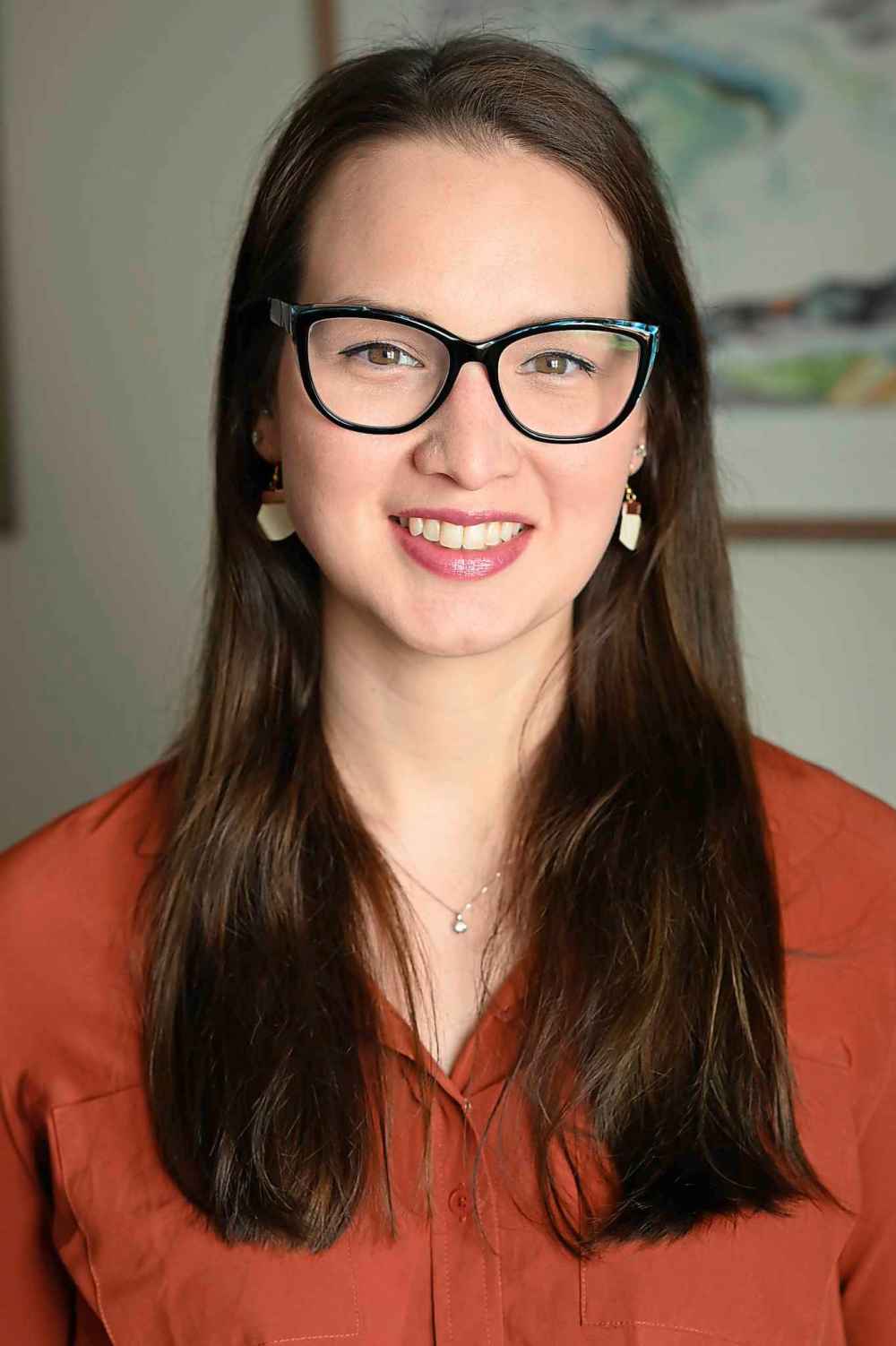
“It’s my way of Indigenizing the space and for the artifacts and belongings and art to hear Inuktitut. When you think about a lot of these things that have been extracted and disconnected from our land and our people and our language, some of these things have been in museums for hundreds of years. They haven’t heard our language in that long.
"So, to reconnect these inanimate objects with our language, to me, it’s a powerful thing for me to do. Sometimes, it’s the only thing I can do for these artifacts.”
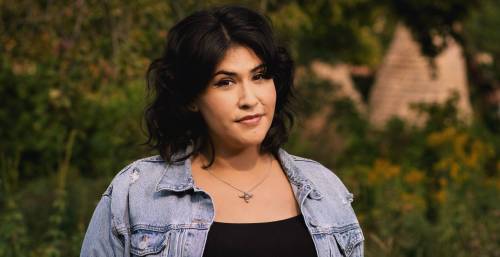
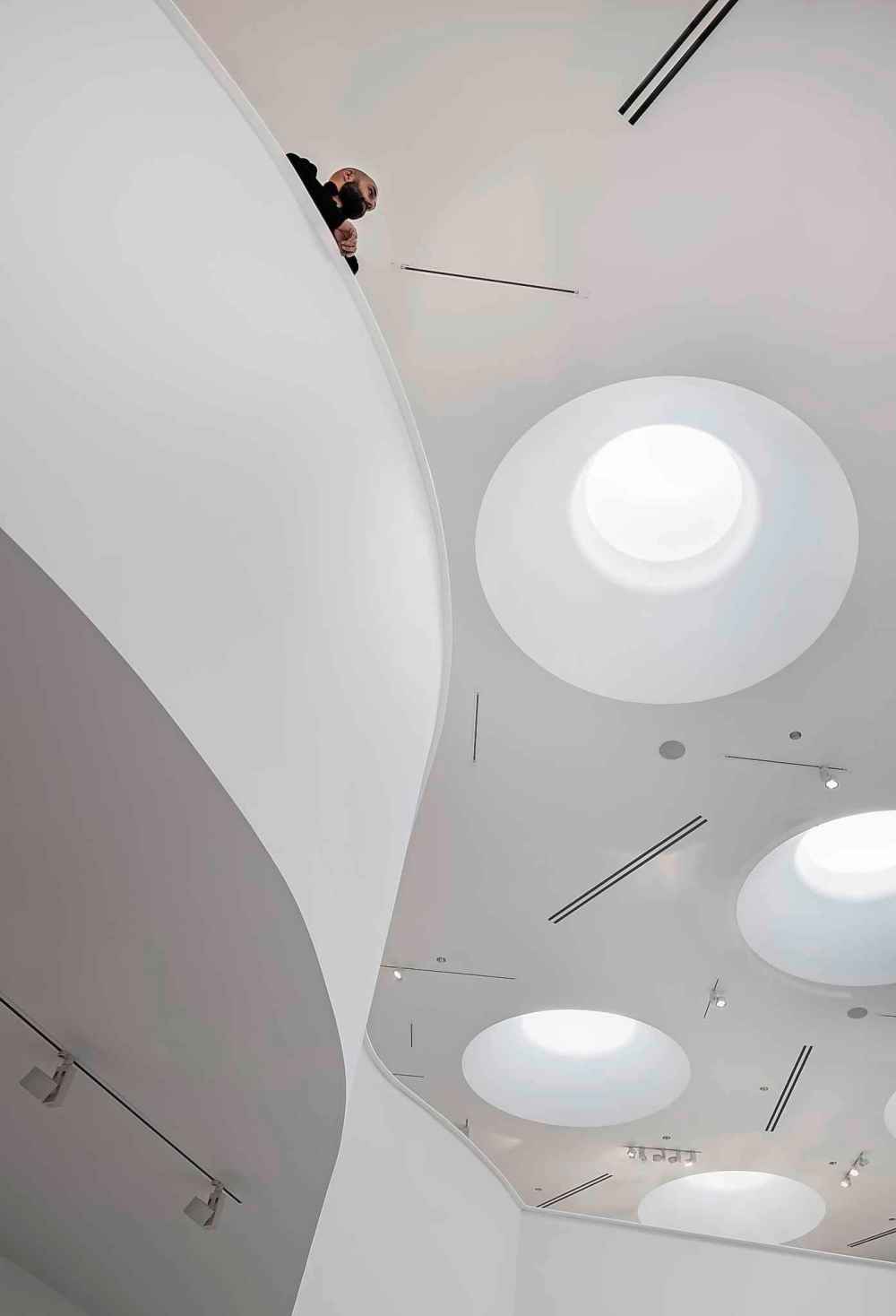
Zawadski is one of the Inuktitut language keepers asked to name Qaumajuq, formerly known as the Inuit Art Centre, at the Winnipeg Art Gallery. Inuktitut for “it is bright, it is lit,” Qaumajuq (kow-ma-yourk) is just one of the names given to the Inuit art centre and WAG buildings, as well as the spaces within them, by a circle of language keepers and elders.
“We always knew the Inuit Art Centre wouldn’t always be called the Inuit Art Centre, and that it would be given an Inuktitut name,” says Julia Lafreniere, head of Indigenous initiatives at the WAG as well as a member of the WAG Indigenous Advisory Circle.
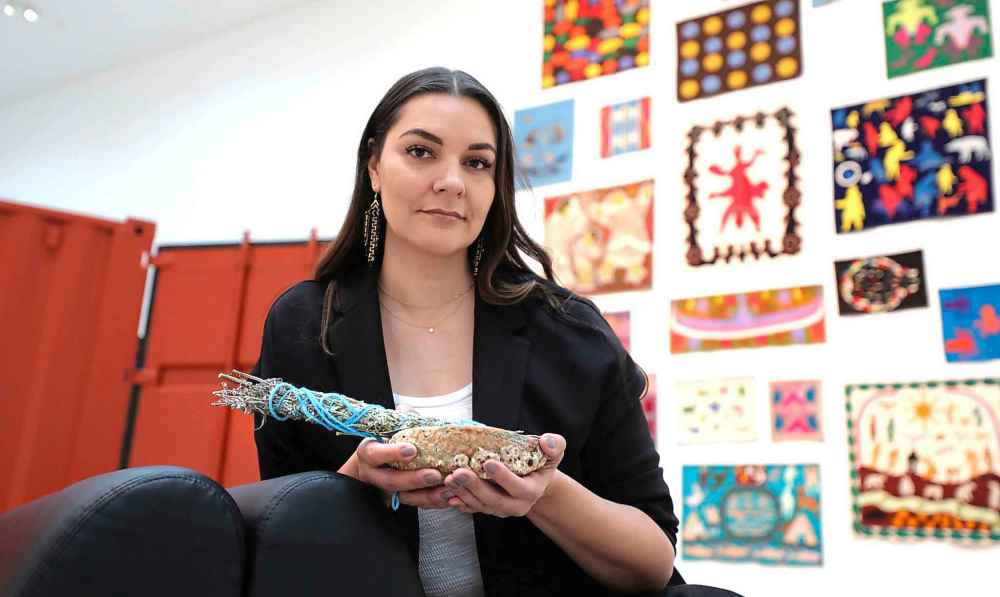
In August 2020, language keepers representing all four regions and dialects of Inuit Nunangat, the homeland of Inuit in Canada — Inuvialuit Settlement Region (northern Northwest Territories), Nunavut, Nunavik (northern Quebec) and Nunatsiavut (northern Labrador) — gathered virtually with language keepers from Indigenous nations in Manitoba.
“It’s always been a balance between honouring the Inuit culture but also honouring the Indigenous nations of the land that the WAG sits on,” Lafreniere says. Inuktitut, Anishinaabemowin (Ojibway), Nêhiyawêwin (Cree), Dakota, and Michif (Métis) will now have a more visible presence throughout the buildings. Spellings were provided by the language keepers based on their regional dialects.
What stood out to all of the language keepers and elders, Lafreniere says, was the natural light that floods the space — so unlike traditional art galleries and museums.
Theresie Tungilik, special adviser for the arts and traditional economy for the Government of Nunavut, is one of the Inuktitut language keepers who contributed to the naming. Light, Tungilik says, is important to her culture and is reflected in many artworks; many Inuit communities experience 24-hour darkness in the winter.
“When you have that long darkness, and the sun finally starts coming back, you really want to celebrate it,” Tungilik says via Zoom from her office in Rankin Inlet.
“Because now you know, you’re not always going to feel tired, you’re going to be more energized, this time is going to give you that wonderful feeling of feeling healthier and happier, and just feel-good energy. And so, to us Inuit, light is very important. Naming the Inuit art centre Qaumajuq was the perfect name for it.”
Tungilik was born in 1951 on the sea ice; her mother went into labour while travelling, so her father and uncle built an igloo so mother and baby would be protected from the elements. Tungilik spoke only Inuktitut until she was seven.
“It’s been my main mother language all my life,” she says.
“To be a language keeper is something I’m very proud to hold,” Tungilik says, pointing out that, prior to the grim advent of the Canadian residential school system, the languages of the North were strong.
“But many of us never really let go of our own language, and to keep it alive is a really vibrant feeling to have. And it really makes you connect to your own culture and the lifestyle you first began in the beginning.”
Within Qaumajuq, many of the building’s spaces now bear names that relate to light and sky.
The skylight-studded main Inuit gallery is appropriately called Qilak (qui-lack), which is Inuktitut for “sky.” Giizhig/Kisik (Gee-shig/Key-sick), the name of the mezzanine gallery means “sky, heaven, day” in Nêhiyawêwin/Michif/Anishinaabemowin.
The main floor corridor between the WAG and Qaumajuq is called Ohni Izanzan (OH-Nee ee-ZHAN-zhan), which refers to an “an everlasting light no matter what happens and how things may dim the light it is always there and will not go out, meaning the light of life, the light of our way of life/language, the world’s light,” in Dakota/Lakota.
“They wanted to name (the buildings and spaces) after the natural light in the space, but also the light that is Indigenous culture and Indigenous language,” Lafreniere says. “Though our cultures have been attempted to be extinguished and we’ve been colonized, there’s always a light of hope in our culture, and that’s brought forward in the Indigenous languages.”
“Though our cultures have been attempted to be extinguished and we’ve been colonized, there’s always a light of hope in our culture, and that’s brought forward in the Indigenous languages.”–Julia Lafreniere
The Indigenous naming initiative at the WAG is a response to both No. 14(i) in the Truth and Reconciliation Commission of Canada’s Calls to Action as well as Article 13 in the United Nations Declaration on the Rights of Indigenous Peoples, which both underline the importance of language preservation.
“The language taking up space in a colonial institution is really significant — and not just space, but significant space,” says Lafreniere, adding that she hopes other institutions take notice and do something similar.
“It has given us more ownership of the building,” Tungilik says. “Even though it’s not our possession, as a whole, it feels like it belongs to the Inuit and the Indigenous people of Canada. If it’s going to be significantly Inuit art in that building, it’s only right to have it in our language and for our language to also be seen and heard.”
Elder Mary Courchene is a residential school survivor who was born and raised on Sagkeeng First Nation. She is also an Anishinaabemowin language keeper who contributed to the naming.
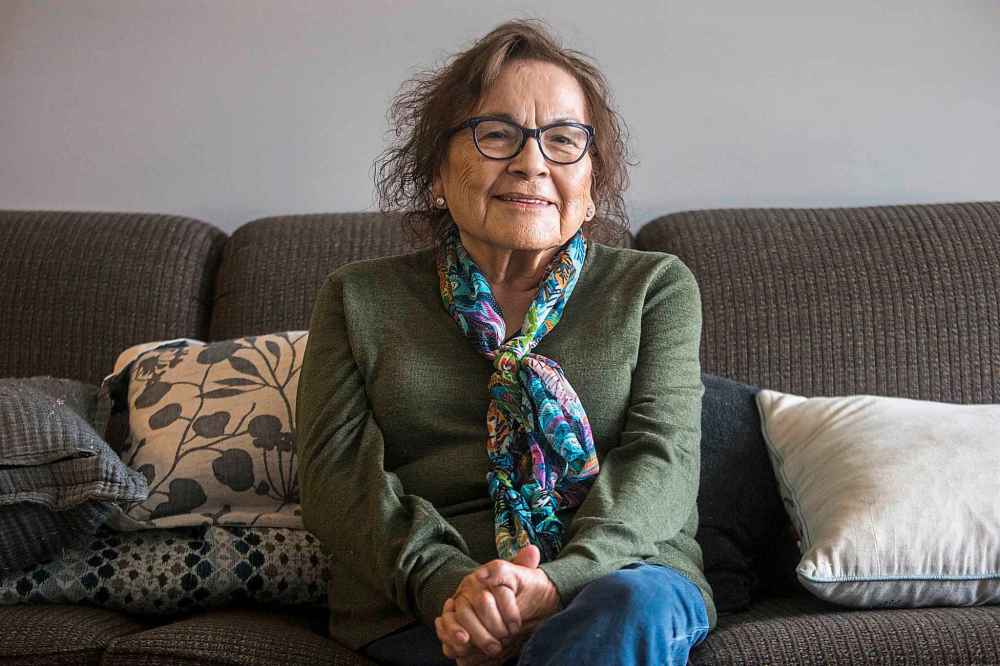
For a long time, Courchene’s relationship to her language — to her identity — was fractured by residential school.
“I hated who I was,” she says. “I thought my ancestors were ignorant and were primitive because that’s the history I learned.” Courchene has a vivid memory of her father welcoming her home from school in Anishinaabemowin, and her interrupting him, saying, “We don’t speak like that anymore.”
But it was her father who instilled in her the importance of language, of remembering who she was and where she came from — gifts she’s since passed along as in her career as an educator and, now, an elder-in-residence for Seven Oaks School Division. “I thank my dad every day,” she says.
When Courchene came to Winnipeg to attend the University of Manitoba in the 1970s, she avoided the WAG. “I thought it was for the elite,” she says. “So, of course, I never went there.”
When thinking about an Indigenous name for the Winnipeg Art Gallery, a colonial institution established over 100 years ago, Courchene wanted a name that represented the light of a new era, a name that made everyone feel welcome.
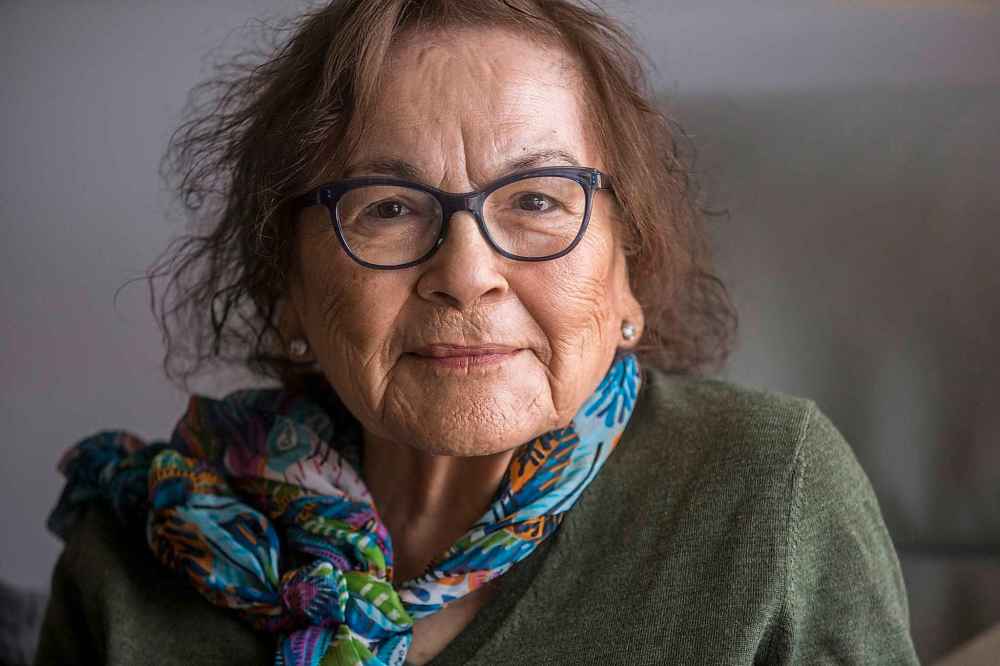
“When settlers first came to our country, we did not chase them away,” Courchene says. “We welcomed them. So, the art gallery is Biindigin Biwaasaeyaah (BEEN-deh-gen Bi-WAH-say-yah). Biindigin, which means ‘Come on in!,’ and Biwaasaeyaah, ‘the dawn of light is coming.’ And the light meaning our world, our worldview. Our worldview is reflected in the art, and everything. Art, to me, is our life. Life is art.”
“With Qaumajuq and the WAG moving forward with Indigenization and really making reconciliation a priority, Qaumajuq has sort of helped bring the WAG into the light,” Lafreniere says.
Indeed, the WAG is delivering on the commitment it evinced in 2017’s history-making Insurgence/Resurgence, the WAG’s largest-ever exhibition of contemporary Indigenous art, curated by Jaimie Isaac and Julie Nagam.
Zawadski remembers seeing artist Joi T. Arcand’s gold-foil Cree syllabics climbing up the WAG’s main staircase as part of that exhibit.
“That, for me, was such a powerful experience and affirmation that the WAG is doing so much to Indigenize the space,” she says.
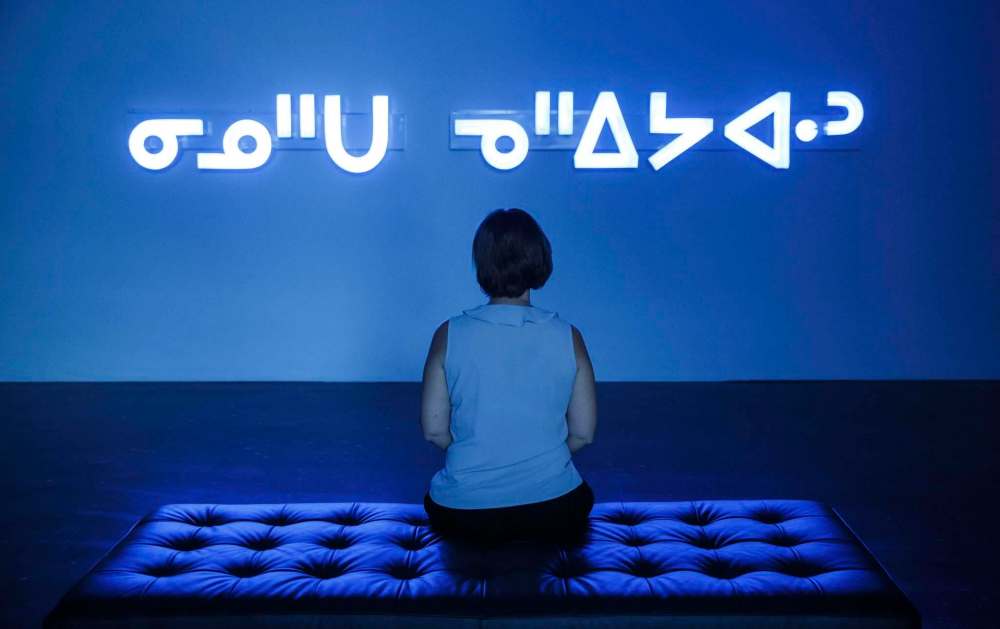
At 38, Zawadski is part of a vanguard of younger curators and artists — along with Isaac, Nagam, and many others — who are reaching across generations, looking back while moving forward. Zawadski is part of the curatorial team behind INUA, the inaugural exhibition at Qaumajuq. Inua means “spirit” or “life force” across many Arctic dialects, but it’s also an acronym for for Inuit Nunangat Ungammuaktut Atautikkut or “Inuit Moving Forward Together.”
It’s a title that reflects the vision for Qaumajuq, a place where culture, art and language lives in the light, a light that will kept burning by future generations.
Fittingly, the ground-floor classroom and research space at Qaumajuq is called Pituaq (pit-two-aak). Pituaq is the foundation of the qulliq, the traditional oil lamp, or the stand on which the qulliq is lit; the heart of the home and also, a constellation in the sky. The entrance hall, meanwhile, is called Ilavut (eelah-voot), which is Inuktitut for “our relatives.”
“This building has to belong to all ages,” Tungilik says. “Not just the past, not just the well-known, but also the emerging and the learning. And people who have interest in our culture — they can come to this place and learn all about that.
"What Qaumajuq can offer is continuous education about Inuit way of life, whether it was long ago or how we survive today, and what we hope the future will bring to us.
“And it will always be moving, like the Northern Lights. Like the Northern Lights, it will never stop or be still.”
jen.zoratti@freepress.mb.ca Twitter: @JenZoratti

Jen Zoratti is a columnist and feature writer working in the Arts & Life department, as well as the author of the weekly newsletter NEXT. A National Newspaper Award finalist for arts and entertainment writing, Jen is a graduate of the Creative Communications program at RRC Polytech and was a music writer before joining the Free Press in 2013. Read more about Jen.
Every piece of reporting Jen produces is reviewed by an editing team before it is posted online or published in print – part of the Free Press‘s tradition, since 1872, of producing reliable independent journalism. Read more about Free Press’s history and mandate, and learn how our newsroom operates.
Our newsroom depends on a growing audience of readers to power our journalism. If you are not a paid reader, please consider becoming a subscriber.
Our newsroom depends on its audience of readers to power our journalism. Thank you for your support.


History
Updated on Friday, March 19, 2021 4:59 PM CDT: Corrects Julia Lafreniere's title.
Updated on Monday, May 31, 2021 10:46 AM CDT: Corrects spelling of Jaimie Isaac’s name.