Tregebov captures ordinary characters under Communism

Advertisement

Advertise with us

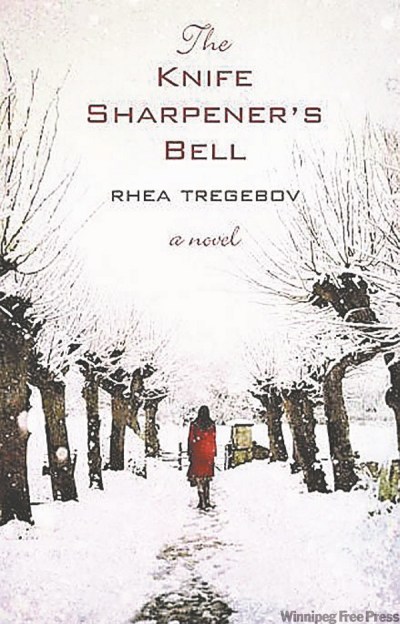
The Knife Sharpener's Bell By Rhea Tregebov Coteau Books, 324 pages, $21

Read this article for free:


or

Already have an account? Log in here »

To continue reading, please subscribe:

Subscribe and receive a limited-edition Free Press branded hat or tote.

Digital Subscription

One year of digital access for only $205*

  • Enjoy unlimited reading on winnipegfreepress.com
  • Read the E-Edition, our digital replica newspaper
  • Access News Break, our award-winning app
  • Play interactive puzzles

*First annual payment billed as $205.00 + GST for one year. This annual subscription will automatically renew at $233.00 + GST every 52 weeks (10% off the regular annual price of $259.35). Offer available to new and qualified returning subscribers only. Cancel any time.

To continue reading, please subscribe:

Add Free Press access to your Brandon Sun subscription for only an additional

$1 for the first 4 weeks*

  • Enjoy unlimited reading on winnipegfreepress.com
  • Read the E-Edition, our digital replica newspaper
  • Access News Break, our award-winning app
  • Play interactive puzzles
Start now

*Your next Brandon Sun subscription payment will increase by $1.00 and you will be charged $17.95 plus GST for four weeks. After four weeks, your payment will increase to $24.95 plus GST every four weeks.

Hey there, time traveller!
This article was published 20/09/2009 (6173 days ago), so information in it may no longer be current.

The Knife Sharpener’s Bell
By Rhea Tregebov
Coteau Books, 324 pages, $21

During the Great Depression, former Winnipeg author Rhea Tregebov’s left-wing Jewish grandparents tried to leave this city to repatriate to the Soviet Union, but the Communist government refused to accept them.

In her riveting debut novel, Tregebov imagines what might have occurred had the opposite been true. Set in Winnipeg and Stalinist Russia, the book recounts the story of a Jewish woman faced with displacement, loss and the clash of differing political ideologies.

Now living and teaching in Vancouver, Tregebov has published six volumes of poetry and five children’s picture books.

Her story begins in the North End in 1932 when the heroine, Annette Gershon, is nine. She is a bright, anxious child who fears almost everything — even the sound of the knife sharpener’s bell whenever it is heard in their neighbourhood.

Her parents are Bolshevik sympathizers who immigrated years earlier from Czarist Russia. Times are tough during the Depression, so the family decides to seek greener pastures in Odessa.

Annette despises her adopted country, but her parents are euphoric; not only have their jobs improved, but under the new government, there is legislation banning anti-Semitism.

A few years later, Stalin rises to power, and their optimism fizzles. Yet her mother remains steadfast in her loyalty to her homeland.

Annette excels at school, and ends up studying architecture. When a Winnipeg relative visits Odessa, he offers to sponsor her to immigrate to Canada. As a result, she must make some important decisions.

Written in supple, evocative prose, the first person narrative unfolds as a 12-chapter flashback of Annette’s recollections from 1932 to 1954.

The first 68 pages chronicle her Winnipeg childhood and events precipitating her parents’ decision. The remainder of the novel takes place in the Soviet Union, focusing on Annette’s coming of age and love life. As the novel progresses, she eventually casts aside her fears and develops inner courage.

Within the lengthy first chapter, Tregebov recounts many historical details associated with Winnipeg in the 1930s with references to Aberdeen School, Selkirk Avenue and numerous examples of the flagging economy.

This novel will remind some of Fugitive Pieces, the 1996 CanLit classic by Toronto poet Anne Michaels. Both books use poetic language and deal with the impact of a European past on Canadian Jews.

However, the historical events in The Knife Sharpener’s Bell play a stronger, more direct role in the plot, and the narrative tone is much less effusive.

One of Tregebov’s strengths is her ability to create vivid images. In the following passage, Annette spends time outdoors prior to making a decision:

"I’m beside the creek in Gorky Park, sitting on the bank, the ground still breathing damp from yesterday’s rain. Tentative spikes of forget-me-nots are pushing through the earth. Soon all the undergrowth here will be starred with their flowers a blue haze, as though the earth were full of possibilities."

By far, Tregebov’s greatest feat is in her subtle portrayal of ordinary characters enduring life under Communism. At first, a sense of idealism prevails; but poverty, injustice and discrimination gradually give way to ambivalence, followed by bitterness and disillusionment.

Tregebov should be commended for successfully making the leap from poet to novelist. The Knife Sharpener’s Bell took a decade to complete. Here’s hoping readers won’t have to wait so long for her next novel.


Bev Sandell Greenberg is a Winnipeg writer and teacher.
Report Error Submit a Tip

More Stories

Safety upgrades at Whiteshell park to begin soon

Free Press staff 2 minute read Preview

Safety upgrades at Whiteshell park to begin soon

Free Press staff 2 minute read 7:06 PM CDT

Construction on safety improvements at a site where two boys drowned in Whiteshell Provincial Park will soon get underway.

The improvements, which include new barriers and fenced lookouts, signage and a new portage for kayakers and canoeists at Sturgeon Falls, was promised by the province after the deaths of brothers Maximo Au Ramirez, 10, and Aaron Au Ramirez, 13, who went missing in Nutimik Lake on July 18.

The province said in a news release Friday the upgrades would begin shortly.

“We have a responsibility to do everything we can to make this site safer and to prevent another family from going through this kind of heartbreak,” said Environment Minister Mike Moyes in the release. “These measures will make the Sturgeon Falls area safer and ensure that Manitobans and visitors are protected when the area reopens.”

Read
7:06 PM CDT

Moving rail lines outside city would make Winnipeg ‘major transportation hub’

Carol Sanders 6 minute read Preview

Moving rail lines outside city would make Winnipeg ‘major transportation hub’

Carol Sanders 6 minute read Wednesday, Aug. 12, 2026

After decades of calls to move rail traffic to the outskirts of Winnipeg, a plan that would benefit residents, railways and taxpayers is now on track, says the former Winnipegger leading the way.

A rail line bypass south of the city, using Crown-owned land and the Manitoba Hydro corridor, would take 20 years to complete, remove 120 railway crossings that are a safety risk and free up about 250 acres of Winnipeg land over time for development, Lloyd Axworthy said Wednesday.

“The visions that we have have to be implemented,” Axworthy said at a news conference announcing the launch of a 90-day feasibility study to move freight rail traffic out of Winnipeg’s urban core along Manitoba Hydro’s southern transmission corridor, connecting east to west along the Perimeter Highway.

The former federal transport minister and Manitoba MP was tasked by Premier Wab Kinew in October 2024 to lead a two-year rail relocation feasibility study.

Read
Wednesday, Aug. 12, 2026

Coalition dismayed after U of M decides not to establish master’s in speech-language pathology

Maggie Macintosh 5 minute read Preview

Coalition dismayed after U of M decides not to establish master’s in speech-language pathology

Maggie Macintosh 5 minute read 4:46 PM CDT

A new coalition representing students who stutter, speak with a lisp and struggle with other speech challenges is decrying the University of Manitoba’s decision to shelve plans to train in-demand clinicians.

U of M recently scrapped a proposal to establish a master of speech-language pathology — a program that exists only outside the province.

“It’s hard to provide the support that students deserve and support teachers and school teams and families with our large caseloads,” said Allison Sexton, a speech-language pathologist who works in the public education sector.

Sexton is one of the organizers behind a campaign that is ramping up ahead of back-to-school season to raise awareness about a chronic shortage of experts in her field and related wait lists.

Read
4:46 PM CDT

All eyes on Brachetto ahead of Downs’ yearling sale

GEORGE WILLIAMS 5 minute read Preview

All eyes on Brachetto ahead of Downs’ yearling sale

GEORGE WILLIAMS 5 minute read 7:38 PM CDT

While Brachetto is at Woodbine attempting to become the first Manitoba-bred horse to win the King’s Plate on Saturday, a yearling colt out of his winning half-sister Aramon will be busy preparing to strut his stuff in the annual Manitoba CTHS Yearling Sale on Thursday.

And whether his famous relative wins or loses the 167th running of the $1-million event, he is sure to attract much attention.

Owned and bred by Manitoba veterinarian Dr. Ross McKague and wife Brenda, Brachetto became one of three Manitoba-breds to win a graded stakes when he claimed the Marine Stakes (G3) at Woodbine on June 27. The others were million-dollar earner and 2018 Canadian Champion Older Mare Escape Clause, bred by Cam Ziprick and Arnason Farms, and Misty Drone, bred by Phil Kives, who won the 1986 Comely Stakes at Aqueduct in New York.

Named Catawba, Brachetto’s relative is Hip no.7 in the yearling sale, and joins 47 others that will be offered at 3:30 on Thursday at the sales pavilion in the Assiniboia Downs backstretch. There will be others attracting attention too, including Hip #12, a half-brother to Escape Clause by Speculating; Hip #18, who is out of multiple champion mare Hidden Grace, and also sired by Speculating; and Hip #34, a gelding named No Bro by top Manitoba sire Nonios out of local overnight stakes winner Purrsistent.

Read
7:38 PM CDT

Tregebov captures ordinary characters under Communism

Reviewed by Bev Sandell Greenberg 3 minute read Preview

Tregebov captures ordinary characters under Communism

Reviewed by Bev Sandell Greenberg 3 minute read Sunday, Sep. 20, 2009

During the Great Depression, former Winnipeg author Rhea Tregebov's left-wing Jewish grandparents tried to leave this city to repatriate to the Soviet Union, but the Communist government refused to accept them.

Read
Sunday, Sep. 20, 2009

Proposed Transcona development — which could add 20,000 people — gets thumbs down from residents

Joyanne Pursaga 5 minute read Preview

Proposed Transcona development — which could add 20,000 people — gets thumbs down from residents

Joyanne Pursaga 5 minute read 6:15 PM CDT

Dozens of Winnipeggers fear plans to make way for up to 20,000 more people to live in south Transcona would dramatically alter their neighbourhood and tie hefty fees for new services to their property titles.

If city council adopts the proposed South Transcona secondary plan, all future development applications would need to conform to its goals. The affected area is located south of Dugald Road, north of St. Boniface Road, east of Plessis Road and west of Murdock Road.

Homeowner Virginia Page Jähne fears the plan could add a massive tab to the title of her 4.3-acre property to cover services required for the development.

“My main concern is that they are wanting to put $1.4 million onto my title to pay for this. Now, they say that I will not have to pay it unless I subdivide. But if a person comes by and wants to buy from me … and they see that $1.4 million … what’s the first thing (they’re) going to do?” said Page Jähne, in an interview.

Read
6:15 PM CDT