Sinclair Ross letters read like a tragic novel

Advertisement

Advertise with us

Collecting Stamps Would Have Been More Fun

Read this article for free:


or

Already have an account? Log in here »

To continue reading, please subscribe:

Subscribe and receive a limited-edition Free Press branded hat or tote.

Digital Subscription

One year of digital access for only $205*

  • Enjoy unlimited reading on winnipegfreepress.com
  • Read the E-Edition, our digital replica newspaper
  • Access News Break, our award-winning app
  • Play interactive puzzles

*First annual payment billed as $205.00 + GST for one year. This annual subscription will automatically renew at $233.00 + GST every 52 weeks (10% off the regular annual price of $259.35). Offer available to new and qualified returning subscribers only. Cancel any time.

To continue reading, please subscribe:

Add Free Press access to your Brandon Sun subscription for only an additional

$1 for the first 4 weeks*

  • Enjoy unlimited reading on winnipegfreepress.com
  • Read the E-Edition, our digital replica newspaper
  • Access News Break, our award-winning app
  • Play interactive puzzles
Start now

*Your next Brandon Sun subscription payment will increase by $1.00 and you will be charged $17.95 plus GST for four weeks. After four weeks, your payment will increase to $24.95 plus GST every four weeks.

Opinion

Hey there, time traveller!
This article was published 18/09/2010 (5845 days ago), so information in it may no longer be current.

Collecting Stamps Would Have Been More Fun

Canadian Publishing and the Correspondence of Sinclair Ross, 1933-1986

Edited by Jordan and David Stouck

University of Alberta Press, 303 pages, $35

MANY books of letters are scattershot, unfocused affairs. But these letters of Canlit pioneer Sinclair Ross are compelling and laid out like a story.

As selected, arranged and annotated by B.C. academics (and daughter and father) Jordan and David Stouck, they build to a jarring and poignant climax, so that the collection reads like a novel. A tragic novel.

The Saskatchewan-born Ross (who lived in Winnipeg for close to a decade) led a difficult writing life. Generally unproductive and arguably uncommitted, he published only six books during his career (four novels and two short-story collections).

Looking back at his literary life, Ross remarks that “Stamps or butterflies would have been more fun.”

The initial chilly reception of his first novel, As for Me and My House (1941), seems to have crushed his confidence. Although the book was later recognized as a Canadian classic and sold well after its republication, Ross never regained confidence in his work.

As more successful writers, such as Margaret Atwood, Margaret Laurence and Guy Vanderhaeghe praise Ross in their letters, Ross responds with professions of failure. One of the most positive things he says about himself in these letters: “At least I can give myself an A for effort.”

The irony, the letters reveal, is that this isn’t so. Consistently, in his correspondence to publishers, Ross shoots himself in the foot. It’s fascinating yet sad, almost pathetic.

When major publishers write to him out of the blue, begging for him to write new books they can publish, Ross responds with notes saying that he’s working on a book but it’s not very good. When he finally sends the manuscripts, he includes cover letters saying things like “there is the likelihood that you wouldn’t touch it with a ten-foot pole.”

It’s difficult to blame his publishers for losing their enthusiasm. But we can’t put all the blame on Ross and his lack of confidence either.

As Stouck writes in his introduction, Ross had many difficulties as a result of his subject matter. “Editors wanted stories with strong plot whereas Ross’s stories, as he knew himself, were strongest in terms of mood, setting, and character.”

Indeed, describing his own work, Ross writes that his stories “are pretty grim, and abound with horses, wistful small boys and poverty-stricken farmers.” An oversimplification — Ross produced some of Canada’s best stories — but an apt summary.

As Ross’s reputation grows, he flirts with success but never feels it. His work is optioned for films that are not made. This is normal, but these filmmakers seem especially bizarre — apparently, in a script for his 1958 novel, The Well, the screenwriter included “a love scene in which the principals discuss Russian scientists and rabbits on the moon.”

The great flaw of the book, both as a scholarly resource and in terms of the story it tells, is that the early letters between Ross’s short-story publisher (Queen’s Quarterly) and the original publishers of As for Me and My House (Reynal and Hitchcock) are missing. Since the letters don’t survive, the editors can’t be faulted, but it’s a shame nonetheless.

Winnipeg writer and literary scholar Jonathan Ball’s poetry collection Clockfire has just been published by Coach House Books.

 

Report Error Submit a Tip

More Stories

Manitoba abandoning spring, fall clock changes

Carol Sanders 8 minute read Preview

Manitoba abandoning spring, fall clock changes

Carol Sanders 8 minute read Updated: Yesterday at 8:48 AM CDT

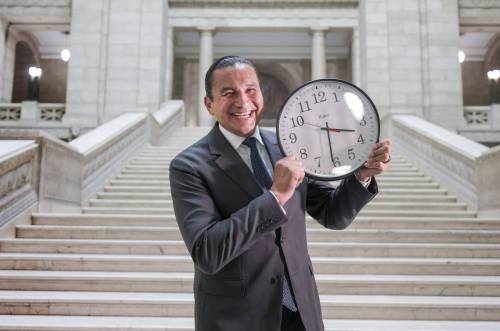
Time’s up for the time change in Manitoba.

Manitobans won’t be setting their clocks back an hour in November. The province has decided to permanently stay on daylight time after surveying residents on the twice annual clock adjustment.

“We heard from Manitobans loud and clear — no more changing the clocks in Manitoba,” Premier Wab Kinew said in a news release Thursday.

Most of the 72,000 votes submitted in an online EngageMB survey — 92 per cent — said they would like to see the practice end. The survey asked if they preferred earlier sunrises in winter with standard time or the later sunsets in summer with daylight time. More than half of survey participants (58 per cent) indicated a preference to stay on permanent daylight time; 34 per cent voted to eliminate the time change but stay on standard time.

Read
Updated: Yesterday at 8:48 AM CDT

Klein has burned bridges with PM, Gillingham says

Joyanne Pursaga 3 minute read Preview

Klein has burned bridges with PM, Gillingham says

Joyanne Pursaga 3 minute read Yesterday at 5:51 PM CDT

One mayoral candidate accused another of writing a column so critical it could compromise his ability to work with the federal government.

Read
Yesterday at 5:51 PM CDT

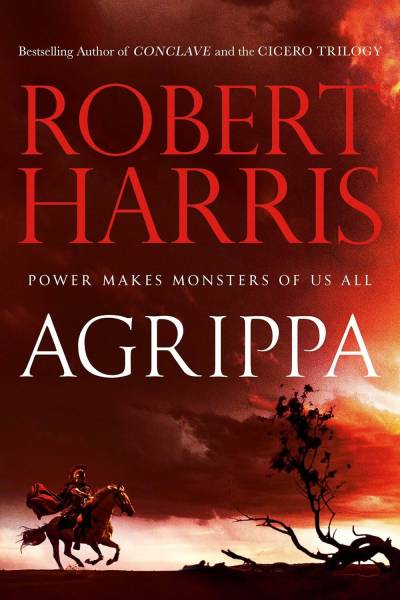
Give-and-take relationship of Roman leaders takes centre stage in Harris’s historical fiction

Reviewed by Kathryne Cardwell 4 minute read Preview

Give-and-take relationship of Roman leaders takes centre stage in Harris’s historical fiction

Reviewed by Kathryne Cardwell 4 minute read 2:01 AM CDT

British novelist Robert Harris’s latest work is a reflection on tyranny, corruption and betrayal among all-powerful political leaders.

You might be forgiven for thinking it’s a contemporary thriller — it’s actually historical fiction set in ancient Rome.

A former BBC journalist, Harris debuted as a novelist in 1992 with Fatherland, an alternative history where Nazi Germany won the Second World War.

Since then, the prolific author has become best-known for his works of historical fiction, especially his ancient Rome trilogy released from 2006-2015 and the novel Conclave, which was published in 2016 and was made into the film of the same name in 2024.

Read
2:01 AM CDT

Hellebuyck standoff caused by… Nathan MacKinnon?

Mike McIntyre 6 minute read Preview

Hellebuyck standoff caused by… Nathan MacKinnon?

Mike McIntyre 6 minute read Yesterday at 6:34 PM CDT

Looking for someone to blame in the Connor Hellebuyck fiasco and cast as public enemy No. 1? How about long-time Winnipeg Jets nemesis Nathan MacKinnon?

Allow us to explain as we fire up the time machine and head back to February in Italy.

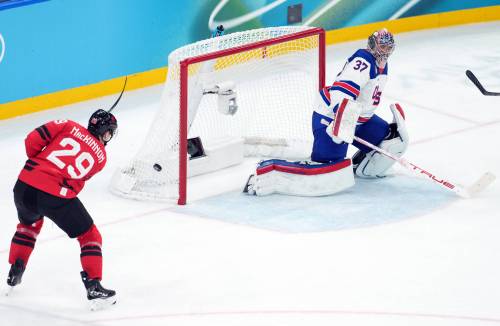
Oh, what could have been if MacKinnon had been able to score on what appeared to be an open net late in the third period of the men’s gold medal game with Hellebuyck down and seemingly out of position.

Instead, the star forward fired wide, keeping the score deadlocked at 1-1 as the clock ticked down on regulation.

Read
Yesterday at 6:34 PM CDT

Former Bombers linebacker Gauthier enjoying career as electrician

Taylor Allen 6 minute read Preview

Former Bombers linebacker Gauthier enjoying career as electrician

Taylor Allen 6 minute read Yesterday at 12:44 PM CDT

Most professional football players don’t ride off into the sunset on their own terms.

Shayne Gauthier was well aware of that, but it didn’t make it sting any less when the Winnipeg Blue Bombers informed the veteran linebacker that they weren’t bringing him back for 2026.

“I was really hoping to play one more (season) because it would have been my 10th season, so, I’d say it didn’t really end the way I wanted,” Gauthier recently told the Free Press.

“It left a little sour taste in my mouth, but that’s part of pro sports. If everybody got the ending that they wanted, then it wouldn’t really work.”

Read
Yesterday at 12:44 PM CDT

Not falling back means time loop remains unclosed

Jen Zoratti 4 minute read 2:01 AM CDT

I demand restitution. Where’s my hour?

In the traditional fall-back, spring-forward time change set up — you know, ol’ trusty that’s been effect for lo these 63 years — we lost an hour in the spring that we got back in the fall.

That was the social contract: you commit to feeling like you’re on cold medication for a week in March because you know a glorious extra hour of sleep will be returned to you in November. (Unless, of course, you have little kids, but look: we all make our choices.)

Well, that transaction, flawed as it was, isn’t happening this year. That hour you sacrificed to the sun gods in the spring? Gone. Not coming back. We’ve sprung forward and we shan’t be falling back — not in November, and (possibly) not ever. The scale shall remain unbalanced and the loop shall remain unclosed as Manitoba has adopted permanent daylight time.