Banality of evil revealed in feeble jokes
Advertisement
Read this article for free:
or
Already have an account? Log in here »
To continue reading, please subscribe:

Digital Subscription
One year of digital access for only $205*
- Enjoy unlimited reading on winnipegfreepress.com
- Read the E-Edition, our digital replica newspaper
- Access News Break, our award-winning app
- Play interactive puzzles
*First annual payment billed as $205.00 + GST for one year. This annual subscription will automatically renew at $233.00 + GST every 52 weeks (10% off the regular annual price of $259.35). Offer available to new and qualified returning subscribers only. Cancel any time.
To continue reading, please subscribe:
Add Free Press access to your Brandon Sun subscription for only an additional
$1 for the first 4 weeks*
- Enjoy unlimited reading on winnipegfreepress.com
- Read the E-Edition, our digital replica newspaper
- Access News Break, our award-winning app
- Play interactive puzzles
*Your next Brandon Sun subscription payment will increase by $1.00 and you will be charged $17.95 plus GST for four weeks. After four weeks, your payment will increase to $24.95 plus GST every four weeks.
Read unlimited articles for free today:
or
Already have an account? Log in here »
Hey there, time traveller!
This article was published 21/05/2011 (5600 days ago), so information in it may no longer be current.
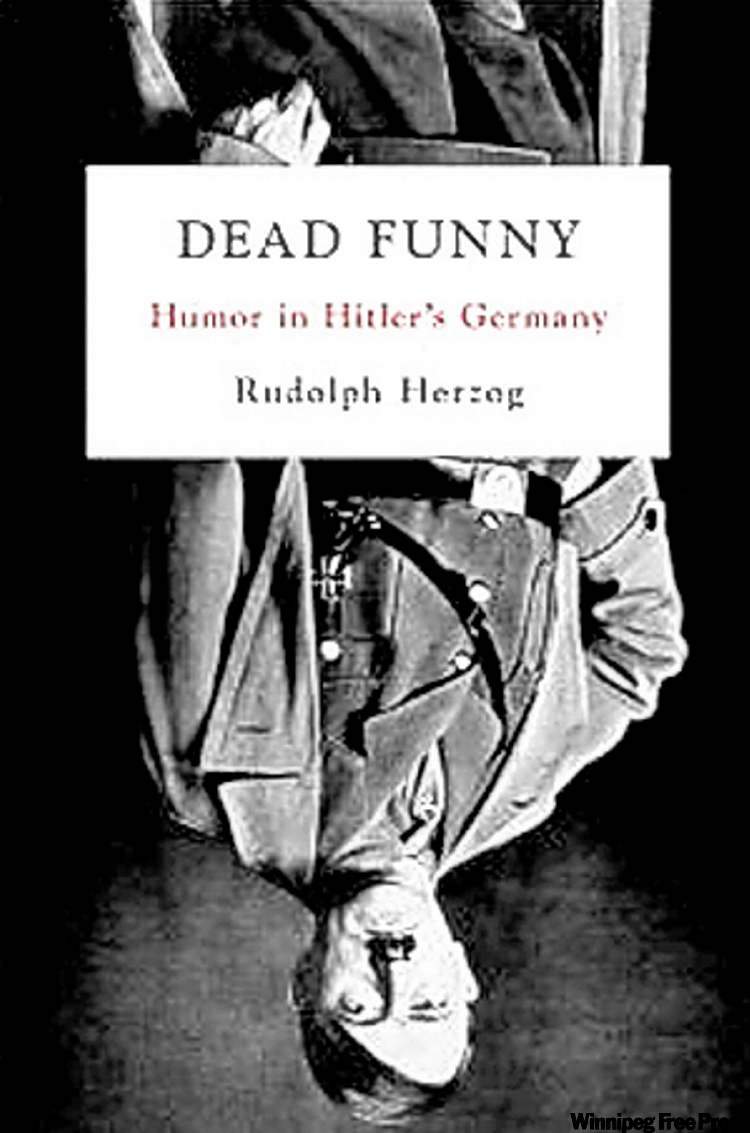
Dead Funny
Humor in Hitler’s Germany
By Rudolph Herzog
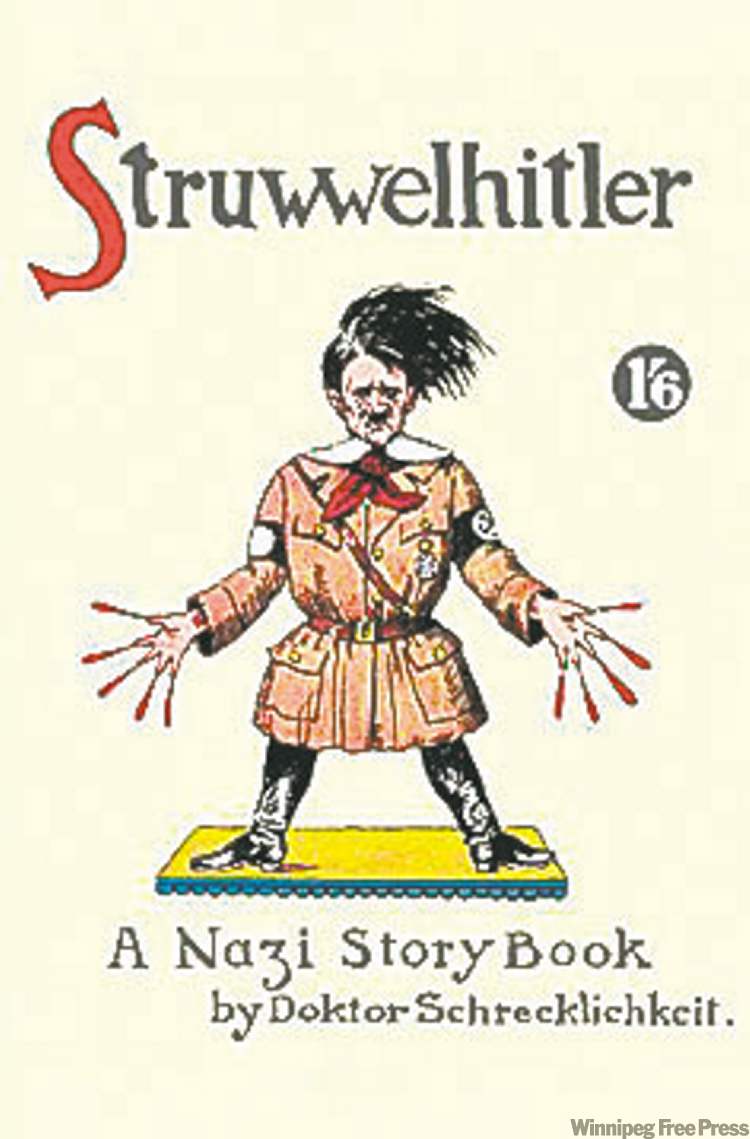
256 pages, Melville House, $30
The subtitle of this book is worthy of a chuckle all in itself. What could be funny about Hitler’s Germany and the genocide that took place there?
You might want to ask that question of the producers of Hogan’s Heroes, the 1960s sitcom that found life in a Second World War German prison camp to be nothing but a barrel of laughs, but don’t ask it of German filmmaker and author Rudolph Herzog.
He knows that people can find something funny even in the most horrible of situations, and this book abounds in jokes. Some of them are told by the Nazis themselves.
But this book is not meant to be funny. Hogan’s Heroes was a bad joke; this book is a serious correction of popular history.
One of the Nazi jokes that Herzog includes in this book is aimed at two of the Nazis’ most hated enemies, the Communists and the Jews, whom they commonly lumped together:
“Trotsky, Lenin and Litvinov (the Soviet foreign minister) are walking through a small Russian town, and the children on the street shout, ‘We know who you are, we know who you are.’ Trotsky turns proudly to his companions and says, ‘You see how famous we are? Even kids recognize us.’ Whereupon the children run away shouting, ‘You’re Jews, you’re Jews.'”
That’s not a particularly good joke — in fact, the term “Nazi joke” is probably an oxymoron, so it is just as well that Herzog doesn’t include a lot of them here.
He is far more interested in bourgeois jokes about the Nazis and what they reveal about Germany and Germans during the Third Reich. It is not a pretty picture and there is not much funny about it.
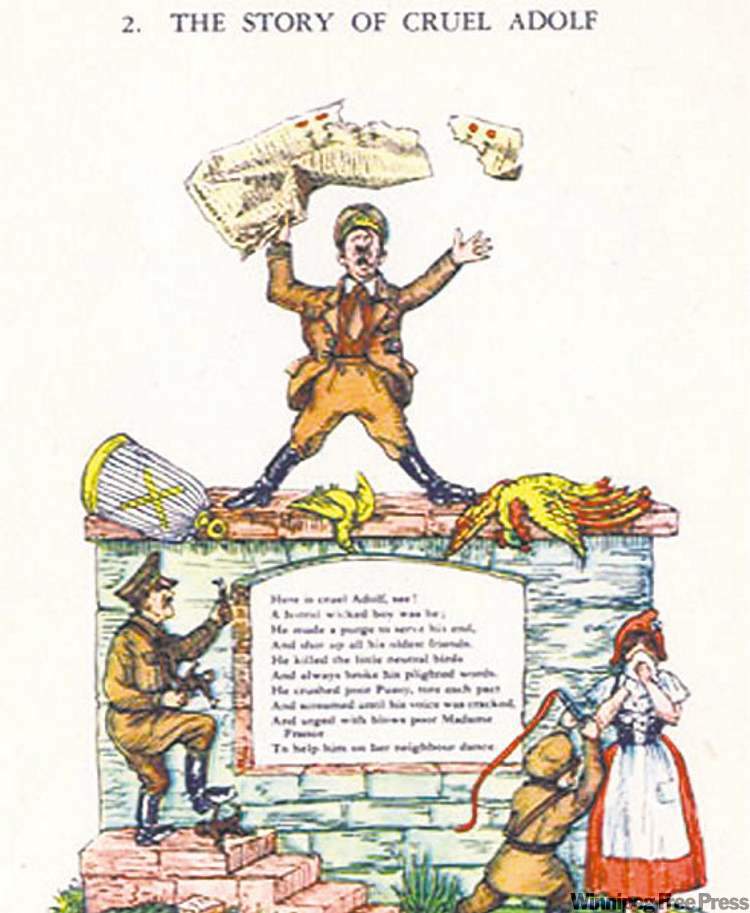
In any case, being funny is not his purpose. Herzog is first and foremost a filmmaker (though no apparent relation to the famous German director Werner Herzog). He made a documentary several years ago called Laughing with Hitler.
It was a huge hit in Germany and was also popular in England. Unfortunately, both the Germans and the English — and how ironic is this — missed the point.
Herzog had set out to show how the humour in Hitler’s Germany made the Fuhrer’s contemporaries accomplices in his atrocities, not innocent of them or incomplicit in them as postwar Germans have always tried to claim that they were:
“Long after the end of (the Second) World War and the demise of the Third Reich, a generation of Germans kept insisting that they knew nothing of the Nazis’ crimes. But the jokes popular in the early years when the Nazi regime was still consolidating its power suggest that such claims were untrue, even from the beginning of Hitler’s rule.”
If Herzog did not quite make the point in his film, he certainly makes it in this book. It is an extraordinary effort that reveals how the Holocaust worked, not just in the concentration camps like Auschwitz, but in the cities and towns and villages in Germany.
As one joke has it, a cable comes to Berlin from a small town: “Please send us some Jews. Otherwise we will not be able to meet our quota.”
The banality of evil, perhaps, is most tellingly revealed in the feebleness of its jokes. As Herzog writes: “Most of Hitler’s henchmen were not demons. They were overly obedient petty bourgeois who had mutated into murderers.”
In fact, they were much like we might be if our circumstances were different.
There is, however, one joke here that gives us hope for ourselves:

“Hitler and his chauffeur are driving through the country when there’s a crash. They have run over a chicken. ‘I’ll tell the farmer. I’m the Fuhrer. He’ll understand,’ Hitler says.
“Two minutes later, Hitler comes up rubbing his behind from where the farmer kicked him in the ass. The two men drive on, and a short time later there’s another crash. This time they’ve run over a pig. Hitler tells his chauffeur, you go in this time.
“The chauffeur obeys, but it’s an hour before he comes out of the farmer’s house, and when he does he’s drunk and is carrying a basket full of sausages and other gifts.
Hitler can’t believe his eyes. ‘What did you tell the farmer?” he asks. The chauffeur says, ‘Nothing special. I just said Heil Hitler! The swine is dead.’ “
Tom Oleson is a member of the Free Press editorial board.