Retail recounting fails to make sale
Advertisement
Read this article for free:
or
Already have an account? Log in here »
To continue reading, please subscribe:

Digital Subscription
One year of digital access for only $205*
- Enjoy unlimited reading on winnipegfreepress.com
- Read the E-Edition, our digital replica newspaper
- Access News Break, our award-winning app
- Play interactive puzzles
*First annual payment billed as $205.00 + GST for one year. This annual subscription will automatically renew at $233.00 + GST every 52 weeks (10% off the regular annual price of $259.35). Offer available to new and qualified returning subscribers only. Cancel any time.
To continue reading, please subscribe:
Add Free Press access to your Brandon Sun subscription for only an additional
$1 for the first 4 weeks*
- Enjoy unlimited reading on winnipegfreepress.com
- Read the E-Edition, our digital replica newspaper
- Access News Break, our award-winning app
- Play interactive puzzles
*Your next Brandon Sun subscription payment will increase by $1.00 and you will be charged $17.95 plus GST for four weeks. After four weeks, your payment will increase to $24.95 plus GST every four weeks.
Read unlimited articles for free today:
or
Already have an account? Log in here »
Hey there, time traveller!
This article was published 25/06/2011 (5579 days ago), so information in it may no longer be current.
Malled
My Unintentional Career in Retail
By Caitlin Kelly
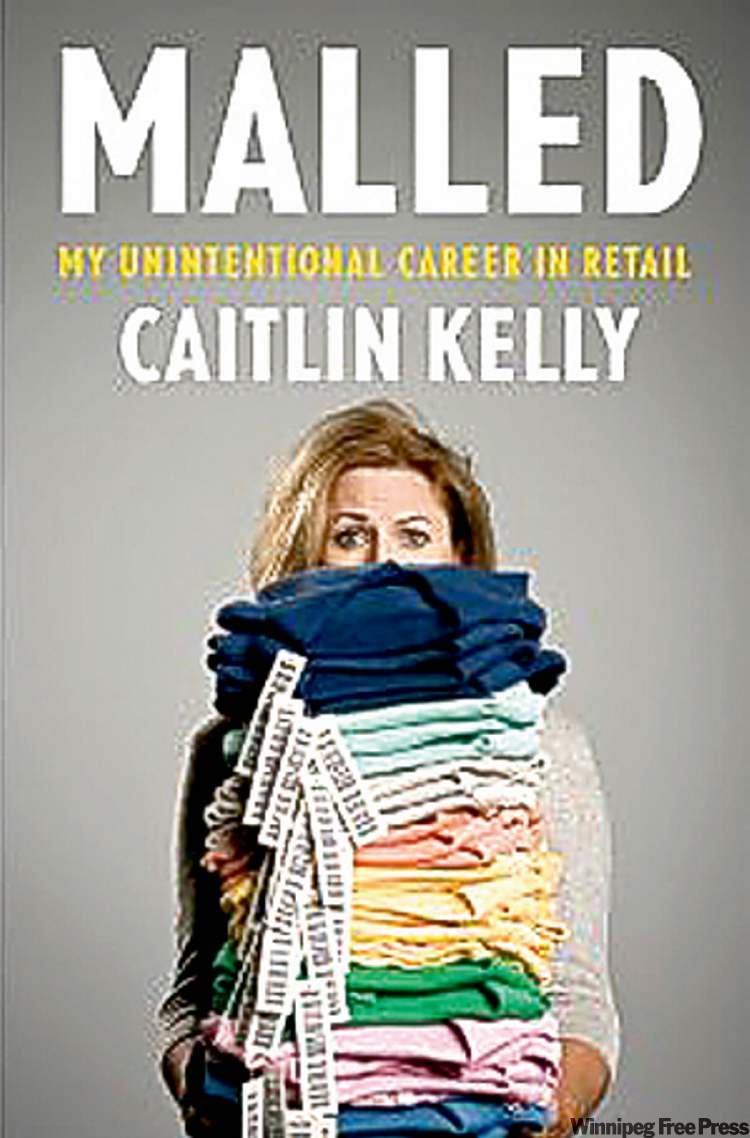
Penguin, 226 pages, $32.50
THE last American recession saw the evaporation of some eight million jobs. Many workers were forced by necessity into unfamiliar, lower-paying employ. Malled is a clear-eyed memoir of a veteran journalist’s experience of reluctantly joining the world of retail sales.
For years, Caitlin Kelly was successfully employed at some of the best-known American news outlets, both as staff writer and freelancer.
In 2006, at age 50, she lost her well-paying position as a reporter at the New York Daily News. Feeling isolated working alone at home, Kelly opted to supplement her income by taking a part-time position with North Face, an outdoor clothing retailer.
Kelly stayed with the company for more than two years, unusual in a field with 100 per cent annual staff turnover. Initially optimistic and excited about her work, she left disillusioned and critical. The work (tedious and unchallenging), customers (rude and overbearing), and supervisors (ungrateful) slowly eroded her early enthusiasm.
According to Kelly, the central problem with retail is that workers are paid minimal wages for often-strenuous work, with little opportunity for advancement, resulting in a transitory and insufficiently trained staff. At heart, though, is a system that thrives on this situation: employees who do not stick around long rarely have the ground or solidarity to request raises or advocate for effective change.
Along with Kelly’s critical perspective, her occasionally snarky reminiscences of difficult customers makes for vicariously enjoyable reading. Interspersed throughout are scattered and powerfully nostalgic reflections on journalism. It is clearly her first love, one she looks back on with melancholy.
Unfortunately, this is also a deeply flawed text, which does not work well as either memoir or analysis. Kelly is convinced that her age, experience and skills set her apart from her co-workers in a fundamental way.
What begins as useful differentiating comments becomes tedious: Kelly never tires of reassuring herself that she is too intelligent, too worldly, and with too many skills and too much education to fit into the world of retail.
Scarcely a page goes by without Kelly valourizing herself, often in comparison to those surrounding her. Of these people, the reader learns very little.
Kelly’s second book — she wrote an early one about women and guns — Malled reads, in the end, as an unconvincing example of proletariat tourism.
Kelly worked only one shift a week throughout her tenure — often a mere five hours. This raises the inevitable suspicion that the job was intended to furnish details for her writing project, a claim she rather unconvincingly deflects.

Whatever sympathies Malled might engender for those who must survive on retail wages does not translate to compassion for what appears to be a lark on Kelly’s part.
While the writing is competent, it rarely impresses. Perhaps Malled would have worked better as a blog or series of short articles. As a story, it is too repetitive and never adequately engages the reader’s sympathy.
Winnipegger Jarett Myskiw is finishing a one-year teaching contract and hopes not to return to retail any time soon.
Related Articles
Manitoba books whittled to 5 for CBC list
Advertisement Advertise With Us
Advertisement Advertise With Us