Rapist’s wife learns to cope with the horror

Advertisement

Advertise with us

Ontario guidance counsellor Shannon Moroney will always remember her first-month wedding anniversary -- but for all the wrong reasons.

Read this article for free:


or

Already have an account? Log in here »

To continue reading, please subscribe:

Subscribe and receive a limited-edition Free Press branded hat or tote.

Digital Subscription

One year of digital access for only $205*

  • Enjoy unlimited reading on winnipegfreepress.com
  • Read the E-Edition, our digital replica newspaper
  • Access News Break, our award-winning app
  • Play interactive puzzles

*First annual payment billed as $205.00 + GST for one year. This annual subscription will automatically renew at $233.00 + GST every 52 weeks (10% off the regular annual price of $259.35). Offer available to new and qualified returning subscribers only. Cancel any time.

To continue reading, please subscribe:

Add Free Press access to your Brandon Sun subscription for only an additional

$1 for the first 4 weeks*

  • Enjoy unlimited reading on winnipegfreepress.com
  • Read the E-Edition, our digital replica newspaper
  • Access News Break, our award-winning app
  • Play interactive puzzles
Start now

*Your next Brandon Sun subscription payment will increase by $1.00 and you will be charged $17.95 plus GST for four weeks. After four weeks, your payment will increase to $24.95 plus GST every four weeks.

Opinion

Hey there, time traveller!
This article was published 15/10/2011 (5453 days ago), so information in it may no longer be current.

Ontario guidance counsellor Shannon Moroney will always remember her first-month wedding anniversary — but for all the wrong reasons.

It was the day her husband abducted two women at knifepoint, took them home to Peterborough in garbage bags, then brutally raped them.

According to Moroney’s gripping memoir — which has echoes of the recent Russell Williams case — no one was more shocked than she to learn this news. Her husband, Jason Staples, was handsome, intelligent, a gifted artist and a conscientious employee. Not only had he and Moroney known each other for three years before getting married, but everyone, including her parents, friends and co-workers thought highly of Jason.

Moroney (left) has a new career as a social justice advocate; on her wedding day with Jason (above).

Through the Glass reads like a cross between a Jonathan Kellerman crime novel and Law and Order: Special Victims Unit TV episode. Except that events actually happened.

The story begins in November 2005 when the police knock on 30-year-old Moroney’s hotel door during a conference she is attending in Toronto. They have come to inform her of Jason’s self-confessed crimes the night before.

The book traces the chaotic events that unfold in Moroney’s life until Staples’ sentencing in May 2008. In the interim, Moroney is forced to confront several decisions: how best to help Jason in prison, whether or not to end her marriage and how to pick up the pieces of her shattered life.

Moroney’s candid first-person narrative is divided into four parts. The first section recounts the couple’s initial meeting and describes their seamless relationship prior to Jason’s arrest. It also discusses his previous 10-year sentence for second-degree murder, which he told her about on their first date.

The second section deals with research findings about Staples’ chaotic upbringing, including three foster homes, sexual abuse by his adoptive mother and physical abuse by his grandmother.

Moroney also includes excerpts from Staples’ articulately written letters as well as his two-and-a-half page final statement.

The final two portions deal with Moroney’s efforts to recover from post-traumatic stress. During Staples’ imprisonment, she used art as a healing tool and pursued a master’s degree in child welfare on a full scholarship in England.

After her master’s, Moroney obtained a certificate in trauma recovery from the Eastern Mennonite University in Virginia. Howard Zehr, the grandfather of restorative justice, taught the course. When Moroney told him her story, he encouraged her to write this book.

Based in Toronto, she is now a social justice advocate and has lectured internationally on restorative justice.

The title refers to the thick glass through which Moroney sees Jason at the prison during their weekly visits.

“When I looked at him through the prison glass, I saw a broken man and couldn’t help but feel humility,” Moroney writes.

“I wasn’t necessarily different or better than the person in front of me. Maybe just luckier … it could have been me on the other side of the glass.”

In Moroney’s opinion, part of Staples’ problem was the lack of availability of psychiatric services for prisoners.

Had he been given extensive counselling while incarcerated for his first offense, he may well have disclosed his tainted past. She feels that, in that case, a followup of adequate back-up psychological support may have lessened his chances of reoffending.

At several junctures in the memoir, Moroney decries her shabby treatment by various institutions. The school board deems her guilty by association; a victim services officer and Staples’ original lawyer treat her offhandedly.

A female police officer labels Staples with the same “dangerous offender” tag as Paul Bernardo.

“No, no … not my Jason!” Moroney thinks. “He is not a Paul Bernardo. … Are they thinking I am his Karla Homolka?”

Much to Moroney’s credit, her storytelling ability along with her emotional honesty and level-headed approach help maintain reader interest.

One poignant vignette involves Moroney’s revelation to her parents about Staples’ prior conviction. Other anecdotes reveal her fair-weather friends’ reactions.
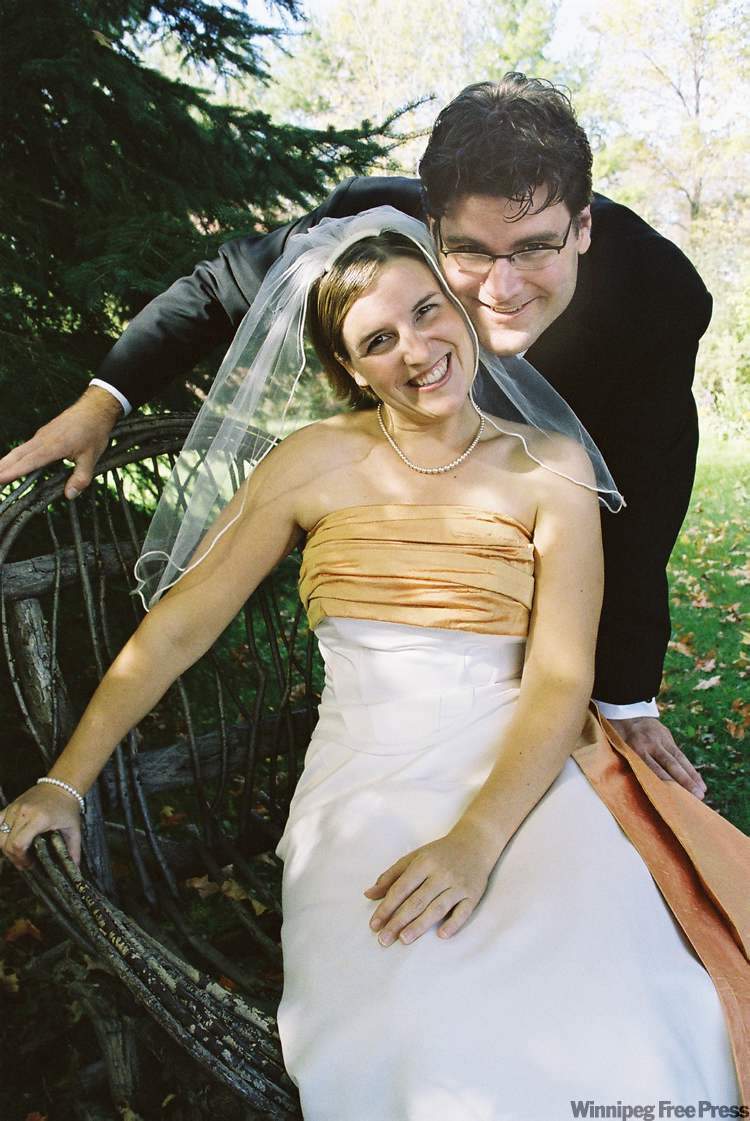
Mooney with Staples on their wedding day.

She even mentions an offer that Staples received that reveals his lost potential. Months before his crimes, he had sent his illustrations to a major Canadian children’s book publisher.

He was already in prison when an encouraging letter arrived. It requested that he make an appointment with the art director immediately. “This was his big break,” says Shannon, “too late.”

This memoir will especially appeal to those readers with an interest in the legal system and the healing professions.

It is an engaging, compassionate story of a woman’s quest for hope in the wake of trauma and violence.


Bev Sandell Greenberg is a Winnipeg writer and teacher.
Report Error Submit a Tip

More Stories

Former Bombers linebacker Gauthier enjoying career as electrician

Taylor Allen 7 minute read Preview

Former Bombers linebacker Gauthier enjoying career as electrician

Taylor Allen 7 minute read Yesterday at 12:44 PM CDT

Most professional football players don’t ride off into the sunset on their own terms.

Shayne Gauthier was well aware of that, but it didn’t make it sting any less when the Winnipeg Blue Bombers informed the veteran linebacker that they weren’t bringing him back for 2026.

“I was really hoping to play one more (season) because it would have been my 10th season, so, I’d say it didn’t really end the way I wanted,” Gauthier recently told the Free Press.

“It left a little sour taste in my mouth, but that’s part of pro sports. If everybody got the ending that they wanted, then it wouldn’t really work.”

Read
Yesterday at 12:44 PM CDT

Grieving child builds backyard rocket ship

Harriet Zaidman 4 minute read 2:01 AM CDT

I Built a Rocket Ship (Kids Can Press, 32 pages, hardcover, $22) by Winnipegger Anna Lazowski is a tender story for children ages 4-8 about a little girl trying to make sense of her mother’s death. The child engages in conversation with her late mom, agreeing and disagreeing about things said as she carries objects (and of course, the cat) to the backyard. There, she is building a rocket ship she will pilot into the skies to find her mom again.

Jennica Lounsbury’s varied perspectives show the range of emotions the little girl experiences.

● ● ●

Northwoods Lullaby by Mary Casanova (University of Minnesota Press, 32 pages, hardover, $25) is a bedtime book for readers up to age eight, perfect to bring a busy, happy day to a close. Just like children who are listening to adults reading the book, all the animal babies are being tucked into their nests and burrows by loving parents: “Thump and scamper,/nimble clover./ Soon it’s time to rest. Baby loon/ nestles in/as Papa floats along.”

Canada must not accept another Iranian autocracy

David Matas 5 minute read 2:01 AM CDT

Iran is a state run by a radical government victimizing its citizens and its neighbours. How do we change that? Any regime change that repeats the mistakes of the past is not a solution.

What went wrong in the past which led to the current regime? One answer is the U.K. and American aided coup which led to the ouster in 1953 of a democratically elected government headed at the time by Mohammad Mossadegh and its replacement with an American friendly autocrat, the Shah of Iran, Mohammad Reza Pahlavi.

The Shah imposed his rule through the Iranian National Intelligence and Security Organization — SAVAK, the acronym of its Persian name. SAVAK systematically inflicted torture, arbitrary killings and extra-judicial killings on perceived opponents of the regime. It was only a matter of time before repression of a regime directed to serving foreign interests would be overthrown.

What replaced the regime of the Shah, in 1979, the current regime of the mullahs, is a regime as intolerant and violent as the regime of the Shah and then some. That was not inevitable. But neither was it surprising. The vicious nature of the current regime, following the example set by the Shah, and its hatred for the United States, reacting to the U.S. aided imposition of the Shah, both echoes and reacts to the past. In 1979, the U.S. reaped what it sowed in 1953.

Not good bet to shoulder gambling issue alone

Maureen Scurfield 5 minute read 2:01 AM CDT

DEAR MISS LONELYHEARTS: We’re living a lie over at our house, but it’s holding the family together.

I know my husband is deeply into gambling. If it weren’t for my steady job I don’t know where the family would be! I insist on paying all of our bills. I also funnel some major cash off to my sister, in case my husband tries to tap into my accounts somehow when I’m out of the house.

He doesn’t know my passwords, since I keep changing them, but he sometimes shows up behind me when I’m online, like he’s dying to ask something.

I say, “What are you looking at? Stop looking over my shoulder!” Then he makes a lame joke and goes away.

Jets vets weigh in on franchise goalie Hellebuyck not reporting to training camp

Mike McIntyre 7 minute read Preview

Jets vets weigh in on franchise goalie Hellebuyck not reporting to training camp

Mike McIntyre 7 minute read Thursday, Sep. 17, 2026

Hockey is the ultimate team sport, where it’s supposed to be about the crest on your chest rather than the name on your back.

So how is Connor Hellebuyck’s trade request and subsequent training camp strike playing out inside the Winnipeg Jets locker room — particularly among other core players he’s gone to battle with over the years?

“Obviously the news is heartbreaking,” Jets forward Kyle Connor said Thursday.

“It feels like we had such a special group here and for whatever reason — I can’t speak to the reason until we hear from the man, I’m not going to speculate on what it is but I know that a lot of guys in that room that are heartbroken.”

Read
Thursday, Sep. 17, 2026

United Way, other charities fight for dollars as donor base shrinks

Scott Billeck 8 minute read Preview

United Way, other charities fight for dollars as donor base shrinks

Scott Billeck 8 minute read Yesterday at 2:00 AM CDT

Winnipeg’s charitable sector is being squeezed from both sides: demand for help is growing while the pool of donors to meet that need is shrinking.

The imbalance is increasingly being carried by a relatively small group of deep-pocketed donors. Last year, 600 people — about three per cent of United Way Winnipeg’s individual donors — accounted for roughly $8 million, or 55 per cent of individual donations.

The fundraising pitch isn’t getting any easier.

Homelessness and public drug use have become increasingly visible, household budgets remain strained and the problems charities are trying to address can seem so entrenched that donors may reasonably wonder what difference another contribution can make.

Read
Yesterday at 2:00 AM CDT