Biographers too partial to Trudeau during crucial transformation
Advertisement
Read this article for free:
or
Already have an account? Log in here »
To continue reading, please subscribe:

Digital Subscription
One year of digital access for only $205*
- Enjoy unlimited reading on winnipegfreepress.com
- Read the E-Edition, our digital replica newspaper
- Access News Break, our award-winning app
- Play interactive puzzles
*First annual payment billed as $205.00 + GST for one year. This annual subscription will automatically renew at $233.00 + GST every 52 weeks (10% off the regular annual price of $259.35). Offer available to new and qualified returning subscribers only. Cancel any time.
To continue reading, please subscribe:
Add Free Press access to your Brandon Sun subscription for only an additional
$1 for the first 4 weeks*
- Enjoy unlimited reading on winnipegfreepress.com
- Read the E-Edition, our digital replica newspaper
- Access News Break, our award-winning app
- Play interactive puzzles
*Your next Brandon Sun subscription payment will increase by $1.00 and you will be charged $17.95 plus GST for four weeks. After four weeks, your payment will increase to $24.95 plus GST every four weeks.
Read unlimited articles for free today:
or
Already have an account? Log in here »
Hey there, time traveller!
This article was published 19/11/2011 (5417 days ago), so information in it may no longer be current.
First there was the blackguard, then the born-again liberal statesman. Everyone loves a story of personal redemption.
But the suspicion is that Montreal biographers Max and Monique Nemni have now rushed so completely to the other side of their great subject, Pierre Elliott Trudeau, that they have become in effect apologists for their progressive version of him. And the reader of this often ground-breaking volume will likely wonder whether they have looked at all possible sides and angles of their compelling but complicated subject.
The Nemnis have been at the epicentre of the earthquakes about Trudeau’s early life ever since the former prime minister’s personal papers were opened up after his death in 2000.
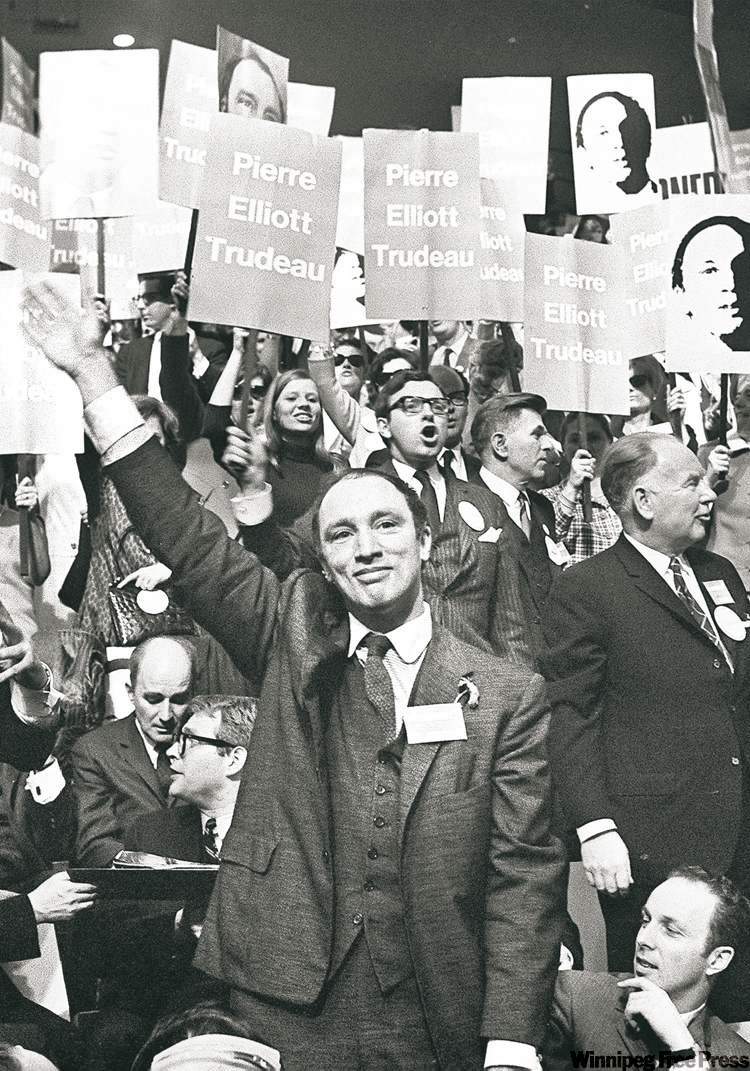
These papers they used to compelling effect in the first volume of the biography they published five years ago, Young Trudeau; Son of Quebec, Father of Canada. This was the sensational volume that told of how the young Trudeau, far from being a broad-minded liberal and cosmopolitan-in-the-making was instead a revolutionary separatist and near-terrorist, all in the cause of a Church-dominated, conservative, authoritarian social order.
What the young Trudeau apparently wanted for Quebec was something like Mussolini’s Italy or Franco’s Spain, but in French.
Their portrayal of the young Trudeau was so unrelenting that it obliterated all other possible perspectives on his early life. The Nemnis saw him as so beyond the pale that they shocked many admirers of Trudeau and they deeply offended Trudeau’s own family.
Perhaps they drew their portrait so sharply in order to dramatize the degree of the turn made by their hero after 1944 when he escaped the parochial world of French Catholic Montreal and ventured forth upon the cosmopolitan world of Harvard University, the Sorbonne and the London School of Economics.
So, consistent with the message already contained in the first volume — that Trudeau would eventually morph from a Catholic, nationalist reactionary into a perfect liberal cosmopolitan — in Trudeau Transformed they have completed the story.
The years the Nemnis deal with in this new volume were the ones when Trudeau confronted a multitude of contexts and pursued a vast variety of personal projects. He completed his formal education, undertook his world trek in 1949, worked in the Privy Council Office in Ottawa for a while and then returned to Montreal in 1951 to fight the Great Satan that was Quebec premier Maurice Duplessis.
Trudeau ran a small law practice out of his mother’s home in Outremont and, denied the one job he really wanted, which was to teach at the University of Montreal, he flourished as an independent public intellectual, helping edit the journal Cité Libre, writing essays, speaking on Radio Canada, giving lectures, travelling to foreign parts and also engaging in politics. Trudeau was not a lazy man and his life was a whirlwind of activity.
The Nemnis have done much to establish that Trudeau did not come to his interest in politics late in life. In a sense he was preparing himself to become a statesman all along. It was so obviously his goal. His predicament was that once beyond his youthful passions he remained unremittingly critical of all the established political parties and his commitment to the CCF in Quebec, while morally commendable, took him inside a cadre of political activists whose popularity in Quebec scarcely rose above two per cent of the vote.
After yet another victory for Duplessis and the Union Nationale in 1956, Trudeau decided that getting rid of Duplessis required new strategies. The Nemnis are good at explaining the details of Trudeau’s leadership of two, non-partisan movements — the Rassemblement and the Union des forces démocratiques — whose aim was to unite the Left against the old tyrant.
Both went nowhere and Trudeau decided pragmatically that the only remaining recourse for progressives was to ensure the triumph of the Liberals, whom for the most part he disdained. Duplessis died in 1959 and Jean Lesage took the provincial Liberals to power in 1960. Enlightenment had come to Quebec.
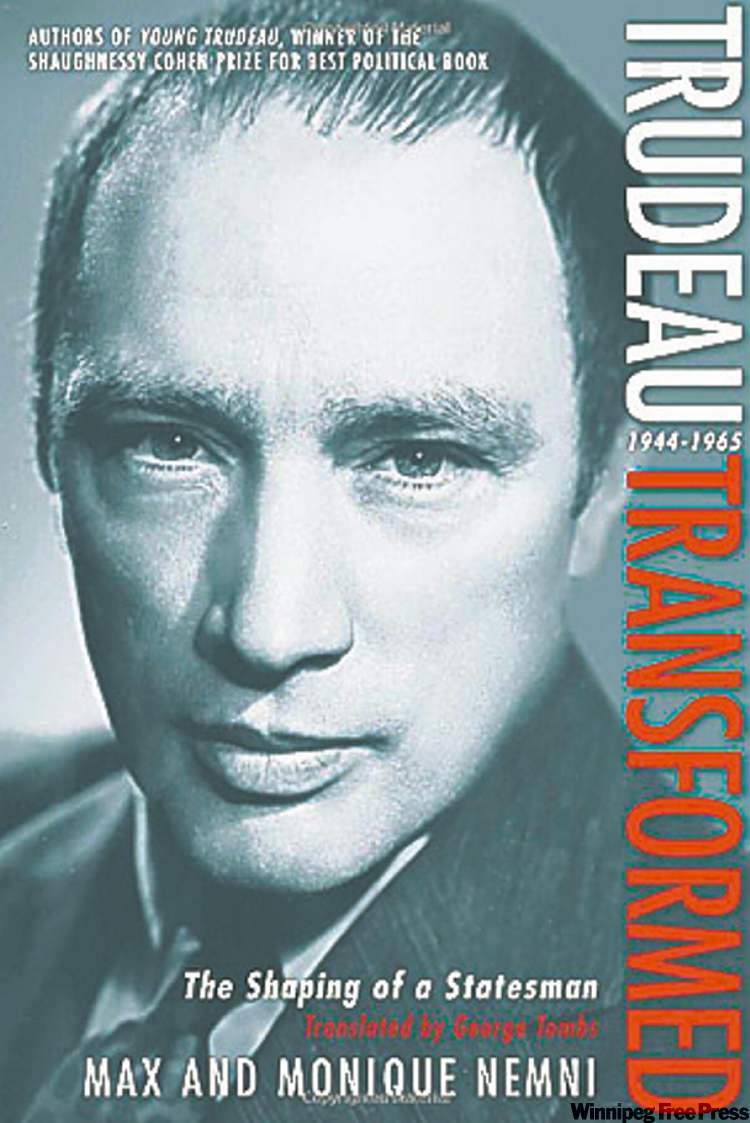
Except that it hadn’t. With the dawning of the so-called Quiet Revolution a new, secular nationalism came roaring forth and so Trudeau picked up his sword again to wage battle against the new enemy. Duplessis’ passing removed the one obstacle that stood in the way of his winning his dream position at the university but as for future political possibilities he was cornered.

Where to go? The Conservatives under Diefenbaker were fading, the Liberals were lusting after power by changing their position promiscuously on the Bomarc nuclear issue and the new New Democratic Party he believed was utopian and impractical and fated for endless political insignificance. And everywhere in Quebec there were nationalists of every stripe or the near-nationalists of the special-status-for-Quebec variety. And so Trudeau made his pragmatic leap to the federal Liberals in 1965 astounding many of his friends and colleagues. As they say, the rest is history. Trudeau was poised within three years, remarkably, to become prime minister.
The Nemnis’ work on Trudeau will always be interesting. With John English, they have had the most complete access to the private papers of Trudeau of anyone and these they have used to fill in many parts of Trudeau’s early biography that have hitherto been either obscure or subject to speculation or in some cases completely unknown at all.
This is a considerable advantage. But the book comes across as too partial to its subject, too unadventurous and unreflective in the questions it pose. It is hastily written as well.
For this period of Trudeau’s life John English’s 2009 biography, Just Watch Me, is better, just as the Nemnis’ earlier volume on the early Trudeau did a somewhat better job than English did in 2006’s Citizen of the World.
Allen Mills teaches politics at the University of Winnipeg.