Intelligent look at semi-automatic pistol that is part of U.S. landscape
Advertisement
Read this article for free:
or
Already have an account? Log in here »
To continue reading, please subscribe:

Digital Subscription
One year of digital access for only $205*
- Enjoy unlimited reading on winnipegfreepress.com
- Read the E-Edition, our digital replica newspaper
- Access News Break, our award-winning app
- Play interactive puzzles
*First annual payment billed as $205.00 + GST for one year. This annual subscription will automatically renew at $233.00 + GST every 52 weeks (10% off the regular annual price of $259.35). Offer available to new and qualified returning subscribers only. Cancel any time.
To continue reading, please subscribe:
Add Free Press access to your Brandon Sun subscription for only an additional
$1 for the first 4 weeks*
- Enjoy unlimited reading on winnipegfreepress.com
- Read the E-Edition, our digital replica newspaper
- Access News Break, our award-winning app
- Play interactive puzzles
*Your next Brandon Sun subscription payment will increase by $1.00 and you will be charged $17.95 plus GST for four weeks. After four weeks, your payment will increase to $24.95 plus GST every four weeks.
Read unlimited articles for free today:
or
Already have an account? Log in here »
Hey there, time traveller!
This article was published 04/02/2012 (5366 days ago), so information in it may no longer be current.
It shows up in movies and on TV and it’s a popular prop for gangsta-rap, where its one-syllable name is an easy fit for bad rhymers with attitude.
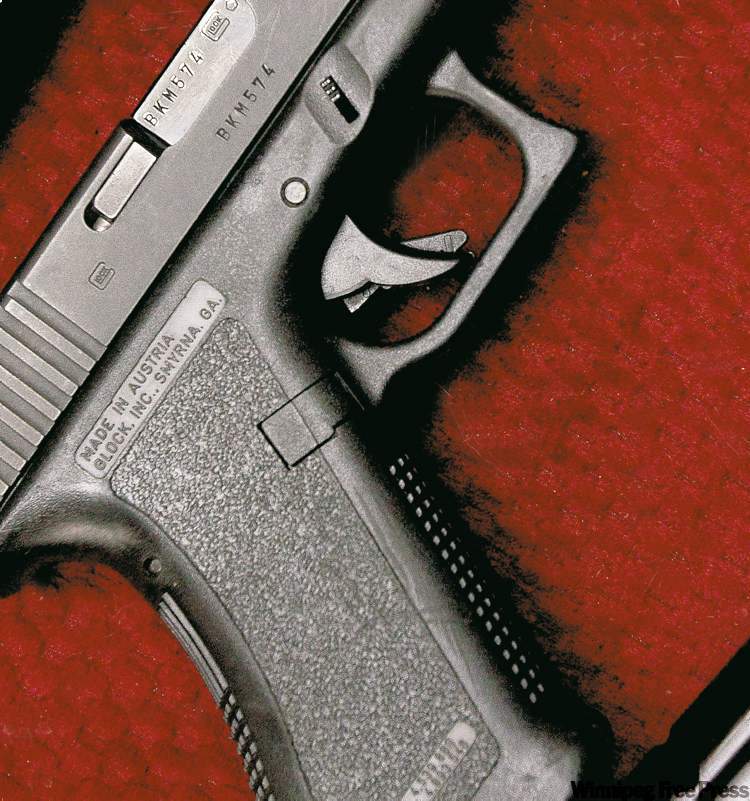
The brain-child of a one-time obscure Austrian engineer named Gaston Glock, this semi-automatic pistol made in large part of polymer is now part of the U.S. landscape, thanks in large part to Hollywood’s Die Hard 2, where Bruce Willis has a famous encounter with it.
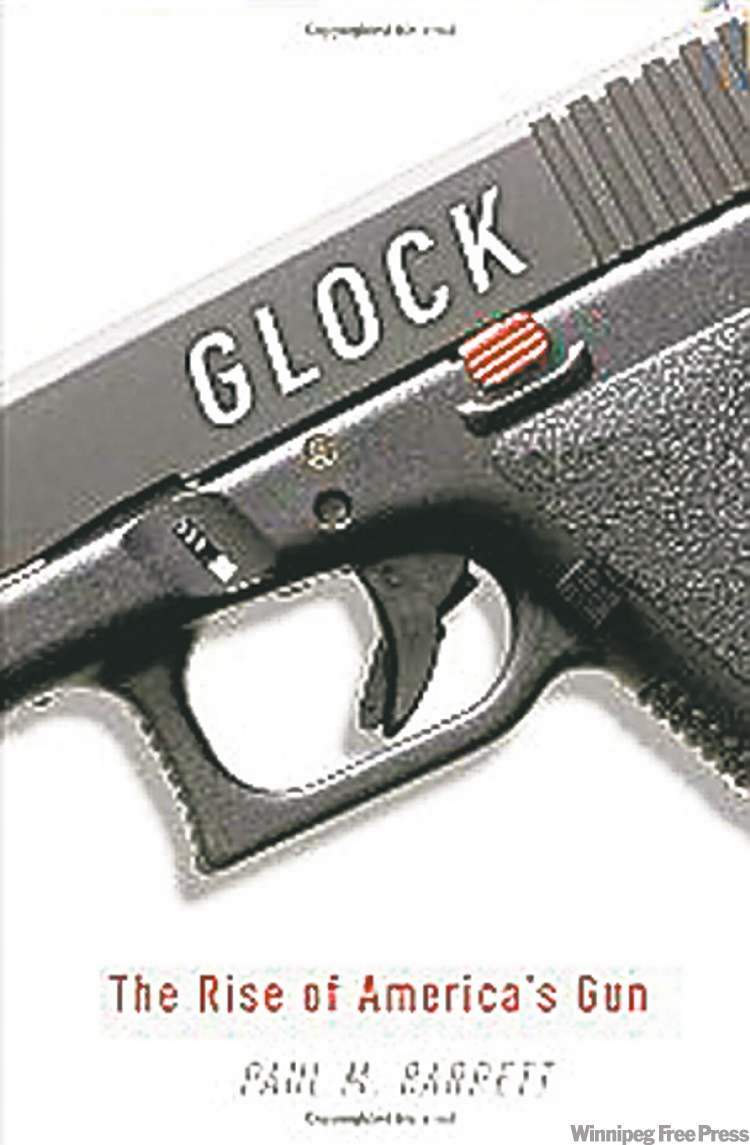
How an innocuous-looking foreign pistol replaced the distinctly American shiny steel revolver as a symbol of that country’s revered Second Amendment to its Constitution is the subject of this thoroughly researched book.
Glock is written by an American and for an American audience, but it contains intelligent and balanced arguments that are a welcome substitute for the hysteria and mythology heard in debates between gun-lovers and gun-haters everywhere.
Paul Barrett has been assistant managing editor and senior feature writer for Bloomberg BusinessWeek since 2005 and is the author of American Islam: The Struggle for the Soul of a Religion (2007).
He emphasizes that he assumes “that guns are good and bad,” much like pollution-spewing automobiles.
Combining a journalist’s inquisitiveness with a writer’s quest for a good story, Barrett also weaves an interesting biography of Gaston Glock into his analysis, but readers may find the accompanying anecdotes detract from a chronology of the pistol’s proliferation throughout the lucrative U.S. market.
Now a jet-setting billionaire octogenarian, Glock displayed an uncanny knack for expanding his company by hiring the right people at the right time, one notable exception being a sleazy financial adviser who siphoned money from Gaston Inc. and hired a hit man to have the boss killed.
Soon after the pistol was adopted by the Austrian army in the early 1980s, the Glock’s unique characteristics quickly drew worldwide attention. Today, police services everywhere, including Winnipeg, use it.
It is relatively light, has fewer than half the component parts of other handguns, is reliable, and features large capacity magazines easily discharged by a softer trigger pull.
Glocks have one general shape or “contour” that makes the pistol easily recognizable, but there have been several generations produced, not unlike the Volkswagen Beetle. Also churned out is a slightly smaller Glock, called the “Pocket Rocket,” which is easy to conceal in a pocket or woman’s handbag.
Barrett writes that the Glock “quickly acquired a reputation as the firearm of both the cop and the outlaw.”
American metropolitan police forces and the FBI, claiming to be outgunned by criminals, replaced their five- or six-shot revolvers with Glocks, while bad guys everywhere acquired them for their status and appeal.
Barrett also focuses on how the Austrian manufacturer maintained commercial success while facing potentially ruinous publicity after Glocks were used in several particularly bloody shootings in the U.S.
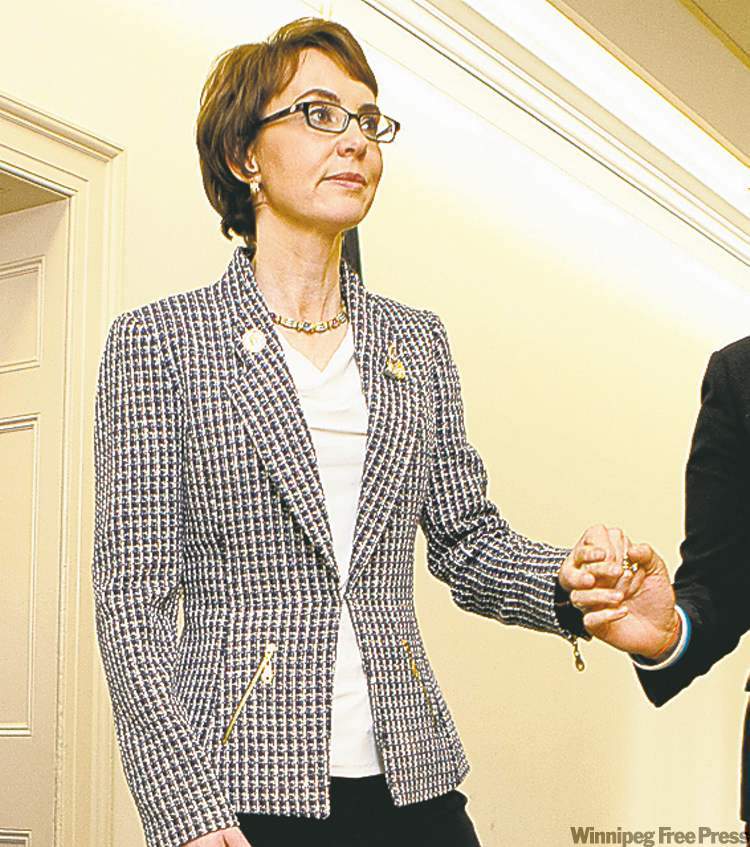
Most recent was the January 2011 incident in Tucson, Ariz., where six died and Congresswoman Gabrielle Giffords was severely wounded by a Glock-wielding nutcase.
Bad publicity, it seems, can always be overcome by lavish trade shows, keen legal teams, and a gun-lobbyist mantra emphasizing that people, not guns, kill other people.
Ironically, killing sprees such as the 2007 Virginia Tech massacre only increase Glock sales, leading Barrett to conclude that “in the gun industry, all publicity is good publicity.”
In 2008, before becoming U.S. president, Barack Obama vowed to continue the legislative fight to curb the proliferation of guns, first begun with the difficult passage of the Brady Law by Bill Clinton.
That nothing much has changed in 2012 speaks to the influence of gun lobbyists and to the deeply engrained gun culture in the U.S., which Glock uses to its benefit.
Canadians who applauded the recent dismantling of our country’s long-gun registry will find support in this book for the argument that criminals rarely carry hunting rifles.
Yet Glock also reveals how gun-lobby groups in the U.S. like the National Rifle Association, which mentor Canadian counterparts, are shown to be more concerned with profit and self-interest than with constitutional rights.
Glock Inc. continues to outsell its competition in America, mainly because millions of gun owners want reliability, and, as Barrett has found out, for a price tag of around $600, “the Glock goes ‘bang’ every time.”
Joseph Hnatiuk is a retired teacher in Winnipeg who supports Canada’s gun registry.
Glocks by the number
25,000 — Glock pistols shipped to the U.S. in 1985.
120,000 — Glocks shipped to the U.S. in 1990.
240,000 — Glocks shipped to the U.S. in 1995
$100 million — Glock Inc’s annual revenue by the late 1990s.
80,000 –Glocks that have gone missing in Iraq and Afghanistan from the 200,000 purchased by the U.S. military.
22 — Victims of a Glock-wielding killer at Luby’s cafeteria in Killeen, Texas, on Oct. 16, 1991.

32 — Victims of a Glock-wielding killer at the Virginia Polytechnic Institute on April 16, 2007.
6 — Victims killed by a Glock-wielding shooter in Tucson, Ariz. on Jan. 6, 2011. The wounded included U.S. Congresswoman Gabrielle Giffords.
82 –The age of billionaire inventor Gaston Glock when he divorced his wife and married a 31-year-old.
99 — The percentage of Winnipeg Police Service officers issued Glock handguns.
Source: Glock — The Rise of America’s Gun, and the Winnipeg Police Service
Book review
Glock
The Rise of America’s Gun
- By Paul M. Barrett
- Crown, 292 pages, $30
Related Articles
On the NightTable: JoAnne Buth
Advertisement Advertise With Us
Advertisement Advertise With Us
History
Updated on Saturday, February 4, 2012 7:53 AM CST: Formats texts, adds fact box