Dating nowadays no better than ‘back in my day’
New novel gives amusing look at then and now
Advertisement
Read this article for free:
or
Already have an account? Log in here »
To continue reading, please subscribe:

Digital Subscription
One year of digital access for only $205*
- Enjoy unlimited reading on winnipegfreepress.com
- Read the E-Edition, our digital replica newspaper
- Access News Break, our award-winning app
- Play interactive puzzles
*First annual payment billed as $205.00 + GST for one year. This annual subscription will automatically renew at $233.00 + GST every 52 weeks (10% off the regular annual price of $259.35). Offer available to new and qualified returning subscribers only. Cancel any time.
To continue reading, please subscribe:
Add Free Press access to your Brandon Sun subscription for only an additional
$1 for the first 4 weeks*
- Enjoy unlimited reading on winnipegfreepress.com
- Read the E-Edition, our digital replica newspaper
- Access News Break, our award-winning app
- Play interactive puzzles
*Your next Brandon Sun subscription payment will increase by $1.00 and you will be charged $17.95 plus GST for four weeks. After four weeks, your payment will increase to $24.95 plus GST every four weeks.
Read unlimited articles for free today:
or
Already have an account? Log in here »
Hey there, time traveller!
This article was published 21/04/2012 (5235 days ago), so information in it may no longer be current.
2It’s the way parents or grandparents (usually men) respond to the assumptions or complaints of young people. There’s even a term for it now: Grumpy old man meme.
“Back in my day we couldn’t afford shoes. We had to walk to school in our bare feet, uphill both ways. In the winter we wrapped our feet with barbed wire for traction.”
Jenkins, the main character and narrator in veteran Winnipeg writer Dave Williamson’s latest comic novel, Dating, isn’t grumpy, but he does have a serious case of “back in my day” syndrome.

Half of the book is comprised of his reminiscences about dating in his youth.
The other half, alternating with the nostalgia, is about his current dating encounters.
Since the mid-’70s, Williamson has published four other novels that have dealt comically with love and male-female relationships. He has also written plays and non-fiction.
Jenkins is actually Robert Henry Jenkins, but nobody calls him by his first name or a nickname. He’s a widower, a nervous, self-doubting, 70-something. It’s two years since his wife Barb died, and he’s back on the dating scene after 50 years of marriage.
Things aren’t much better for Jenkins in the present than they were back in the good old days of junior and senior high and the University of Manitoba. He was a mostly unsuccessful dater back then, and he remains so in 2007, the year of the story.
Williamson has Jenkins as an old fogey, as he once was a young fogey. A pre-baby boomer, he’s from a generation (like Williamson’s) that did not benefit from the pill and the sexual revolution of the 1960s.
His dating experiences were all about necking, petting, clumsy groping and abstinence. In other words they were elaborate exercises in anticipation and frustration.
One of the more amusingly articulated, if somewhat clichéd, scenes occurs on Jenkins’ fourth date with a classy girl named Marcia.
Marcia is prone to overusing the word “exquisite.” When she invites him in and serves salmon, Jenkins, as usual, fantasizes that it’s a prelude to sex.
“Seafood — good for lovemaking,” he thinks.
Marcia disabuses him of this notion with this classic speech: “We have a lot of exquisite fun together. And since we know that, I’m asking you, do we have to spoil what we have? Can’t we just be good friends?”
When the rules of middle-class dating etiquette don’t intervene, fate does or some higher power. While Jenkins gropes a working-class girl in her parents’ living room, a large crucifix on the wall makes him worry that divine intervention has arrived “at the perfect time to deliver me from temptation.” He is frustrated once again.
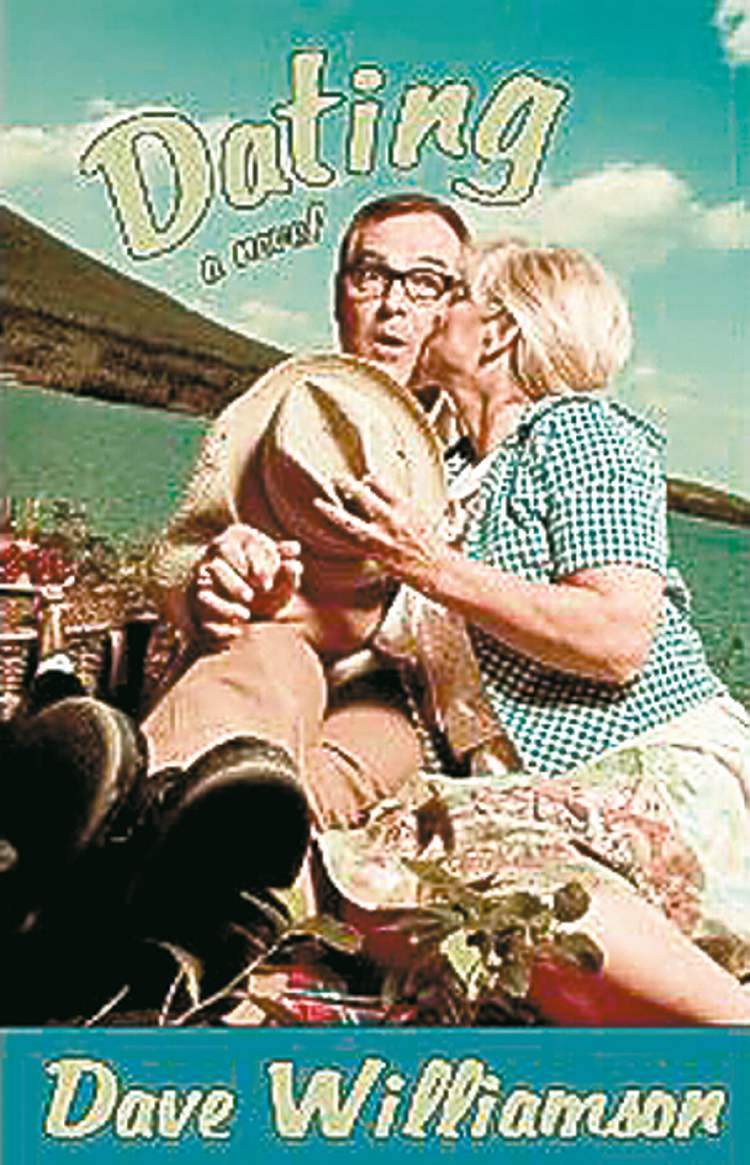
Jenkins and the novel are saved from the Sisyphean repetitiveness of anticipation and frustration by the appearance of his future wife, Barb. But even their romance is fraught.
His memories of their courtship are interwoven with a date in the present with one of his high school flames. From the beginning when her children set rules for Jenkins to its disastrous conclusion, the scene is a delicate balance of humour, irony and poignancy. It’s one of the better scenes in the novel.
Astutely crafted and amusing rather than compelling or hilarious, Dating is a comedy of manners that could use less sentimentality about the past, less wishful thinking about Jenkins’ prospects in the present, and more satiric bite.

In an age of rampant Internet dating, even among geezers, it’s also slightly out of date.
Williamson’s prose is neither dazzling nor distracting; it moves the story along calmly, smoothly and efficiently. And Dating does get better as it moves along. It’s more inventive; there are more surprises — right to the very last page.
With its references to the Chocolate Shop, the Highwayman restaurant, the Ivanhoe and other local institutions, Dating will have a special attractiveness for older, nostalgic Winnipeg readers.
Gene Walz recently retired as a film studies professor at the University of Manitoba.