Ambitious, unsettling novel memorable with faults like real life
Advertisement
Read this article for free:
or
Already have an account? Log in here »
To continue reading, please subscribe:

Digital Subscription
One year of digital access for only $205*
- Enjoy unlimited reading on winnipegfreepress.com
- Read the E-Edition, our digital replica newspaper
- Access News Break, our award-winning app
- Play interactive puzzles
*First annual payment billed as $205.00 + GST for one year. This annual subscription will automatically renew at $233.00 + GST every 52 weeks (10% off the regular annual price of $259.35). Offer available to new and qualified returning subscribers only. Cancel any time.
To continue reading, please subscribe:
Add Free Press access to your Brandon Sun subscription for only an additional
$1 for the first 4 weeks*
- Enjoy unlimited reading on winnipegfreepress.com
- Read the E-Edition, our digital replica newspaper
- Access News Break, our award-winning app
- Play interactive puzzles
*Your next Brandon Sun subscription payment will increase by $1.00 and you will be charged $17.95 plus GST for four weeks. After four weeks, your payment will increase to $24.95 plus GST every four weeks.
Read unlimited articles for free today:
or
Already have an account? Log in here »
Hey there, time traveller!
This article was published 02/06/2012 (5234 days ago), so information in it may no longer be current.
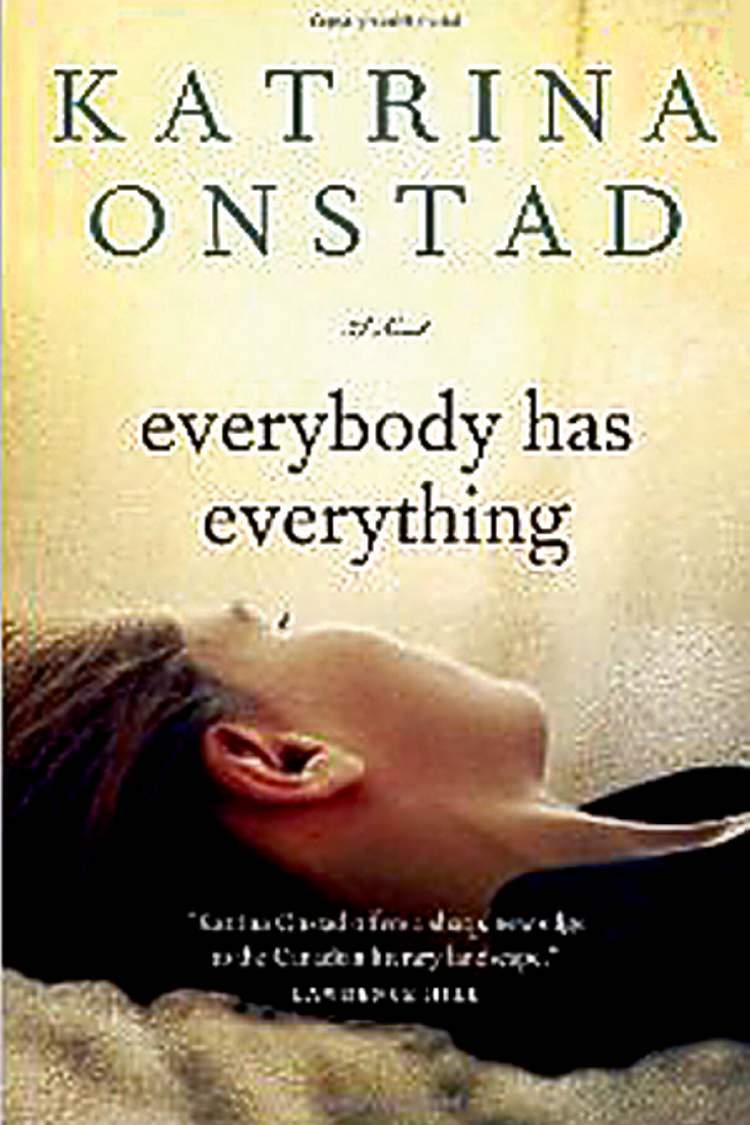
“IN the end it took Ana and James only an hour to become parents.” So begins this remarkable novel, the second written by Toronto author and journalist Katrina Onstad.
Two couples had enjoyed dinner together every Friday night. For Sarah and Marcus, it was a chance to get Sarah out of the maternal isolation she called the “mommy circuit.” For Ana and James, the dinners provided a welcome respite from their tidy routines and aching marriage.
On Labour Day weekend, a terrible car accident killed Marcus and left Sarah in a coma. Finn, their two-year-old, is unharmed. He is placed with James and Ana who have been named Finn’s guardians (they can only remember having been asked to be executors). Apparently there are no living family members with whom Finn should go.
Suddenly Ana’s “inhospitable” uterus and James’ lethargic sperm are no longer the main agenda of their marriage. They have become instant parents. But it’s not “happily ever after.” Rather, Onstad creates a novel that dares to tread into the sacred territory of commitment and its nemesis, betrayal.
In the hands of a writer like Jodi Picoult, the plot would be maudlin, complex and a little predictable. Certainly a tear jerker. And a bestseller.
In the hands of Onstad, though, the story becomes a literary excursion into the poignancy and murkiness of loss, parenting and marriage. No one can accuse Onstad of saccharine sentimentality. This is sharp, edgy writing (warning to the sensitive out there: lots of f-sharps in this book!). Onstad mines the emotions of flawed and wounded characters.
Her 2006 debut, How to Be Happy, also had a flawed and wounded protagonist, a flailing entertainment journalist (probably not unlike Onstad herself), but Everybody Has Everything is much more impressive.
Her title is ironic: everybody has everything, but everyone has nothing too. What does it mean to “have” and why does it matter? And can anyone really “have” anything anyways?
Ana is a research lawyer who loves to “hack problems into tiny pieces” and arm litigators with all the information they need for battle. James is a television producer who is happy to air his views on any subject. But two months before the fatal accident, James loses his job. Suddenly, he is an obsolete 40-year-old in an industry that values youth and beauty.
When Finn comes into James’ and Ana’s home, they muddle into parenting. They have no children’s books, so for bedtime stories they bring out The New Yorker and look at the cartoon animals with him. Ana throws cushions on the floor by Finn’s bed in a circumference “like a ring of lye outside a village hut used to keep away witches.”
When Finn asks for a familiar nighttime song (“Sing light!” he demands), they desperately reach for a distraction. Finn is a gracious toddler who offers hope and life in a novel where the adults are less trustworthy.
For Ana, parenting was something she thought she wanted. After three miscarriages she begins to recognize ambivalence in her desires. Mothering does not come naturally. She holds the child at an arm’s length and obsesses with cleanliness and order.

James, on the other hand, is able to make Finn laugh easily, “a sound which rang the bells of James’s own pride.” He loves the intensity of being with a child and feels most alive as a parent.
Everybody Has Everything is an intelligent, ambitious and unsettling novel. It isn’t perfect: there are moments that shock the reader, events that seem too dramatic to be plausible, and odd characters that seem completely out of place. Not unlike the dramas of real life, of course.
On the whole, this novel is credible and most definitely memorable. When it’s all over, though, we just wish that there had never been that fatal car accident.
Adelia Neufeld Wiens is a Winnipeg freelance writer.