Believable, flawed look at toll of mental illness
Advertisement
Read this article for free:
or
Already have an account? Log in here »
To continue reading, please subscribe:

Digital Subscription
One year of digital access for only $205*
- Enjoy unlimited reading on winnipegfreepress.com
- Read the E-Edition, our digital replica newspaper
- Access News Break, our award-winning app
- Play interactive puzzles
*First annual payment billed as $205.00 + GST for one year. This annual subscription will automatically renew at $233.00 + GST every 52 weeks (10% off the regular annual price of $259.35). Offer available to new and qualified returning subscribers only. Cancel any time.
To continue reading, please subscribe:
Add Free Press access to your Brandon Sun subscription for only an additional
$1 for the first 4 weeks*
- Enjoy unlimited reading on winnipegfreepress.com
- Read the E-Edition, our digital replica newspaper
- Access News Break, our award-winning app
- Play interactive puzzles
*Your next Brandon Sun subscription payment will increase by $1.00 and you will be charged $17.95 plus GST for four weeks. After four weeks, your payment will increase to $24.95 plus GST every four weeks.
Read unlimited articles for free today:
or
Already have an account? Log in here »
Hey there, time traveller!
This article was published 01/07/2012 (5206 days ago), so information in it may no longer be current.
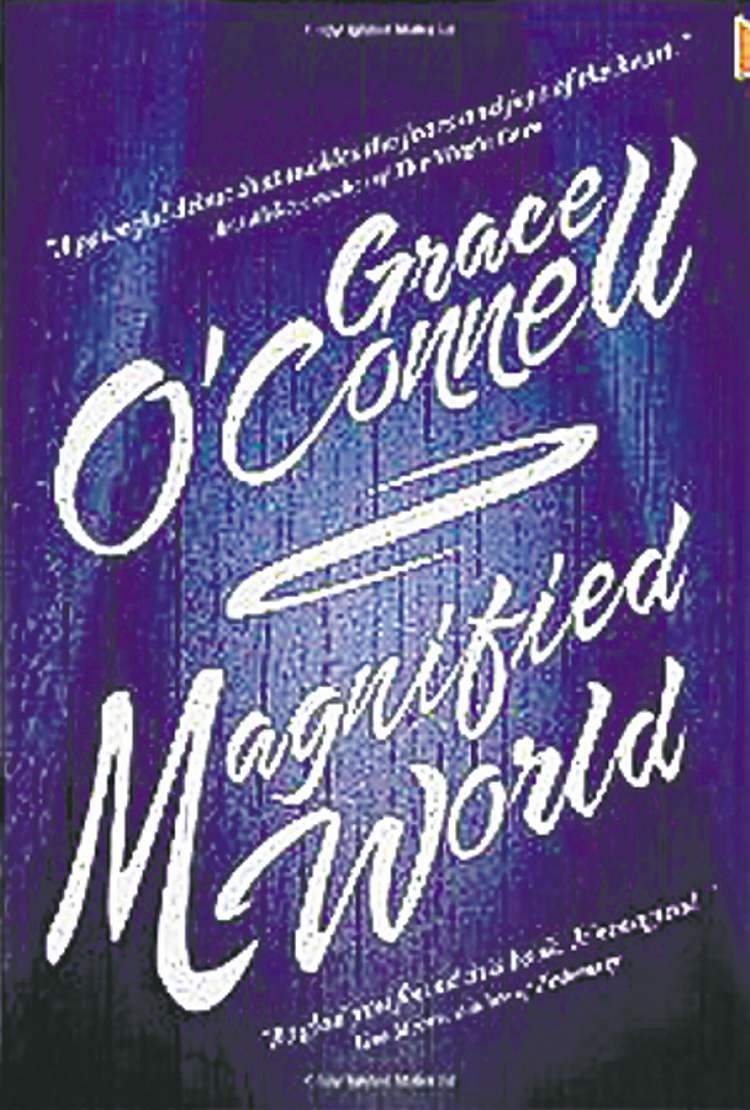
IN her debut novel Toronto writer Grace O’Connell offers a believable though flawed account of a family dealing with mental illness.
But ultimately, it’s O’Connell’s intense portrayal of a daughter’s grief that makes this journey worth reading.
Protagonist and narrator Maggie Pierce is a 20-something still living with her parents in their Toronto home. She works in the family’s shop downstairs, Pierce Gifts and Oddities, which sells, well, oddities, specifically of the New Age variety.
Maggie’s mother, Carol, is a bit of an oddity herself, an aging hippie who spouts adages and is prone to extreme mood swings and self-destructive behaviour.
As a child, Maggie became resourceful out of necessity, doing her own laundry and shopping for groceries, all the while struggling to make sense of her enigmatic mother.
“She was like a coin that could be flipped and sometimes it went one way and sometimes the other.”
After Carol drowns herself in the Don River, her pockets loaded with crystals, Maggie begins experiencing blackouts. Grief turns to confusion and Maggie wonders if she is headed down the same road, if it’s her “turn now.”
The details of Maggie’s chaotic childhood take up a large part of the novel and provide a colourful, tragic back story to her current problems. Unfortunately, the present-day story — set in the 1980s — is less compelling.
In order to keep functioning in the real world, Maggie invents some interesting coping mechanisms, which lead her family and friends to question her sanity. She resorts to living in a kind of hyper-reality — or magnified world — where her hallucinations and imaginings seem more real than the physical world in which she is living.
O’Connell’s precise and sometimes quirky prose make Maggie’s distress almost tangible to the reader, as when she describes her feelings before a blackout.
“I felt safest lying down, as if the blackouts might sweep over me and keep on going if I could make myself slippery enough, aerodynamic enough, so that nothing could catch. I thought maybe I could see it even, a dark thing that would sail across the ceiling of my room, searching for me. Something eyeless and snoutless.”
Mental illness is hardly a new subject for writers. Winnipeggers need only think back to Manitoba Theatre Centre’s season closer, Next to Normal, which also focused on a mother’s depression.
Alas, there are no songs in Magnified World. Its narrative also lags painfully in spots, particularly the numerous scenes with Gil, the stranger who shows up at the shop, promising to cure her blackouts. Although he ends up being the catalyst for Maggie’s final breakthrough, their interaction often feels prolonged and repetitive.
The novel also touches on the stigma attached to mental illness, even in our seemingly evolved modern society. While staying at Wooster House, a “grief management centre,” Maggie and the other tenants learn that a neighbourhood coalition is insisting they wear bright orange T-shirts whenever they leave the grounds.
Maggie is annoyed, if not slightly amused, but the neighbours’ response comes as no great surprise. As she points out, these are the same people who “were known to grab their small daughters by the upper arms when they saw us walking down our gravel path, when they saw Chad unlocking the front gate.”
Magnified World is not always as cohesive as it could be and the pace of the story is inconsistent.
O’Connell does a better job painting a picture of mental illness, and on the toll it takes not only on the person who is sick, but on their loved ones, as well.

Lindsay McKnight works in the arts in Winnipeg.
Magnified World
By Grace O’Connell
Random House Canada, 336 pages, $23
Book review
Magnified World
- By Grace O’Connell
- Random House Canada, 336 pages, $23
Related Articles
SUSPENSE: Cast aside worries with bloody mayhem
Advertisement Advertise With Us
Advertisement Advertise With Us