Daughter pens readable ‘child of’ Hollywood bio
Advertisement
Read this article for free:
or
Already have an account? Log in here »
To continue reading, please subscribe:

Digital Subscription
One year of digital access for only $205*
- Enjoy unlimited reading on winnipegfreepress.com
- Read the E-Edition, our digital replica newspaper
- Access News Break, our award-winning app
- Play interactive puzzles
*First annual payment billed as $205.00 + GST for one year. This annual subscription will automatically renew at $233.00 + GST every 52 weeks (10% off the regular annual price of $259.35). Offer available to new and qualified returning subscribers only. Cancel any time.
To continue reading, please subscribe:
Add Free Press access to your Brandon Sun subscription for only an additional
$1 for the first 4 weeks*
- Enjoy unlimited reading on winnipegfreepress.com
- Read the E-Edition, our digital replica newspaper
- Access News Break, our award-winning app
- Play interactive puzzles
*Your next Brandon Sun subscription payment will increase by $1.00 and you will be charged $17.95 plus GST for four weeks. After four weeks, your payment will increase to $24.95 plus GST every four weeks.
Read unlimited articles for free today:
or
Already have an account? Log in here »
Hey there, time traveller!
This article was published 24/11/2012 (5057 days ago), so information in it may no longer be current.
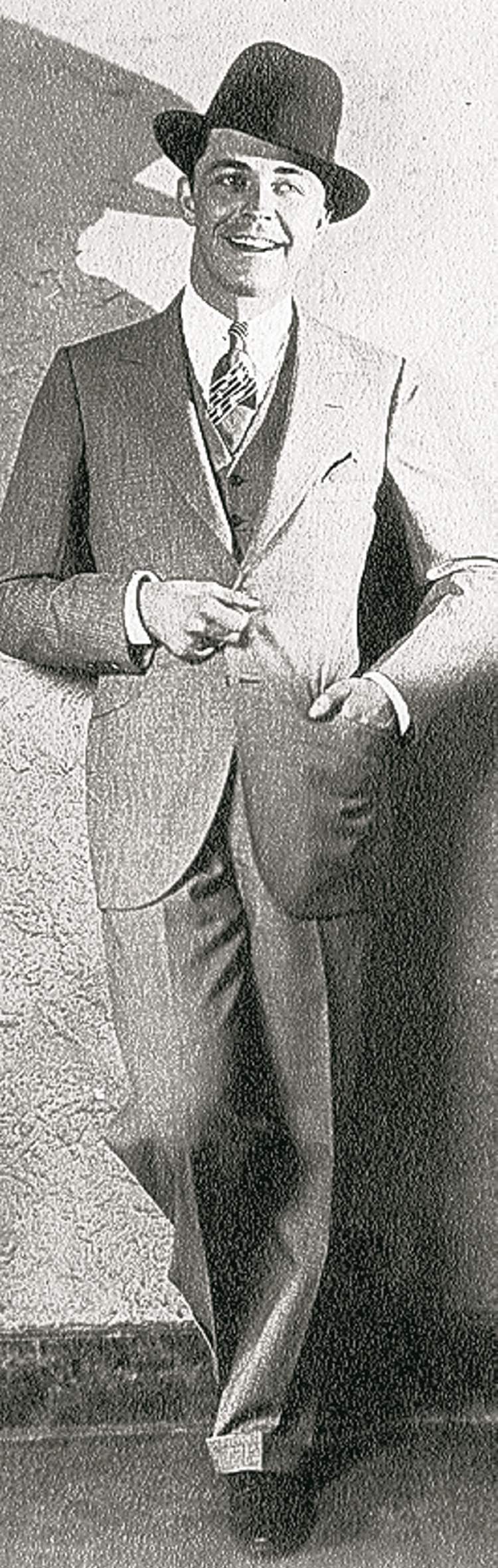
Lyle Talbot was never a big star or an important cultural figure. On his own he probably doesn’t merit a lengthy biography.
But Talbot had a long, varied and fascinating career in American showbiz. And this is therefore no ordinary bio.
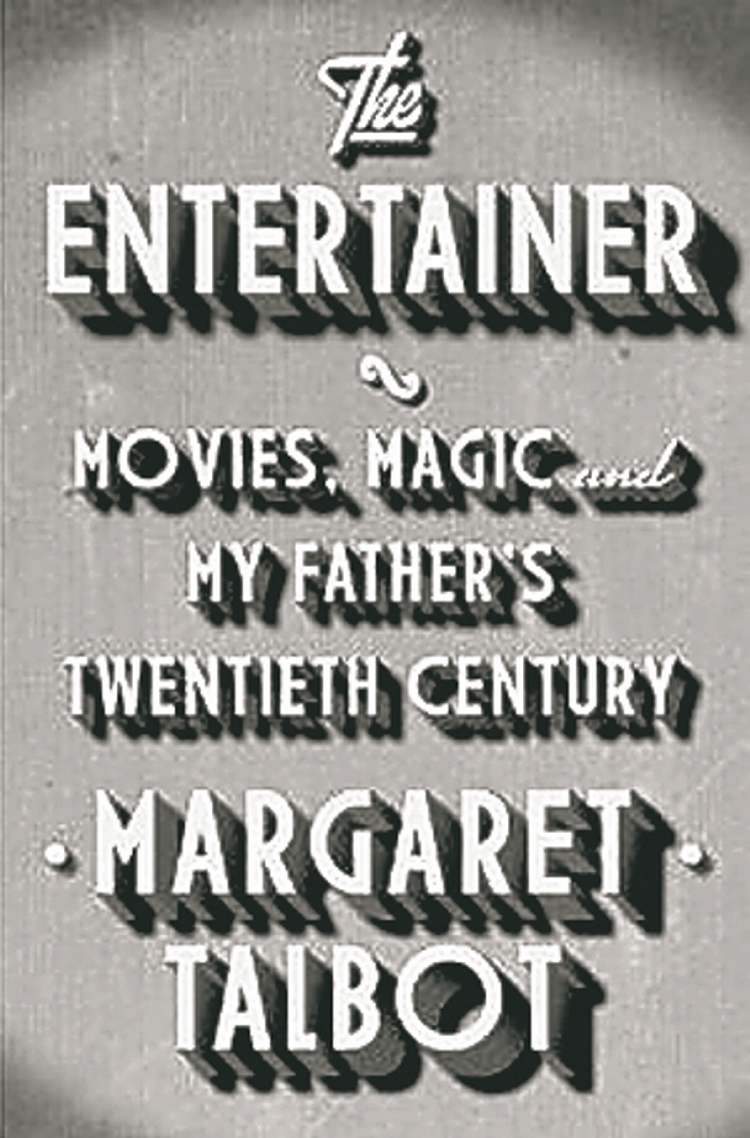
Talbot was like Woody Allen’s Zelig. He had a way of turning up in all sorts of entertainments and in the company of other interesting people. Tracing his career makes The Entertainer more like a cultural history of different kinds of 20th-century show businesses.
Margaret Talbot, staff writer for the New Yorker magazine and the youngest of Talbot’s four children (by his fourth wife), performs a delicate balancing act between loving daughter and objective outsider.
She uses family memories, her father’s scrapbooks and interviews, and research from sources as diverse as scholarly tomes, social histories, and not-nearly-so-reliable fan mags and gossip.
At times she gives the impression that the book might have been livelier or more probing had she chosen one approach over the other. But, by and large, it’s an intelligent, readable, and revealing study.
Born in 1902 in Pittsburgh and raised in Brainard, Neb., Lyle Talbot got his start as a teenager in the American Midwest as a carnival barker, magician’s assistant and phoney hypnotist’s plant.
He moved on to travelling stage shows; he even started his own acting company in his 20s.
By 1930 he landed in Hollywood as a contract actor with Warner Bros. Handsome and talented, he looked to be on his way with over 40 movies in five short years.
He had the lead role in a handful of these early 1930s B pictures. He played opposite some rising stars — Humphrey Bogart, Spencer Tracy, Bette Davis, and others. But he was usually relegated to third or fourth billing. Somehow, he never became a star.
Talbot devotes two-thirds of her book to this, the first third of her father’s life. And he lived a long life, until age 94.
His fourth wife, 20 years old when they wed and 26 years his junior, made him give up drinking. She threatened divorce when the kids were growing up. For the most part he seems to have agreed to become a teetotaler. By then he obviously preferred domestic life to debauchery.
Talbot enlivens her narrative by contextualizing his various pursuits. She comments on the lost worlds of circuses, travelling acting troupes, carnivals, dance marathons, “pre-Code” movies. There are revealing anecdotes about some of the true characters of the era.
Her main insight here is that America was changing from a culture based on character to one based on personality. Lyle Talbot seems to have had plenty of personality but not much character. He was perfect for the times.
Why did he not become a star, then? This is the question that haunts his daughter throughout this part of the narrative.
Perhaps it was because he was an indefatigable skirt-chaser, known in the gossip columns as a “nightclub Romeo.” He had a poorly timed affair with the ex-wife of Sam Warner just when his first contract was up. Oops!
Perhaps it was because he was a big drinker.
Or maybe it was because he just didn’t have that indefinable quality that separates stars from the rest of us, the “it” factor, charisma.
Somehow he survived in Hollywood. He had almost continuous work as a movie actor throughout the 1930s and 1940s.
Some of it was pretty low-grade stuff, working with the minor studios. He even has the distinction of being the only actor to appear in all three of the execrable movies of Ed Wood, including “the worst movie ever made,” Plan 9 from Outer Space.


Contextualizing is not nearly as thorough in this part of the story. Simple questions (like: did he have an agent?) are left unanswered.
Likewise Talbot’s closest brush with stardom, as the affable neighbor in 72 episodes of The Adventures of Ozzie and Harriet, is under-examined.
The Entertainer is certainly an entertaining book. It’s a bit lopsided and hastens to a conclusion, but it’s one of the best “child of” Hollywood bios.
Gene Walz is a retired University of Manitoba film professor.
History
Updated on Saturday, November 24, 2012 10:37 AM CST: adds fact box