Fresh, unflinching stories resonate
Advertisement
Read this article for free:
or
Already have an account? Log in here »
To continue reading, please subscribe:

Digital Subscription
One year of digital access for only $205*
- Enjoy unlimited reading on winnipegfreepress.com
- Read the E-Edition, our digital replica newspaper
- Access News Break, our award-winning app
- Play interactive puzzles
*First annual payment billed as $205.00 + GST for one year. This annual subscription will automatically renew at $233.00 + GST every 52 weeks (10% off the regular annual price of $259.35). Offer available to new and qualified returning subscribers only. Cancel any time.
To continue reading, please subscribe:
Add Free Press access to your Brandon Sun subscription for only an additional
$1 for the first 4 weeks*
- Enjoy unlimited reading on winnipegfreepress.com
- Read the E-Edition, our digital replica newspaper
- Access News Break, our award-winning app
- Play interactive puzzles
*Your next Brandon Sun subscription payment will increase by $1.00 and you will be charged $17.95 plus GST for four weeks. After four weeks, your payment will increase to $24.95 plus GST every four weeks.
Read unlimited articles for free today:
or
Already have an account? Log in here »
Hey there, time traveller!
This article was published 16/03/2013 (4922 days ago), so information in it may no longer be current.
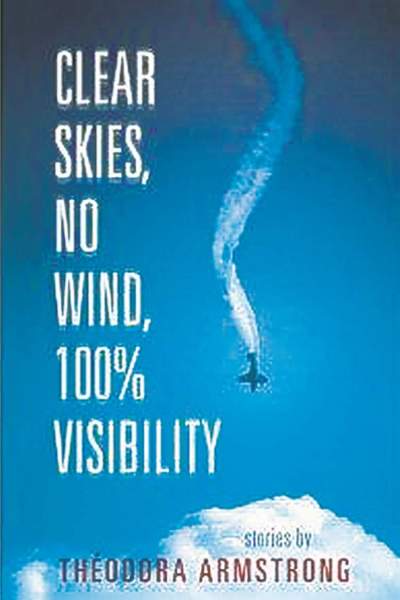
VANCOUVERITE Théodora Armstrong’s debut collection of short stories has something for every busy reader.
Clear Skies, No Wind, 100% Visibility is the initial offering by Toronto-based House of Anansi Press’s new short-fiction imprint, Astoria.
These fresh, edgy, unflinching stories about contemporary life on the urban and rural West Coast will resonate with readers at all stages of life: parents watching their children grow up too quickly, young couples starting families, brothers and sisters at crossroads in life coping with the fraying adulthood brings to childhood bonds.

The only thing that might not appeal to some readers is a key feature of short stories as opposed to novels: the lack of a traditional plot line. This collection would make a good textbook for any professor of short fiction looking for new material to engage students.
Armstrong, whose fiction and poetry has also appeared in literary magazines like Prairie Fire, The Fiddlehead and Contemporary Verse 2, has created incredibly strong gems in this collection, some rough, some sparkling but all engaging.
Each story — there are eight in total — is a snapshot taken from the characters’ lives midstream. We are allowed in only for a moment and dismissed when there is still more to come: a schoolgirl learns disturbing things about her older brother in Rabbit, but from her innocent perspective we read even darker things between unwritten lines.
In Fishtail, a busy businessman’s weekend away with his nearly grown daughters reveals how he has missed their childhoods while focusing on his career and that his marriage is all but over.
Unifying all the stories, the penultimate and title one, Clear Skies, No Wind, 100% Visibility, captures how, despite seemingly perfect conditions, life can still take some incredibly unexpected turns, as when an air traffic controller loses a plane on a perfect day.
The Art of Eating stands out: a very distinctive sense of place presides as Charlie, a restaurant chef with a pregnant girlfriend, drives through West Vancouver, preoccupied with asking his boss for a raise.
The theme: Charlie’s fear of failing his child like his own alcoholic father failed him, while at the same time not living up to his father’s perfectionist standards as a première chef.

“The anger begins to sizzle all over his skin, his vision blurring,” Armstrong writes. “He throws the steak on the grill and sees his father standing by the prep counter, twirling in a maddened rage, throwing handfuls of limp spaghettini at the wall.”
As in the other stories, the main action is the change that takes place within the character.
One of the book’s promotional quotes compares Armstrong to Raymond Carver and Flannery O’Connor, which is inappropriate since Carver and O’Connor are American Gothic.
Not every new author writing about life in all its raw beauty and grit should get the O’Connor rubber stamp. Armstrong writes with a distinctly Canadian tone of stained innocence and naive cynicism.
Christine Mazur is a Winnipeg writer who holds a master’s degree in English literature from the University of Manitoba.