Dark humour skewers materialistic boomer
Advertisement
Read this article for free:
or
Already have an account? Log in here »
To continue reading, please subscribe:

Digital Subscription
One year of digital access for only $205*
- Enjoy unlimited reading on winnipegfreepress.com
- Read the E-Edition, our digital replica newspaper
- Access News Break, our award-winning app
- Play interactive puzzles
*First annual payment billed as $205.00 + GST for one year. This annual subscription will automatically renew at $233.00 + GST every 52 weeks (10% off the regular annual price of $259.35). Offer available to new and qualified returning subscribers only. Cancel any time.
To continue reading, please subscribe:
Add Free Press access to your Brandon Sun subscription for only an additional
$1 for the first 4 weeks*
- Enjoy unlimited reading on winnipegfreepress.com
- Read the E-Edition, our digital replica newspaper
- Access News Break, our award-winning app
- Play interactive puzzles
*Your next Brandon Sun subscription payment will increase by $1.00 and you will be charged $17.95 plus GST for four weeks. After four weeks, your payment will increase to $24.95 plus GST every four weeks.
Read unlimited articles for free today:
or
Already have an account? Log in here »
Hey there, time traveller!
This article was published 13/04/2013 (4909 days ago), so information in it may no longer be current.
MUCH like a long-term GIC, former Winnipegger Don Gillmor’s new novel is a stable investment for your time but only guarantees a modest rate of interest.
Best known for his journalism and children’s books, Gillmor published his first novel in 2009, Kanata, a historical fiction story set in Western Canada.
His insight into Canadian history and contemporary culture both play into Mount Pleasant, although his perception and scathing satire don’t make up for the book’s lack of plot and wandering storyline.
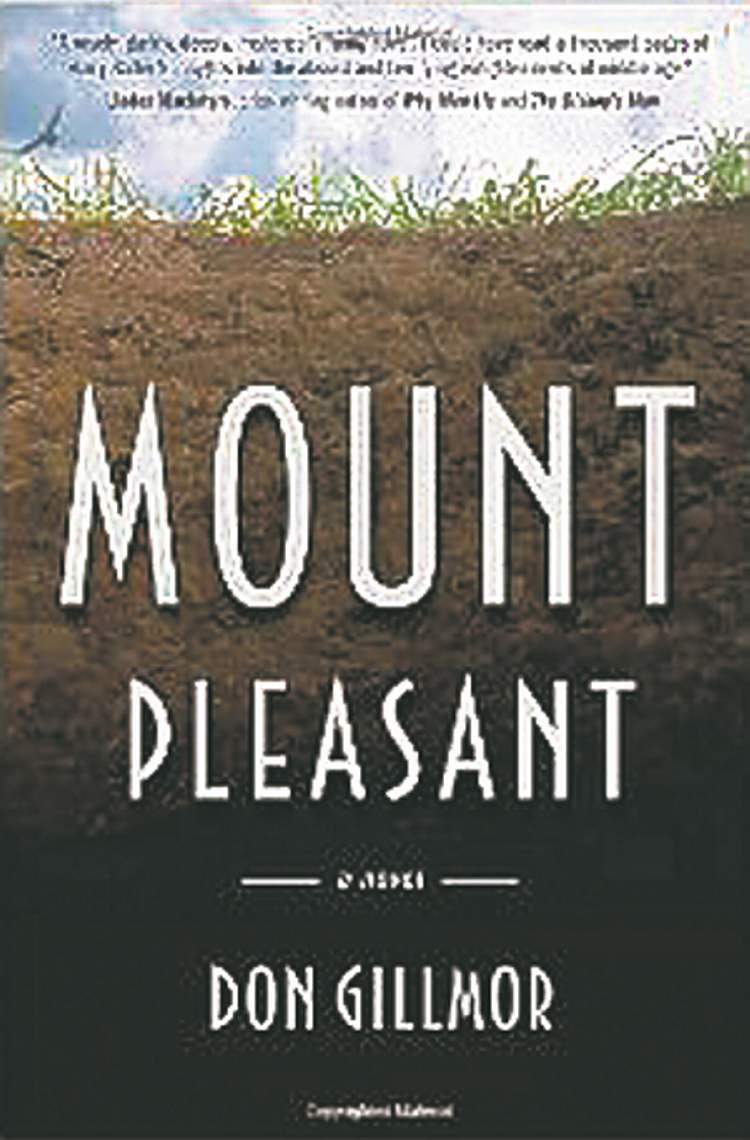
The story structure may remind readers of David Bergen’s 2012 novel The Age of Hope, another novel with a protagonist trying to make sense of life. But while The Age of Hope keeps its story moving despite a deceptively shallow plot, Mount Pleasant opens with a solid premise and collapses into an impotent rant about our materialistic and greedy society.
The novel opens in present-day Toronto, introducing us to Harry Salter, a boomer who was born into old money in the tony suburb of Rosedale. The title, by the way, refers to Toronto’s Mount Pleasant cemetery.
Although Harry could have expected an easy life, nothing has turned out the way he thought. His marriage is failing, his son feels like a stranger and Harry is broke.
“Debt was his mistress,” Gillmor writes, “the dirty siren who clawed his back.”
Well-born men gone to seed seem to be a staple of Toronto fiction. Witness the novels of former CBC film critic David Gillmour and TV writer-actor Ken Finkleman’s 2010 novel Noah’s Turn.
Harry, at least, isn’t a drunk. But his father is about to die, and Harry knows that his inheritance will pay off his debts and maybe even save his marriage. But when the will is read, Harry receives only $4,200. His father’s wealth has disappeared.
Harry goes on an investigation to find out how his father could possibly have squandered or been cheated of his fortune. As he digs deeper into the mystery, he discovers unpleasant truths about himself and the world in which he has believed for so long.
Gillmor’s prose is clear and readable, gleaming with dark humour that will at times make readers laugh out loud or shake their heads in agreement.
He probes into themes of entitlement, consumerism, complacency and greed that skewer materialistic values. However, the plot slows down quickly after the opening chapters and Harry’s continued worries about his debt and running commentary on society eventually grow tiresome. With no plot to keep the story moving forward, eventually it becomes hard to care about the case of Harry’s missing inheritance.

Having said that, the character of Harry is absolutely the novel’s best feature. In Harry, Gillmor has created a perfect caricature of the stereotypically entitled and materialistic boomer.
“He felt he wasn’t extravagant but knew he hadn’t entirely forsaken the sense of entitlement that he’d been born with,” writes Gillmor (who is the older brother of Winnipeg journalist Alison Gillmor). “If Harry bought the $14 Shiraz rather than the still very modest $24 Bordeaux, what would it save him? A few hundred a month. A spit in the ocean.”
The supporting characters are fairly shallow and one-dimensional, but it’s not clear if Gillmor intends them to be caricatures or just hasn’t bothered to give them any depth.
Mount Pleasant may not be the best story, but it’s an eye-opening look at the age we live in.
Winnipeg writer Kathryne Cardwell does not come from old money and is not expecting a large inheritance.