Bold combo of memoir, travelogue
Advertisement
Read this article for free:
or
Already have an account? Log in here »
To continue reading, please subscribe:

Digital Subscription
One year of digital access for only $205*
- Enjoy unlimited reading on winnipegfreepress.com
- Read the E-Edition, our digital replica newspaper
- Access News Break, our award-winning app
- Play interactive puzzles
*First annual payment billed as $205.00 + GST for one year. This annual subscription will automatically renew at $233.00 + GST every 52 weeks (10% off the regular annual price of $259.35). Offer available to new and qualified returning subscribers only. Cancel any time.
To continue reading, please subscribe:
Add Free Press access to your Brandon Sun subscription for only an additional
$1 for the first 4 weeks*
- Enjoy unlimited reading on winnipegfreepress.com
- Read the E-Edition, our digital replica newspaper
- Access News Break, our award-winning app
- Play interactive puzzles
*Your next Brandon Sun subscription payment will increase by $1.00 and you will be charged $17.95 plus GST for four weeks. After four weeks, your payment will increase to $24.95 plus GST every four weeks.
Read unlimited articles for free today:
or
Already have an account? Log in here »
Hey there, time traveller!
This article was published 03/08/2013 (4806 days ago), so information in it may no longer be current.
On his mother’s side, British Columbia poet and professor Jay Ruzesky is a cousin, twice-removed, of Norwegian explorer Roald Amundsen.
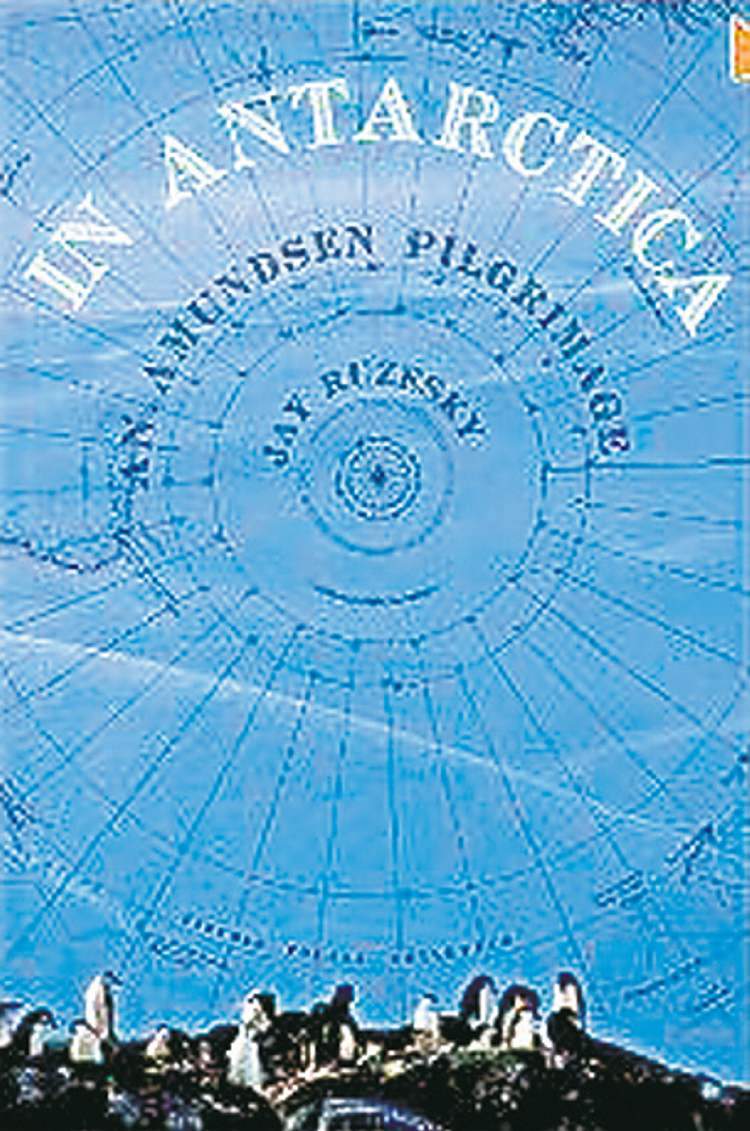
Ruzesky’s compelling new memoir, In Antarctica, tells the story of his trip to the Antarctic a century after his ancestor became the first person to set foot on the South Pole.
Ruzesky, who now teaches in Duncan, spent his childhood dreaming of the polar expeditions. But his adult life had been consumed by writing three collections of poetry and a novel, teaching and having a family.
As the 2011 anniversary of Amundsen’s achievement approached, Ruzesky tried to reconcile himself to not following in his ancestor’s footsteps.
He failed. Instead, Ruzesky found himself online, booking a berth on a ship that would take him from Patagonia to the Antarctic.
What’s more, he convinced his brother Scott to come along, even if his sibling’s first question was, “Which one of us is Amundsen?”
Ruzesky knew he was incurring tens of thousands of dollars of debt but thought there might be a book in his trip across the ice. (Which, in case you’re wondering, makes perfect economic sense to a poet.)
Structurally, In Antarctica parallels Ruzesky’s 2011 trip with episodes from Amundsen’s 1911 voyage on the Fram and his earlier expedition to the Antarctic on the Belgica in 1887. His title is obviously an homage to the late Bruce Chatwin’s classic 1977 travel memoir, In Patagonia.
The sections from Ruzesky’s point of view meld travel writing with memoir, which effectively sets the stage for the writer’s month-long voyage.
For instance, though Ruzesky has called B.C. home for 20 years, he spent his childhood in the cold-weather climes of Winnipeg, Thunder Bay, Saskatoon and Calgary.
One story that would be familiar to anyone who grew up on the Prairies details how the entrance collapsed to the quinzee he and his schoolmates had built in their school playground in Thunder Bay.
This is meaningful, given that Amundsen’s crew spent more than a year in a large hut connected to a series of snow caves on the Ross Ice Shelf before making their attempt on the pole.
Also interesting is Ruzesky’s anecdote of a failed dog-sledging lesson in Whitehorse in 2002. Knowing that Amundsen’s success in reaching the South Pole was largely attributed to his use of dogs instead of ponies, like his English rival Robert Falcon Scott, supercharges this story.
Ruzesky also includes meditations on exploration and cartography and provides context for Amundsen’s journey by providing thumbnail sketches of other voyages to both the North and South poles.

The other half of In Antarctica is in Amundsen’s voice, an incredibly detailed account that Ruzesky somehow cobbled together from the explorer’s journals and photographs.
More importantly, these sections are very finely written. Ruzesky illuminates Amundsen’s dreamy childhood and his possible motives for devoting his life to exploration instead of medicine, as his mother would have preferred.
Ruzesky’s description of Admundsen’s affair with the married Sigrid Castberg that preceded the 1911 voyage, however, read like the best historical fiction.
All of which is to say that In Antarctica is a bold and satisfying composite of creative non-fiction, memoir and travel writing.
Ariel Gordon is a Winnipeg poet whose paternal great-grandfather died on the shores of Antarctica’s South Georgia Island in 1914.
History
Updated on Saturday, August 3, 2013 6:46 PM CDT: fixes formatting.