Hero fought to remember children lost at residential school
Read this article for free:
or
Already have an account? Log in here »
To continue reading, please subscribe:

Digital Subscription
One year of digital access for only $205*
- Enjoy unlimited reading on winnipegfreepress.com
- Read the E-Edition, our digital replica newspaper
- Access News Break, our award-winning app
- Play interactive puzzles
*First annual payment billed as $205.00 + GST for one year. This annual subscription will automatically renew at $233.00 + GST every 52 weeks (10% off the regular annual price of $259.35). Offer available to new and qualified returning subscribers only. Cancel any time.
To continue reading, please subscribe:
Add Free Press access to your Brandon Sun subscription for only an additional
$1 for the first 4 weeks*
- Enjoy unlimited reading on winnipegfreepress.com
- Read the E-Edition, our digital replica newspaper
- Access News Break, our award-winning app
- Play interactive puzzles
*Your next Brandon Sun subscription payment will increase by $1.00 and you will be charged $17.95 plus GST for four weeks. After four weeks, your payment will increase to $24.95 plus GST every four weeks.
Read unlimited articles for free today:
or
Already have an account? Log in here »
The story of the gravesites of students who attended the Brandon Indian Residential School underneath the Turtle Crossing Campground is truly a Manitoba tragedy.
This week, in partnership with the City of Brandon, the province announced it acquired the land where many of the gravesites likely exist — hopefully starting the process of bringing to an end the question of the fate of dozens of children.
There are many who made this possible — but only one hero.
I’ll get to him.
First, the facts: from 1895, hundreds of First Nations children from over a dozen communities were removed from their homes to attend the Brandon Indian Residential School, run first by the Methodist Church and later the United Church.
For the first 16 years of the school (until 1911), more than 50 students were recorded to have died — with many buried near the Assiniboine River.
In 1921, the gravesite markers were removed and the area fell into neglect.
Later acquired by the City of Brandon, the area would be converted into what would become known as Curran Park.
Former Brandon Indian Residential School survivor Alfred Kirkness fought for decades to honour school’s students.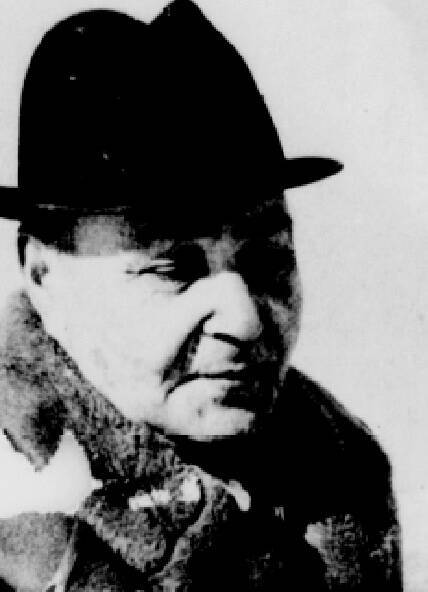
This is where a true hero, Alfred Kirkness, stepped up.
Born at Island Lake and a former student of the school — and someone who likely knew many of the children who died — Kirkness worked for decades at the Brandon Experimental Farm located beside the residential school.
Starting in the 1960s, Kirkness began writing letters to the mayor of Brandon, Indian Affairs officials, federal ministers, and civic leaders asking that something be done to honour the children lost at Brandon Indian Residential School.
He believed that there were two cemeteries, the one in Curran Park (near the Assiniboine River) and another located on land that became a cow pasture.
Kirkness kept up his fight for decades, documenting the condition of the site through photographs and arguing that the lack of care reflected a lack of respect.
All he asked was that these human remains receive the same respect as others in cemeteries throughout the Brandon area.
Kirkness was successful in convincing some officials to visit the site.
For those who came, he offered tours, identified the burial locations and even proposed solutions on how to protect the area, which included fencing, memorials and even a relocation plan.
His advocacy found partners, too.
By 1967, the Brandon Indian Friendship Society was involved, and by 1972 a local Rotary Club and Girl Guide group installed a fence at the site with a large memorial stone with a plaque that read “Indian Children Burial Ground.”
Library and Archives Canada A 1964 photo provided to the Office of Indian Affairs by Alfred Kirkness shows wooden crosses that presumably marked individual graves at Brandon Indian Residential School. 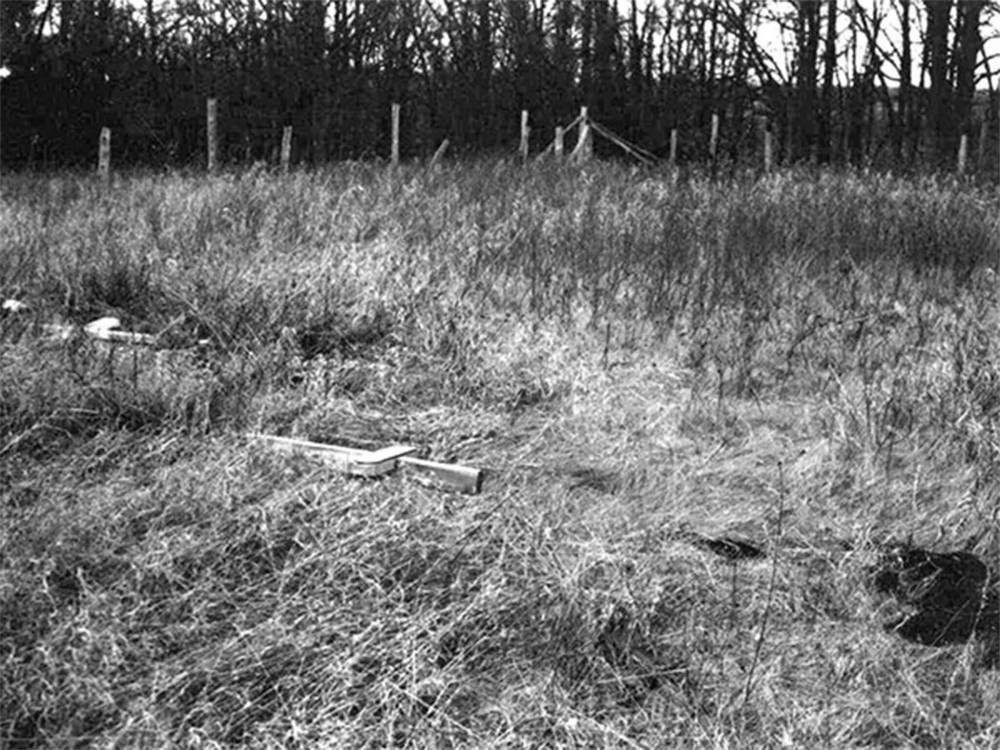
On January 29, 1980, Kirkness died and was buried in Brandon Cemetery.
If this story ended here, we might be able to call it an act of “reconciliation.”
But it doesn’t.
By the late 1990s, the City of Brandon began to sell assets to make money. In February 2001, Curran Park was sold to businessman Gerald Voth for $130,000. As a condition of the sale, the “aboriginal burial ground” was to be undisturbed.
One year later, Voth sold the property and it was on the market again a few years later. A local couple purchased it and replaced the name Curran Park with Turtle Crossing Campground, operating the space as an RV park and event site.
At some point, whether by a 2011 flood of the area, the 2014 construction of a ring dike, or by more (ahem) nefarious means — the memorial gravestone was relocated to a nearby ditch and the gravesite area was developed.
Tim Smith / Brandon Sun The site of the former Brandon Indian Residential School along Grand Valley Road is seen from the air in July, 2014.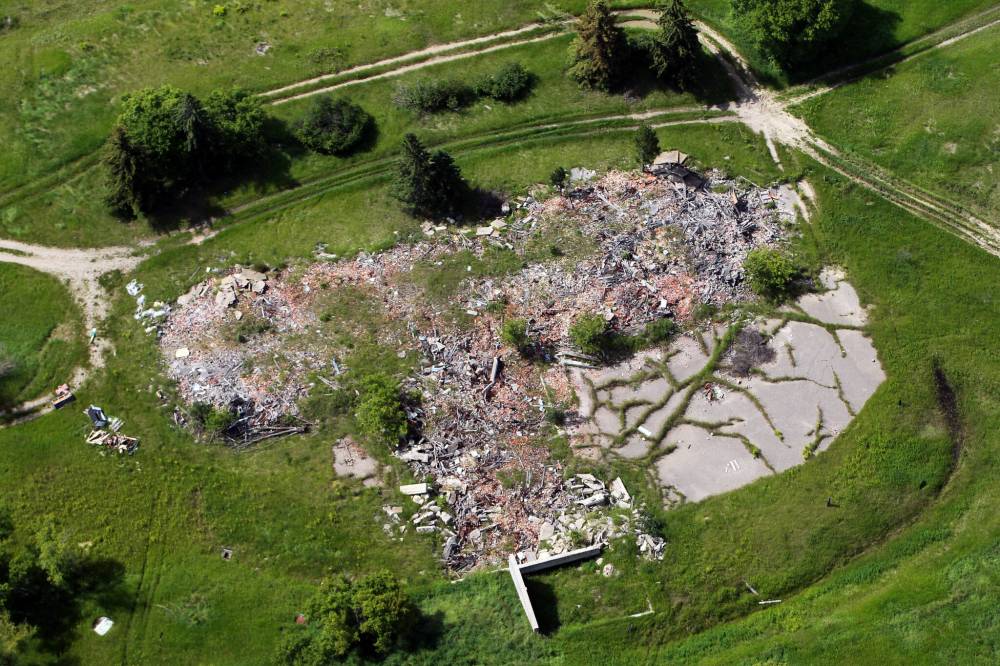
This is where the story turns really gross — with RVs and families camping and playing over the remains of children.
This is also where researchers like Anne Lindsay became involved.
Over a decade ago, Lindsay heard of the story of Kirkness and began her own research into the Brandon residential school.
She has since worked to recover the names of students, their home communities, and document their lives and deaths.
I’ve been privileged to become friends (and, occasionally, a writing partner) with Lindsay. Her meticulous research and commitment to telling the story of Kirkness and the students were a big part of convincing officials to partner with local First Nations in studying the site.
Sioux Valley Dakota Nation oversaw an archaeological and geophysical survey in 2018 that identified at least 56 potential gravesites on the campground.
In 2023, leaders from Sioux Valley, God’s Lake First Nation and Manitoba Keewatinowi Okimakanak called for the site to be protected under the Heritage Resources Act.

On the National Day for Truth and Reconciliation, the site has returned to all of us, so we can help nearly a dozen First Nations find out what happened to their children.
Our little relations.
The story of what happened at Brandon Indian Residential School is not over. In many ways, it is just beginning.
Reconciliation has taken a big step forward.
We have heroes like Alfred Kirkness to thank.
niigaan.sinclair@freepress.mb.ca

Niigaan Sinclair is Anishinaabe from Peguis First Nation and a professor in the Department of Indigenous Studies at the University of Manitoba. He’s been a columnist for the Free Press since 2018. Read more about Niigaan.
Every piece of writing Niigaan produces is reviewed by an editing team before it is posted online or published in print — part of the Free Press‘s tradition, since 1872, of producing reliable independent journalism. Read more about Free Press’s history and mandate, and learn how our newsroom operates.
Our newsroom depends on a growing audience of readers to power our journalism. If you are not a paid reader, please consider becoming a subscriber.
Our newsroom depends on its audience of readers to power our journalism. Thank you for your support.