Coming-of-age story avoids hackneyed themes
Advertisement
Read this article for free:
or
Already have an account? Log in here »
To continue reading, please subscribe:

Digital Subscription
One year of digital access for only $205*
- Enjoy unlimited reading on winnipegfreepress.com
- Read the E-Edition, our digital replica newspaper
- Access News Break, our award-winning app
- Play interactive puzzles
*First annual payment billed as $205.00 + GST for one year. This annual subscription will automatically renew at $233.00 + GST every 52 weeks (10% off the regular annual price of $259.35). Offer available to new and qualified returning subscribers only. Cancel any time.
To continue reading, please subscribe:
Add Free Press access to your Brandon Sun subscription for only an additional
$1 for the first 4 weeks*
- Enjoy unlimited reading on winnipegfreepress.com
- Read the E-Edition, our digital replica newspaper
- Access News Break, our award-winning app
- Play interactive puzzles
*Your next Brandon Sun subscription payment will increase by $1.00 and you will be charged $17.95 plus GST for four weeks. After four weeks, your payment will increase to $24.95 plus GST every four weeks.
Read unlimited articles for free today:
or
Already have an account? Log in here »
Hey there, time traveller!
This article was published 17/08/2013 (4790 days ago), so information in it may no longer be current.
For a story about magic and escaping reality, prolific Canadian author Cary Fagan’s slender new novel remains stubbornly set in reality.
It flirts with the idea of letting the characters forget their harsh surroundings, yet somehow always seems to find a way to bring sober reality crashing down on them, without coming off as depressing.
A Bird’s Eye revolves around, and is narrated by, Benjamin Kleeman, a 14-year-old who grows up in a Jewish household in 1930s Toronto. While it may seem like a story that should revolve around tribal identity and perhaps anti-Semitism, Fagan stays away from those hackneyed themes.
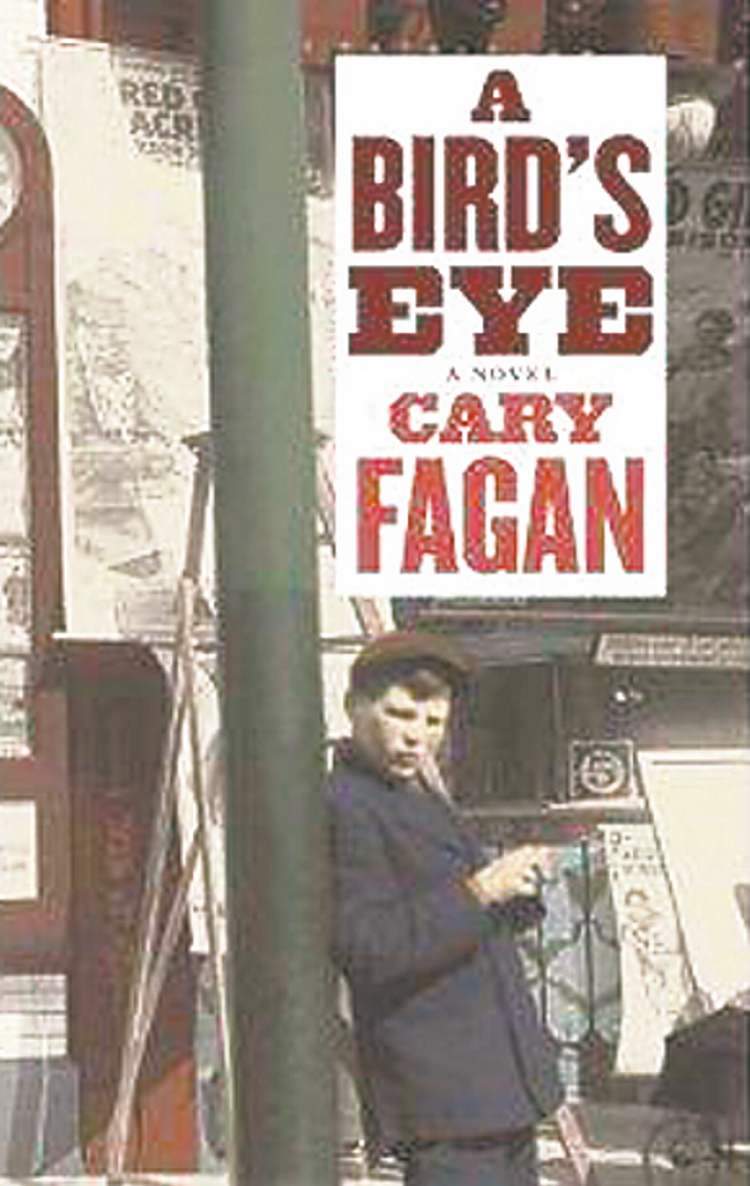
Instead, Fagan tells of Benjamin’s escape from his dysfunctional parents and family members and the Great Depression that is taking hold in Toronto.
Fagan is well-suited to writing about adolescence, in that he has published a dozen children’s books. But he has also written five adult novels. His most recent, Valentine’s Fall, won the 2010 Toronto Book Award.
In many ways, the reader can imagine A Bird’s Eye as an adult version of the recent Martin Scorsese film Hugo, with more sex and poverty. Even mechanical creatures have their part to play in both stories.
Benjamin’s escape happens through his discovery of magic. Not fantasy magic, where wands solve all problems forever, but stage magic, where card tricks and disappearing doves make people forget their problems for a while.
Benjamin’s discovery of magic happens halfway into the story. Fagan spends a long time exploring all the things Benjamin tries to escape first.
He describes in detail how Benjamin’s parents met, how his father ends up as the listless husk he is now, and how his mother becomes a bitter, yet energetic, woman who regrets her past mistakes.
Fagan’s style of writing is simple, clean and honest. He describes, in unflinching terms, everything from the poverty that inhabits Toronto streets to Benjamin’s first awkward sexual encounter.
His characters, though Fagan doesn’t give them much room to be developed, are multi-dimensional and interesting. Though each character’s primary drive is obvious, they still manage to surprise with their occasional decisions.
Ultimately A Bird’s Eye can’t seem to decide if it wants to let good things happen to good people. Benjamin’s story starts off as depressing but gets happier and happier as he discovers his talent for illusions.
More and more things seem to be going right for him, and the magic that lets his audience forget about their worries seems to be doing the same for him. Without spoiling anything, the ending remains stubbornly ambiguous as to whether everything ends up all right for Benjamin.
If A Bird’s Eye were an illusion, it would be like making the dove disappear, and then not letting it reappear, leaving the audience guessing.

But that’s not necessarily a bad thing. Fagan’s writing style, coupled with his familiar yet refreshing characters, makes the novel one where the pages get turned faster and faster as the reader gets more interested in what happens next.
If the ending leaves the reader unsatisfied, it is only because the story is so compelling that it begs for a perfect conclusion.
Magical yet realistic, A Bird’s Eye is an easy read for an afternoon where the world can be forgotten for a few short hours, much like one of Benjamin’s illusions.
Oliver Sachgau is a summer reporter at the Free Press and journalism student in Ottawa.
History
Updated on Saturday, August 17, 2013 10:07 PM CDT: tweaks formatting.