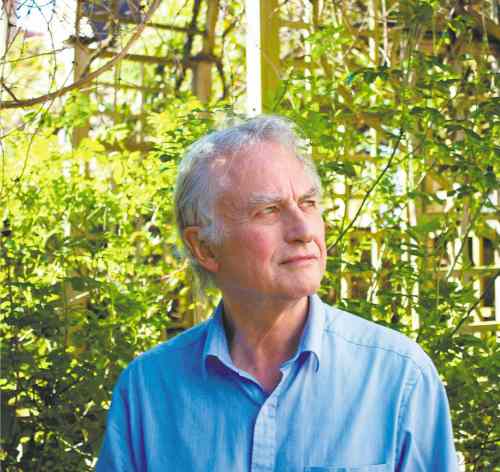
Just don’t thank God
Great genes, good education propel scientist Richard Dawkins
Advertisement
Read this article for free:
or
Already have an account? Log in here »
To continue reading, please subscribe:

Digital Subscription
One year of digital access for only $205*
- Enjoy unlimited reading on winnipegfreepress.com
- Read the E-Edition, our digital replica newspaper
- Access News Break, our award-winning app
- Play interactive puzzles
*First annual payment billed as $205.00 + GST for one year. This annual subscription will automatically renew at $233.00 + GST every 52 weeks (10% off the regular annual price of $259.35). Offer available to new and qualified returning subscribers only. Cancel any time.
To continue reading, please subscribe:
Add Free Press access to your Brandon Sun subscription for only an additional
$1 for the first 4 weeks*
- Enjoy unlimited reading on winnipegfreepress.com
- Read the E-Edition, our digital replica newspaper
- Access News Break, our award-winning app
- Play interactive puzzles
*Your next Brandon Sun subscription payment will increase by $1.00 and you will be charged $17.95 plus GST for four weeks. After four weeks, your payment will increase to $24.95 plus GST every four weeks.
Read unlimited articles for free today:
or
Already have an account? Log in here »
Hey there, time traveller!
This article was published 05/10/2013 (4688 days ago), so information in it may no longer be current.
Richard Dawkins was 22 when he lost his virginity, 16 when he abandoned his religious faith.
So reveals the great British biologist, author and militant atheist in this genial if undramatic autobiography, which recounts the first half of his life up to and including the publication of his first book, the one that made him famous, The Selfish Gene, in 1976.
His cherry he lost in 1963 to a “sweet cellist in London, who removed her skirt in order to play to me in her bedsitter… and then removed everything else.”
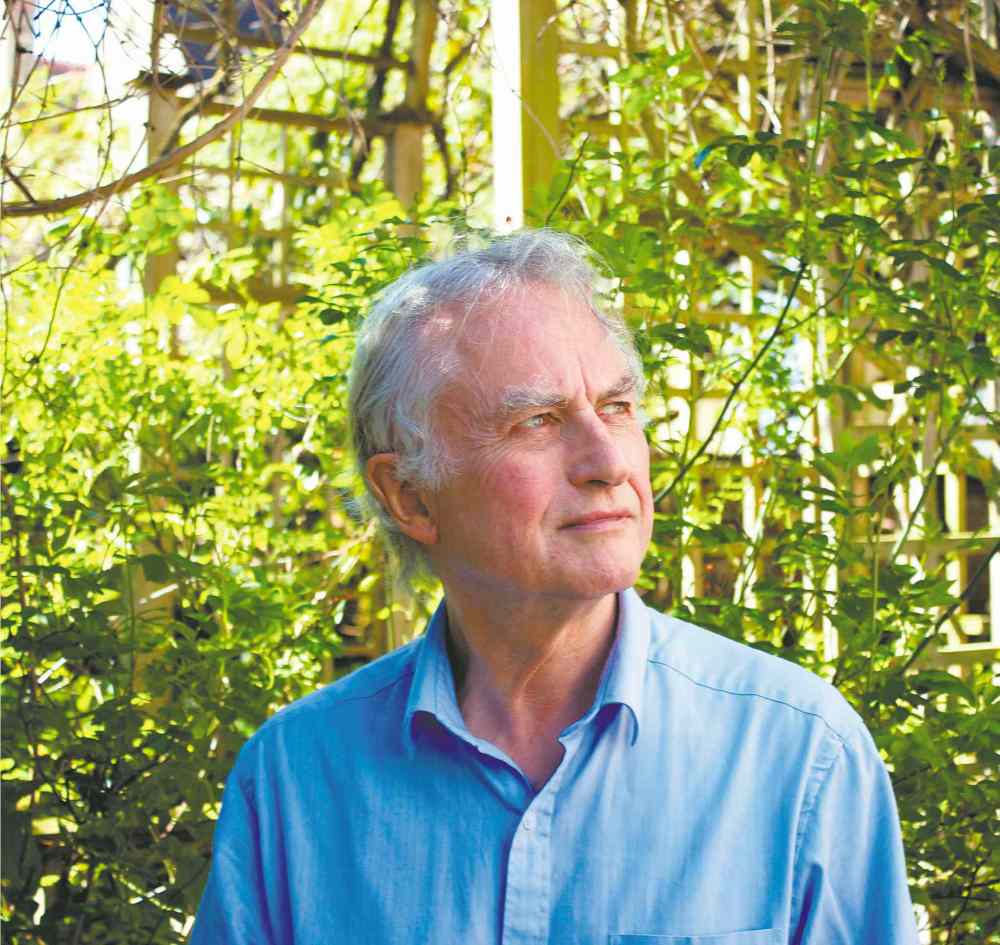
In An Appetite for Wonder, Dawkins remains otherwise mum on his biological urges, except to mention how easy it is for a member of his profession “to explain why nervous systems evolved in such a way as to make sexual congress one of the consistently greatest experiences life has to offer.”
His appetites clearly lean toward the intellectual. And, of course, so do those of most of his large and admiring audience, who have either come to him through his numerous books explicating the power of Darwinian evolution or, more recently, through his massively successful 2006 atheist polemic, The God Delusion.
In his early teens in a British public school — that’s private to everyone else — he was a nominal Anglican and, like his musical hero the renowned theologian Elvis Presley, “a strong believer in a non-denominational creator god.”
This phase passed, and by the time he was 16, under the influence of his botanist father and a couple of rationalist friends, he became persuaded of “the full force of Darwin’s brilliant idea and I shed my last vestiges of theistic credulity.”
The rest, as they say, is history.
At 72, Dawkins has inherited the mantle of two sadly deceased Americans, astronomer Carl Sagan and paleontologist Stephen Jay Gould, as the English-speaking world’s leading defender of scientific rationalism.
Given that An Appetite for Wonder takes him only to age 36 — on the final pages he pledges a second volume in two years — we don’t learn exactly how he got from there to here.
But he obviously benefited from good genes, on both his maternal and paternal lines, a happy childhood and an excellent education that implanted in him the pleasure of life-long learning.
His experiences growing up in Africa (where his father worked in the public service in what is now Malawi) and his schooling back home in England, including his university training at Oxford, were formative and dysfunction-free.
At Oxford’s Balliol College, where he followed in his father’s footsteps, he was taken under the wing of several prominent biologists, among them a Nobel Prize winner. Like many advantaged people, Dawkins recounts his accomplishments with grace and modesty.
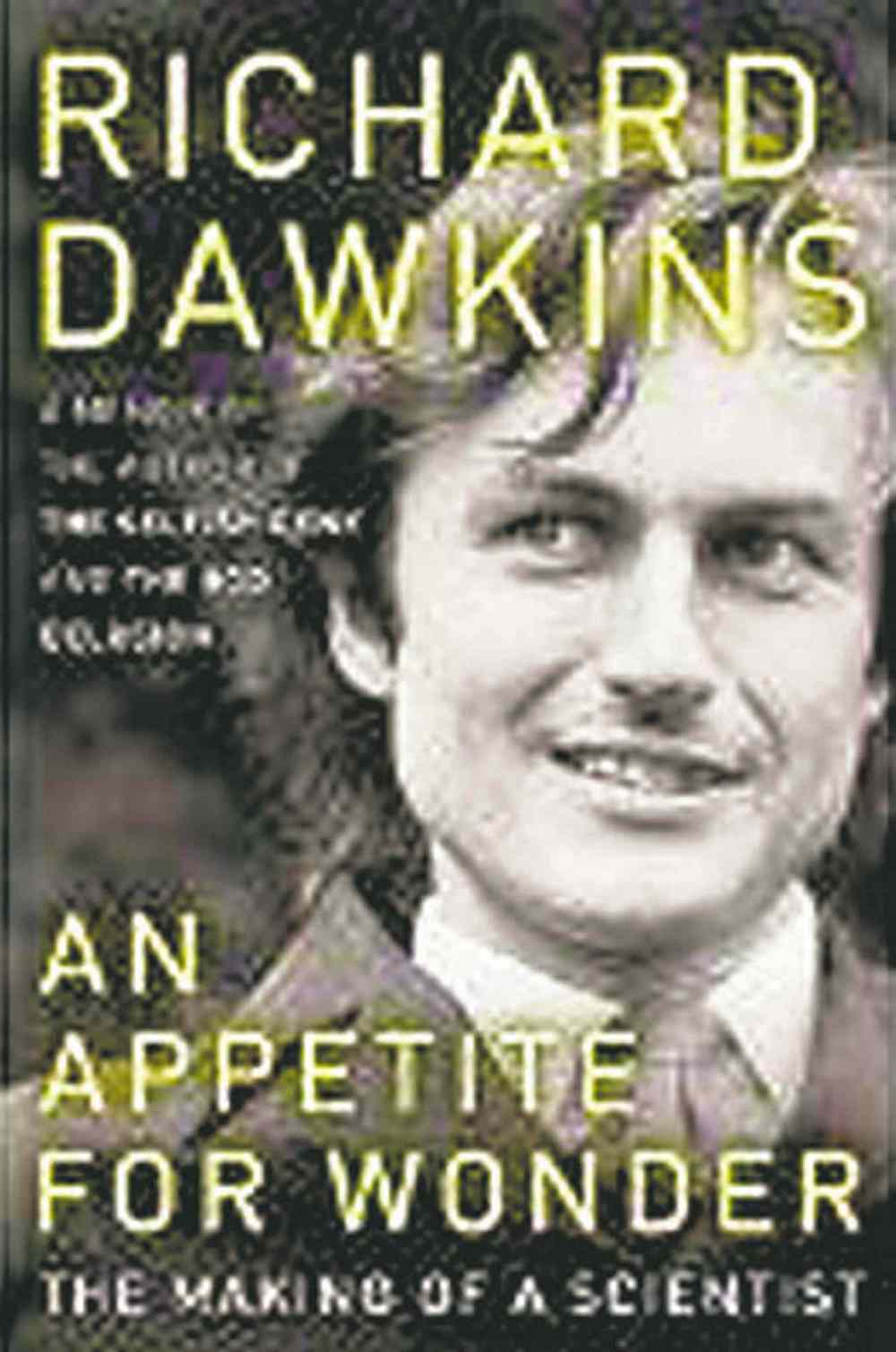
He talks as enthusiastically about poetry and music as about computers and mathematics.
In one of the more intriguing chapters, he recounts his post-doctoral years in San Francisco while opposition to the Vietnam War was at its peak. Here is a biologist who has not always buried his nose in a petri dish.
As in most of his books — and fitting for science memoir — Dawkins provides lots of evolutionary and mathematical background to explain his work. Much of this serves to walk the reader through how he came to the ideas he presented in The Selfish Gene, which argues that all living organisms, human beings included, are mere vehicles to propel the central unit of a natural selection, the gene, into the next generation.
Fortunately, Dawkins’ abilities as a writer are as developed as his analytical skills. One looks forward to Vol. 2, in hopes he will pull back the curtain on his experiences as a fearless public intellectual.
Morley Walker edits the Free Press books section.