A year to remember
Free Press reviewers select their favourite reads of 2013
Advertisement
Read this article for free:
or
Already have an account? Log in here »
To continue reading, please subscribe:

Digital Subscription
One year of digital access for only $205*
- Enjoy unlimited reading on winnipegfreepress.com
- Read the E-Edition, our digital replica newspaper
- Access News Break, our award-winning app
- Play interactive puzzles
*First annual payment billed as $205.00 + GST for one year. This annual subscription will automatically renew at $233.00 + GST every 52 weeks (10% off the regular annual price of $259.35). Offer available to new and qualified returning subscribers only. Cancel any time.
To continue reading, please subscribe:
Add Free Press access to your Brandon Sun subscription for only an additional
$1 for the first 4 weeks*
- Enjoy unlimited reading on winnipegfreepress.com
- Read the E-Edition, our digital replica newspaper
- Access News Break, our award-winning app
- Play interactive puzzles
*Your next Brandon Sun subscription payment will increase by $1.00 and you will be charged $17.95 plus GST for four weeks. After four weeks, your payment will increase to $24.95 plus GST every four weeks.
Read unlimited articles for free today:
or
Already have an account? Log in here »
Hey there, time traveller!
This article was published 21/12/2013 (4663 days ago), so information in it may no longer be current.
Maybe Eleanor Catton has got enough publicity this year.
As impressive as her novel The Luminaries is — it captured among others prize the Booker and Governor General’s Award — conquering its 800 pages does takes a certain amount of willpower.
So instead of compiling a list of the best or most critically acclaimed books of the year, we’ve asked Free Press reviewers to select their personal favourites — the ones they enjoyed the most.

Here they are, fiction and non-fiction, in alphabetical order by title.
FICTION
A Constellation of Vital Phenomena,
by Anthony Marra
Stellar writing illuminates the conflict in far-flung Chechnya, in a debut that predicts a sparkling literary career. Marra’s precisely chosen, poetic prose elevates this novel to more than just another story of inhumanity.
— Harriet Zaidman
The Dilettantes, by Michael Hingston
For readers who spent their college years hanging around campus newspapers — and isn’t that everybody? — this first novel by young Edmonton Journal books columnist Michael Hingston may well be the Great Canadian Comic Novel.
— Bob Armstrong
The Empty Room, by Lauren B. Davis
Davis captures all the mannerisms, rationalizations and cover-ups of the classic alcoholic in a remarkable novel that shows the funny side of horrific and degrading scenes while never causing us to laugh at her protagonist and always retaining our sympathy.
— Dave Williamson
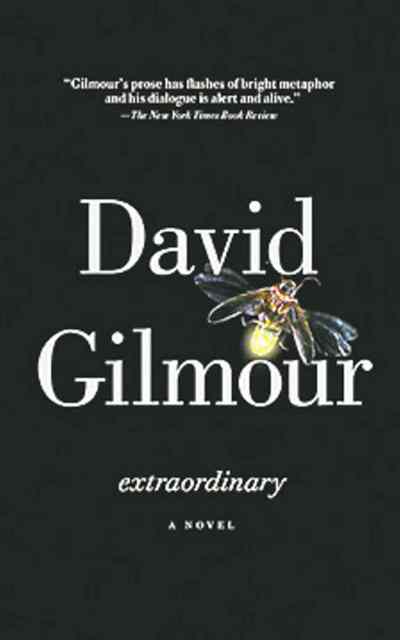
Extraordinary, by David Gilmour
The Toronto novelist uses the fraught topic of assisted suicide to quietly explore what it can reveal about the human heart and the sweet brevity of our earthly existence.
— Morley Walker
Life After Life, by Kate Atkinson
Over and over, a woman meets her untimely demise — a fall, a flu — only to be reborn on Feb. 11, 1910, and given a chance to make almost unconscious choices to alter her future. It sounds like high-concept malarkey, but in the British author’s hands, it’s a thoughtful and utterly lovely conceit that touches on destiny and free will but also love, duty and family.
— Jill Wilson

The Lowland, by Jhumpa Lahiri
Set in Calcutta and Rhode Island over six decades, this gripping novel, shortlisted for the Man Booker Prize, tells of loss, yearning and discontinuity in the lives of two Bengali brothers long after an act of violence occurs.
— Bev Sandell Greenberg
A Marker to Measure Drift,
by Alexander Maksik
Set in the immediate aftermath of Charles Taylor’s fall from power in mid-2000s Liberia, American Alexander Maksik’s luminous novel follows a single Liberian refugee as she wanders across a sun-soaked Greek island, struggling to meet both her body’s needs and her memory’s insistent demands on her consciousness.
— Julienne Isaacs
October 1970, by Louis Hamelin
This dazzling and intriguing novel questions the official account of Canada’s terrifying October Crisis. It contains ripped-from-the-headlines insights into the corrupt dealings of Quebec politicians, businesses and mobsters. Literary novel? Genre fiction? Who knows? Who cares?
— Duncan McMonagle
The Orenda, by Joseph Boyden
The final volume in the Canadian author’s broadly conceived aboriginal trilogy seeks with remarkable success to recreate one of the darkest eras of pre-Canadian history: the Jesuits’ ill-fated missions among the Huron and Iroquois in the mid-1600s.
— Neil Besner
A Tale for the Time Being, by Ruth Ozeki
The entire novel is steeped in history and the shadow of major world events. Ozeki has painted an absorbing, insightful portrait on the nature of loss, pain and hope.
— Joel Boyce

Tombstone Blues, by Chadwick Ginther
This satisfying second instalment of the fantasy-adventure trilogy that began with Thunder Road finds our reluctant hero descending literally into hell, which just happens to be in Winnipeg.
— Chris Rutkowski
Up and Down, by Terry Fallis
This comic novel about how professional spin doctors plan to reignite interest in the North American space program quickly becomes a much broader tale, with entertaining plot twists that engage anyone looking for hilarious and astute commentary on the differences between Canadians and Americans.
— Deborah Bowers
We Are All Completely Beside Ourselves, by Karen Joy Fowler
The California writer’s new novel could do for chimpanzees’ lives in North America what Rachel Carson’s Silent Spring did for pesticides.
— Julie Carl
We Live in Water, by Jess Walter
An artist of deep compassion, Jess Walter, in his first superb book of short stories, We Live In Water, has, along with Richard Ford, perhaps the sharpest eye in American fiction for the messiness, and craziness, of contemporary life.
— Rory Runnells
The Wittenbergs, by Sarah Klassen
Sarah Klassen’s debut novel is a simple but moving story about a Winnipeg Mennonite family’s attempt to connect their past to their future.
— Kathryne Cardwell
NON-FICTION
The Big Shift,

by Darrell Bricker and John Ibbitson
The authors argue Harper’s majority came from a new, and permanent, alliance of conservative western voters combined with suburbanites and mostly Asian immigrants in the Greater Toronto Area and its suburbs (traditionally Liberal voters).
— Greg Lockert
The Coup, by Ervand Abrahamian
In 1953, the British and American governments engineered a coup that overthrew Iran’s only truly democratically elected government. This book should be read by everybody wishing to understand contemporary American-Iranian relations.
— John K. Collins
Fire and Ashes, by Michael Ignatieff
In this frank and insightful memoir, former Liberal leader Michael Ignatieff reflects unabashedly on his failures, yet suggests politics has “nobility” for those willing to heed a “higher calling.”
— George A. MacLean
The God Argument, by A.C. Grayling
The British philosopher argues that the principles of secular humanism offer a sturdier ethical framework for the modern age than those offered by religion.
— Morley Walker
Lean In, by Sheryl Sandberg
That the Facebook CEO has managed to anger such polar opposites — feminists and traditionalists — within 172 pages of one slim volume shows just what a hot button the gender question is — and just how willing Sandberg is to push it.
— Julie Carl
Levels of Life, by Julian Barnes
Mixing autobiography, history and fiction, the Booker-winning British novelist mourns the sudden death of his wife with a deeply moving but stringently unsentimental memoir.

— Alison Gillmor
Maggie & Me, by Damian Barr
Maggie is former U.K. Conservative leader Margaret Thatcher. The me is author Damian Barr. An unlikely intersection, but one that yields a fine memoir about the drama, pain and humour of growing up gay, gifted and poor.
— Douglas J. Johnston
The Massey Murder, by Charlotte Gray
The well-known Toronto biographer and historian Charlotte Gray uses discerning research and a perceptive tone to weave a compelling tale of murder, class conflict and societal changes brought on by war in early 20th-century Canadian society.
— Julie Kentner
Salt Sugar Fat, by Michael Moss
The American journalist outlines the psychological methods companies employ to “divine the minds of consumers.” He hopes his book is a wake-up call to the issues and tactics at play in the food industry. “After all,” he says, “we decide what to buy.”
— Harriet Zaidman
Shopping for Votes, by Susan Delacourt
This well-written study of our national political parties and how they use modern marketing techniques to win vote provides fresh, yet disturbing, insights into citizenship and political marketing.
— Christopher Adams
Sticks and Stones, by Emily Bazelon
Bullying is the curse of childhood, and Bazelon conveys the issue’s complexities intelligently and in an accessible, straightforward style. It is a near perfect book for concerned parents and for professionals looking for fresh answers.
— Ian Stewart

Still Foolin’ ‘Em, by Billy Crystal
The paladin of modern American standup comes across in this entertaining memoir as so emotionally balanced he could crack one-liners crossing Niagara Falls on a tightrope.
— Barry Craig
The Story of Spanish, by Jean-BenoÆt Nadeau and Julie Barlow
The Quebec authors take an entertaining — if arduous — journey through 3,000 years, five empires and three continents. The results are part history, part language textbook and part telenovela.
— Gail Perry
The War on Science, by Chris Turner
The Alberta journalist Turner delivers a devastating indictment of Prime Minister Stephen Harper’s systematic, deliberate elimination or weakening of environmental policies and regulations, as well as of entire branches of government-funded science.
— Michael Dudley
The War That Ended Peace, by Margaret MacMillan
While cataloguing seemingly inescapable forces at play in the cockpit of national rivalries, MacMillan insists on the possibility of human volition and choice making a difference amid the reigning pressures. Hers is a learned insistence deserving careful assessment.
— Garin Burbank
Wave, by Sonali Deraniyagala
The London-based economist’s life changed in an instant on Dec. 26, 2004, when her family was swept away by the Asian tsunami. This affecting memoir charts her painful journey of coming to terms with a life without the people she loves.
— Greg Klassen