Rebel with a cause
Birth-control pioneer gets graphic-novel treatment
Advertisement
Read this article for free:
or
Already have an account? Log in here »
To continue reading, please subscribe:

Digital Subscription
One year of digital access for only $205*
- Enjoy unlimited reading on winnipegfreepress.com
- Read the E-Edition, our digital replica newspaper
- Access News Break, our award-winning app
- Play interactive puzzles
*First annual payment billed as $205.00 + GST for one year. This annual subscription will automatically renew at $233.00 + GST every 52 weeks (10% off the regular annual price of $259.35). Offer available to new and qualified returning subscribers only. Cancel any time.
To continue reading, please subscribe:
Add Free Press access to your Brandon Sun subscription for only an additional
$1 for the first 4 weeks*
- Enjoy unlimited reading on winnipegfreepress.com
- Read the E-Edition, our digital replica newspaper
- Access News Break, our award-winning app
- Play interactive puzzles
*Your next Brandon Sun subscription payment will increase by $1.00 and you will be charged $17.95 plus GST for four weeks. After four weeks, your payment will increase to $24.95 plus GST every four weeks.
Read unlimited articles for free today:
or
Already have an account? Log in here »
Hey there, time traveller!
This article was published 15/02/2014 (4624 days ago), so information in it may no longer be current.
The birth-control pill is sometimes listed as the most important invention of the 20th century. For that we to thank have tireless campaigner Margaret Sanger (1879-1966), who spent her life trying to make women “the absolute mistress” of their own bodies. In this vivid, dense graphic biography, Peter Bagge tells the history of the birth-control movement through this colourful woman’s life.
Bagge is an influential yet under-appreciated Seattle artist whose best-known 1990s series, Hate, satirized grunge culture. In addition to producing Spider-Man, Hulk and other titles for DC and Marvel, he has an ongoing series of History of Science strips for Discover magazine and produces comics for the libertarian magazine Reason.
In his afterword to The Woman Rebel, he notes that Sanger’s life was so action-packed he immediately thought of doing a comic book about it.
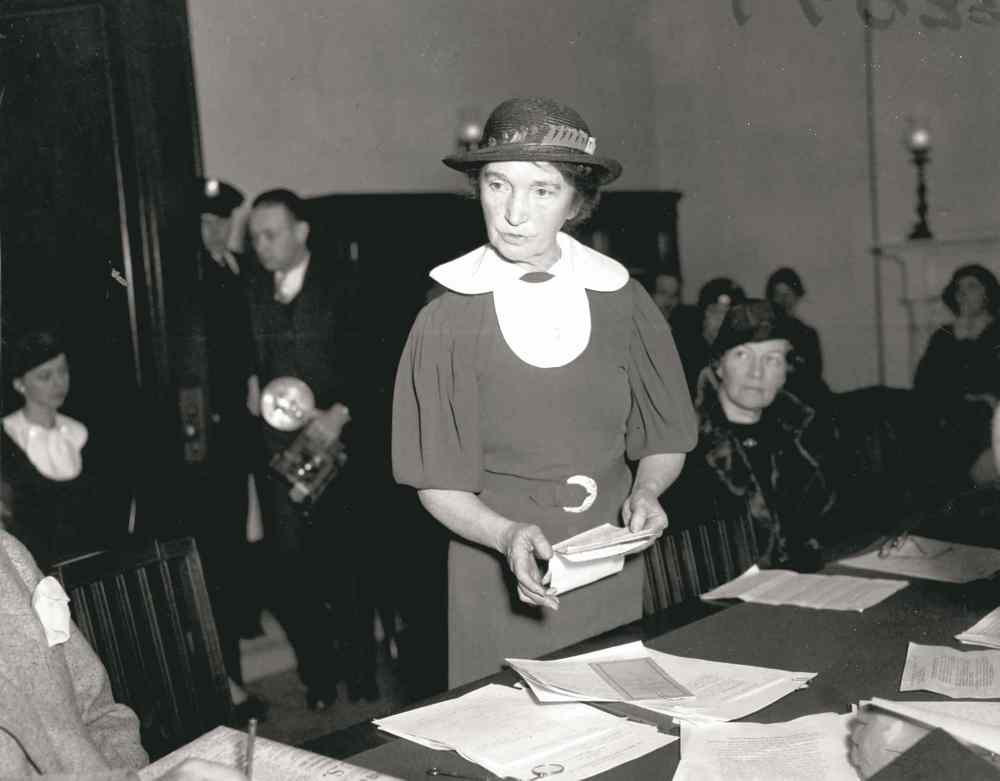
Sanger was born into an Irish-American family in the factory town of Corning, N.Y. Her stonemason father was an outspoken socialist and atheist who supported women’s suffrage; her mother was a devout Catholic who had 18 pregnancies in 25 years, with 10 of the children surviving into adulthood. (She died at 49 of tuberculosis, which the 19-year-old Margaret believed was worsened by her many pregnancies and miscarriages.)
Supported by her sisters, Margaret attended nursing school and then found work serving impoverished immigrants in New York’s Lower East Side. Margaret witnessed the horrific results of a self-administered abortion but was legally unable to offer the surviving woman medical advice on how to prevent future potentially fatal pregnancies. Bagge conveys the emotional impact of this and other scenes effectively through his signature exaggerated, expressive faces.
Sanger started writing sex-education columns for the New York Call, a socialist newspaper, with titles such as What Every Girl Should Know. In 1914, she coined the term “birth control” and launched The Woman Rebel, a monthly newsletter that published frank contraceptive information.
She was arrested in 1916 for opening the first U.S. birth-control clinic, but persevered and in 1921 founded the American Birth Control League, the precursor to Planned Parenthood.
As Bagge tells it, birth control was as much a free-speech issue as a woman’s-rights issue. Sanger fought lifelong legal battles against the 1873 Comstock Act, which made it illegal to send obscene material through the U.S. post office. Bagge draws postal officials as cartoon villains intent on destroying Sanger. Judges eventually ruled in Sanger’s favour in 1932 regarding a mail order of Japanese diaphragms for her clinic.
The second half of her life receives a more compressed treatment, as Bagge shows Margaret going on international speaking tours, gaining the support of “society matrons,” being attacked by the Catholic Church, funding research into the oral contraceptive pill that received FDA approval in 1960, and eventually handing over the reins to new leadership at Planned Parenthood.

This changing of the guard is one of the sequences where Bagge acknowledges Margaret’s controversial positions on eugenics, race and abortion (she was opposed to the latter, but for maternal-health reasons rather than moral ones). An informative set of endnotes explains Margaret’s complex political stances and refers us to Bagge’s sources.
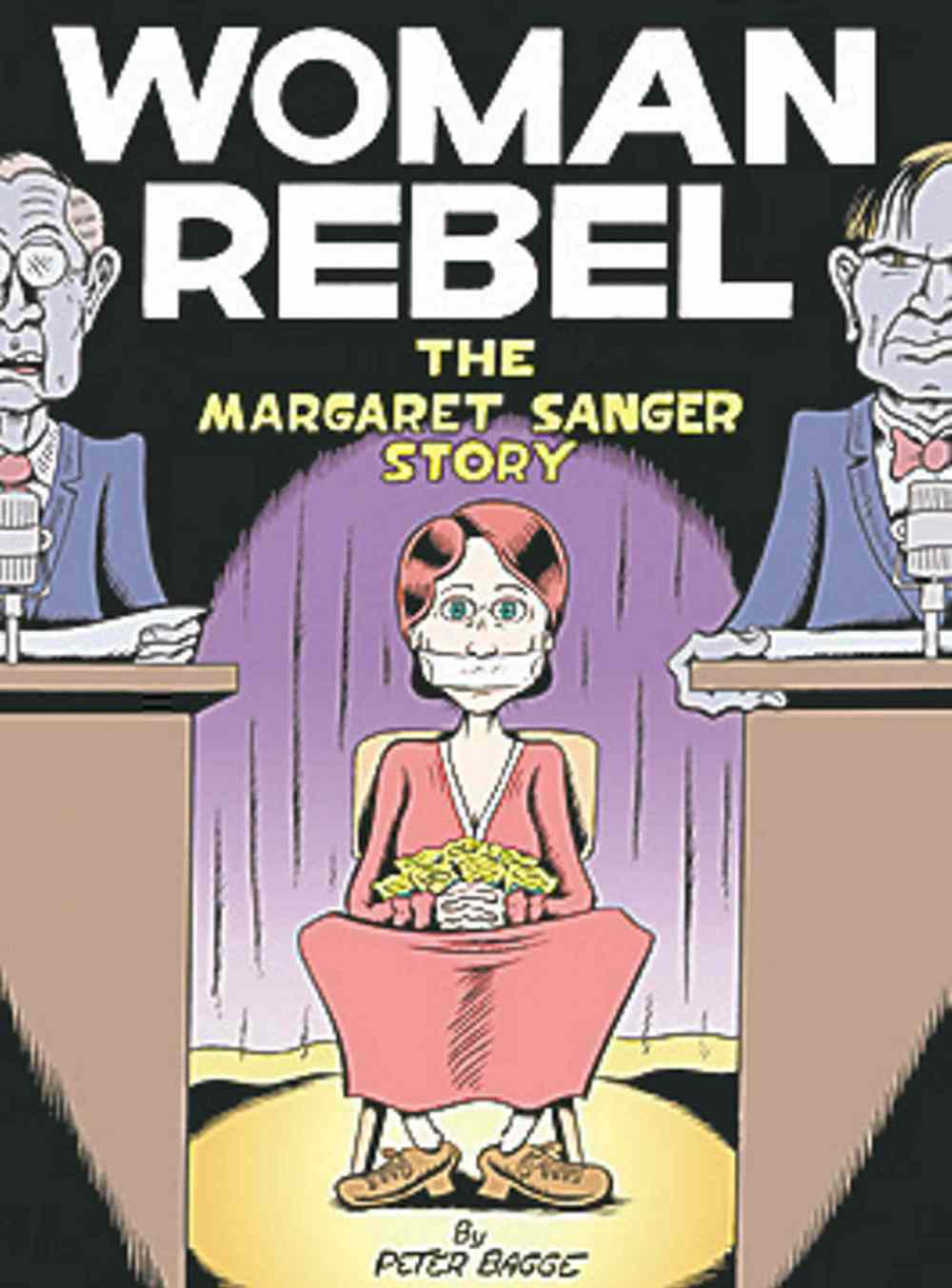
Alongside this professional history of Margaret the activist, Bagge tells the personal story of Margaret the bohemian free-thinker who, like her ally Emma Goldman, believed in free love and insisted on open marriages. We also learn about her sister Ethel’s role in the movement, and the often tense yet loyal relationship between the two women.
All of this is drawn in Bagge’s rubbery cartoon style, reminiscent of R. Crumb and early Warner Brothers cartoons. Like Chester Brown’s Louis Riel: A Comic-Strip Biography, The Woman Rebel tells the story of a real life in the larger-than-life form of comics, reminding us that regular people and superheroes are perhaps not that different.
Candida Rifkind teaches Canadian literature and graphic narratives in the English department of the University of Winnipeg.
Woman Rebel
The Margaret Sanger Story
By Peter Bagge
Drawn and Quarterly, 80 pages, $22
Related Articles
What's open, what's closed on Louis Riel Day
Advertisement Advertise With Us
Advertisement Advertise With Us
History
Updated on Saturday, February 15, 2014 8:02 AM CST: Tweaks formatting.