From Tuscany to Georgia
Memoir traces author's troubled early roots in the Deep South
Advertisement
Read this article for free:
or
Already have an account? Log in here »
To continue reading, please subscribe:

Digital Subscription
One year of digital access for only $205*
- Enjoy unlimited reading on winnipegfreepress.com
- Read the E-Edition, our digital replica newspaper
- Access News Break, our award-winning app
- Play interactive puzzles
*First annual payment billed as $205.00 + GST for one year. This annual subscription will automatically renew at $233.00 + GST every 52 weeks (10% off the regular annual price of $259.35). Offer available to new and qualified returning subscribers only. Cancel any time.
To continue reading, please subscribe:
Add Free Press access to your Brandon Sun subscription for only an additional
$1 for the first 4 weeks*
- Enjoy unlimited reading on winnipegfreepress.com
- Read the E-Edition, our digital replica newspaper
- Access News Break, our award-winning app
- Play interactive puzzles
*Your next Brandon Sun subscription payment will increase by $1.00 and you will be charged $17.95 plus GST for four weeks. After four weeks, your payment will increase to $24.95 plus GST every four weeks.
Read unlimited articles for free today:
or
Already have an account? Log in here »
Hey there, time traveller!
This article was published 05/04/2014 (4541 days ago), so information in it may no longer be current.
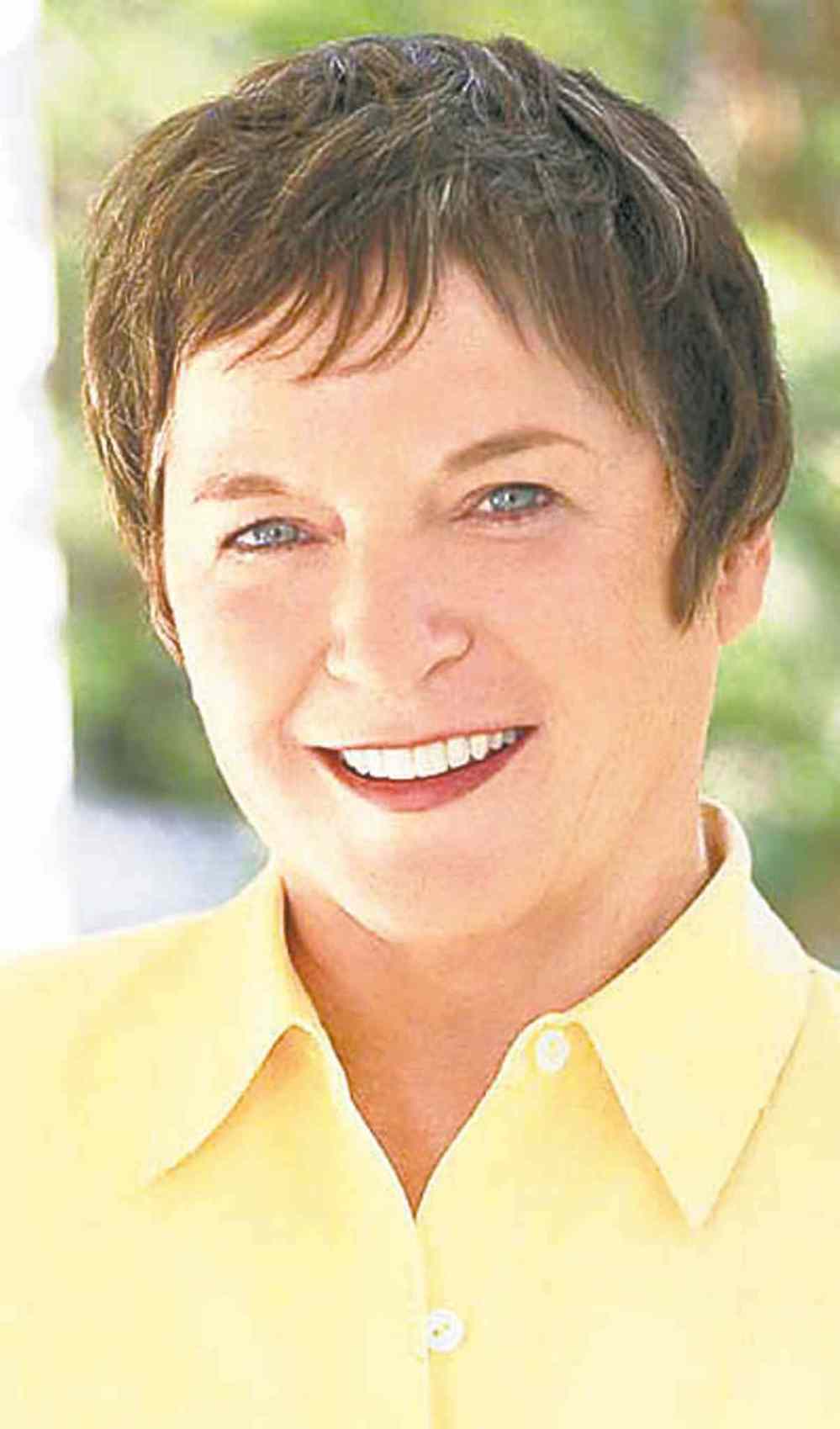
With powerful, compact language and an uncanny skill with imagery, American writer Frances Mayes has raised the bar on writing memoirs. In Under Magnolia, Mayes offers us the bittersweet return home of someone who admittedly spent her youth trying to get away.
And get away she did, with remarkable results. Mayes’ renovation of an ancient Italian villa spawned her 1996 memoir, Under the Tuscan Sun, which became a bestseller and was later made into a film starring Diane Lane. Its success launched the author into worldwide fame, and was soon followed by two more volumes in a Tuscan trilogy of funny and inspiring reminiscences of life abroad.
With this newest offering, Mayes, professor, gourmet cook and widely published poet and essayist, gives us a lyrical but penetrating glimpse into the troubled home life in which she was raised. Set in the American Deep South, this is a beautiful, poignant and tragic story of the Mayes family, whose outward image of wealth and position belies a reality of an unpredictable, despicably cruel father and an ethereal, emotionally dependent alcoholic mother.

Evoking the imagery of William Faulkner’s short story A Rose for Emily, Mayes’ writing seems to almost channel the writer she so admired. At times heartbreaking, at times whimsical, her recollections never rely on self-pity or self-absorption to help readers share her past. Instead, stunning metaphors make the sense of place and her childhood reality come to life on the page: “Noon burns the whole town into stillness.”
While Mayes’ previous memoirs have been lighthearted, adventurous tales, Under Magnolia is a sensitive, gut-wrenching journey into the heart of a solitary, highly creative child who often invented imaginary scenarios to replace the tragic reality she was experiencing. Although the narrative is solid prose, the images are pure poetry, as with her description of a trip to the White Springs: “I liked to dive there, deep into the bottomless, roiling black water. The sulfur smell drenched my skin, even when I dried off, and I felt I’d dived down to hell.”
She paints a picture of a home crackling with lethal tension. Her father, perpetually cross and frequently brutal, treats her as an annoyance. Her mother, barely there in anything but body, is too preoccupied with herself to pay her youngest child any attention. While her parents spend their time alternately socializing and bickering, and her two older sisters are off doing their own thing, Mayes finds comfort with kind and gentle household staff.
When left unsupervised, the bright, curious youngster becomes a pillaging, plundering snoop, searching through drawers and closets, looking for secrets to help explain what makes people, particularly her parents, tick. “What are they hiding? Knowing them, they probably don’t know themselves.”
A lonely childhood spent with her own imagination as a constant companion is no doubt at the heart of Mayes’ development as a writer. Even as a child, her fascination with language is evident. She haunts the local public library and keeps diaries. Her notebook is kept in a code she has devised, eliminating as much as possible the use of the letter “e” since she knows it occurs 131.5 times in every 1,000 letters. A voracious reader, she absorbs facts and statistics with powers of observation that reach well beyond the quantifiable: “Cypresses grow in standing black water. We are like that, trees growing out of their own reflections.”

Writing for her becomes a way of filling the void. As she delves into the past, her love of words and her ability to create images are never far below the surface. It was so quiet, she says of one long, lonely summer, “I could hear my hair growing.”
Like many satisfying tales, this one ends in a kind of redemption: Ultimately, Mayes’ love of the seething south, and for the fractured family that produced her and created her writer’s soul.
In her own words: “what one finds in the enterprise of writing is that there is no bottom. Only a contraction into the rhythmic, blood-pumping heart of the past.”
Angela Narth is a Winnipeg author and literary reviewer. Her chapter on writing children’s literature is slated for release in spring 2014 in the anthology Writing After Retirement: Tips by Successful Retired Writers, from Scarecrow Press.
History
Updated on Saturday, April 5, 2014 7:53 AM CDT: Tweaks formatting, adds book jacket.