WEATHER ALERT

Probable cause: Ability to find water key to homo sapiens’ survival, ecologist says

Ability to find water key to homo sapiens' survival, ecologist says

Advertisement

Advertise with us

Contemporaries in the scientific world call Clive Finlayson a Neanderthal buff, acknowledging the ecologist's commitment to understanding why modern man won the evolutionary race over relatives with larger brains and larger statures.

Read this article for free:

or

Already have an account? Log in here »

To continue reading, please subscribe:

Subscribe and receive a limited-edition Free Press branded hat or tote.

Digital Subscription

One year of digital access for only $205*

  • Enjoy unlimited reading on winnipegfreepress.com
  • Read the E-Edition, our digital replica newspaper
  • Access News Break, our award-winning app
  • Play interactive puzzles

*First annual payment billed as $205.00 + GST for one year. This annual subscription will automatically renew at $233.00 + GST every 52 weeks (10% off the regular annual price of $259.35). Offer available to new and qualified returning subscribers only. Cancel any time.

To continue reading, please subscribe:

Add Free Press access to your Brandon Sun subscription for only an additional

$1 for the first 4 weeks*

  • Enjoy unlimited reading on winnipegfreepress.com
  • Read the E-Edition, our digital replica newspaper
  • Access News Break, our award-winning app
  • Play interactive puzzles
Start now

*Your next Brandon Sun subscription payment will increase by $1.00 and you will be charged $17.95 plus GST for four weeks. After four weeks, your payment will increase to $24.95 plus GST every four weeks.

Hey there, time traveller!
This article was published 07/06/2014 (4419 days ago), so information in it may no longer be current.

Contemporaries in the scientific world call Clive Finlayson a Neanderthal buff, acknowledging the ecologist’s commitment to understanding why modern man won the evolutionary race over relatives with larger brains and larger statures.

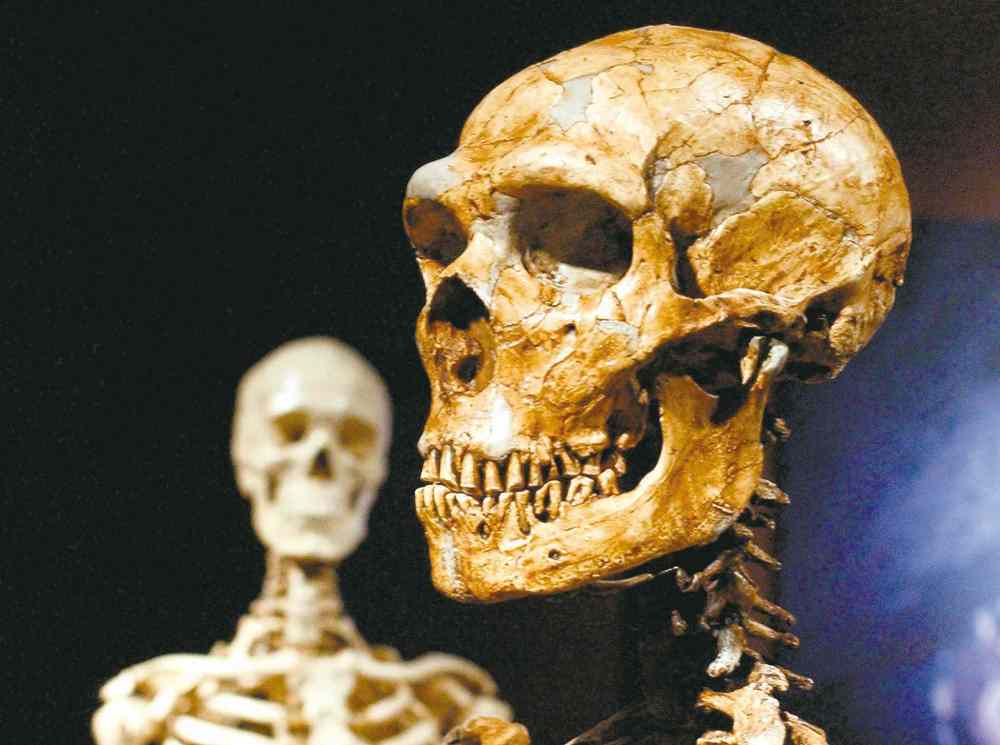
Finlayson resides in Gibraltar, home to world-renowned archeological sites holding evidence of Neanderthals who lived there as recently as 30,000 years ago.

He has written extensively about homo sapiens’ survival during the long and likely torturous process implied in Darwin’s revolutionary ideas about the natural selection of species.
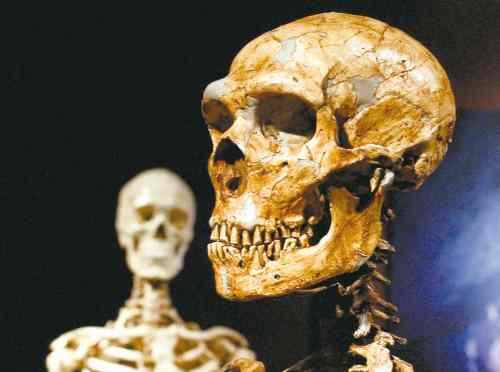
Frank Franklin II / The Associated Press files

Perplexing questions of where we came from and what triggered our ascendancy over our Neanderthal cousins prompted Finlayson’s critically-acclaimed book, The Humans Who Went Extinct (2009).

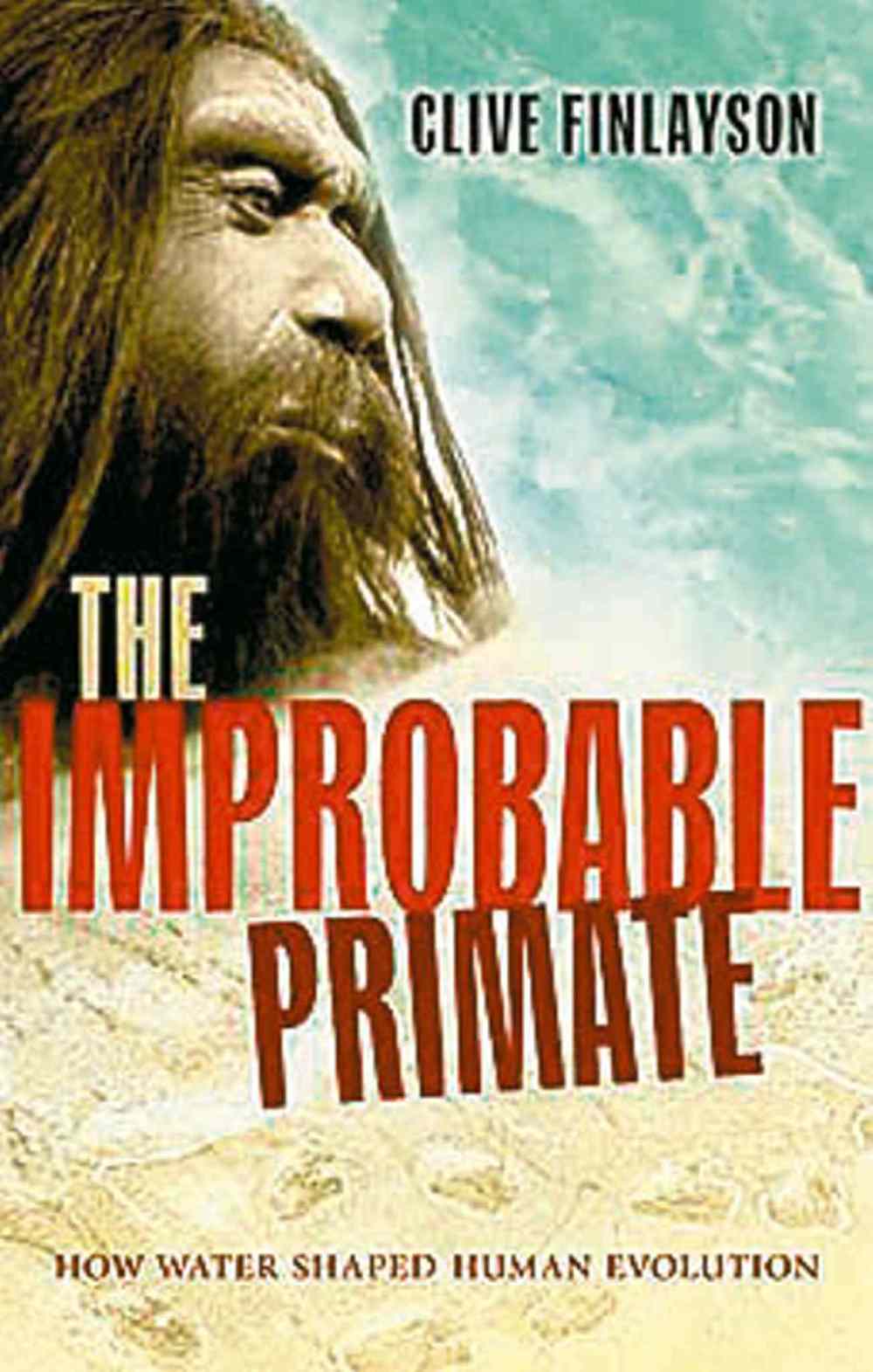
His most recent offering is a provocatively simple insight into human evolution, suggesting its driving force was the ability — or luck — of some primates to locate water during the Earth’s many ecological changes.

Typical of the ongoing science-versus-religion battle, Finlayson’s writing and research provides a sharp contrast with the less-cerebral but much more comfortable faith-based notion of Adam and Eve being our seminal kin.

To understand how our species fit into nature’s selection hinges on the correct categorization of humans, and in The Improbable Primate, Finlayson shows why previous categories were likely incorrect.

He leans heavily on the findings of Ernst Mayer, one of the 20th century’s leading evolutionary biologists, who in 1942 first defined biological species as “groups of organisms capable of freely interbreeding with each other,” and suggested that “never more than one species of man existed on the earth at any one time”.

Finlayson uses Mayer’s assumptions to argue human development began with the emergence of an erect, two-legged primate, homo erectus, nearly two million years ago, and that other human-like primates such as Neanderthals represent different lineages of the one species.

He disagrees with scientists who grant special species status to differing skeletal remains of erect primates, and believes differences in physical structure point to natural selection caused by geographical environments, and not to evidence of a different species.

The arrival of this fully upright primate was a significant departure from some earlier but similar tree-traversing models and, as Finlayson states in the book’s title, it was an improbable model, fashioned by natural-selection pressures but remarkably capable of evolving in response to climatic and environmental changes.

Finlayson posits that throughout homo sapiens’ subsequent lengthy evolution, evidence from artifacts and skeletal fragments found in Africa and Eurasia prove our early ancestors were “geographically variable,” but probably “capable of reproducing with each other.”

He reminds readers DNA testing has proven that evidence of inter-breeding with Neanderthals “was retained in our genome,” and that another ancient lineage, the Denisovans from southeast Asia, are also “shown to have exchanged genes with our own.”

In the preface to The Improbable Primate, Finlayson asserts that “water was a key ingredient in our evolution,” then defends this hypothesis throughout the book’s 11 chapters, using his own research and field work along with a well-documented array of comparative analyses by other scientists.
The Improbable Primate.

The result is a scholarly, revelatory, and contemplative chronology of human development that inquisitive readers should find fascinating.

One chapter is devoted to the relatively recent migration of humans into Australia approximately 50,000 years ago, what Finlayson calls “a unique opportunity to observe how humans took on the challenge of living in an arid world.”

The Australian story effectively reminds readers these early humans had “an almost 2 million year old heritage of adaptation… and were well-versed in the art of finding water.”

Finlayson’s chronology of our evolution into modern humans requires an accurate recalling of taxonomic names of various species and lineages that comprise the story of homo sapiens.

This can detract from the book’s main idea, which first appears in its subtitle, but an emphasis upon water, the undisputed precursor to life as we know it, should nevertheless attract a variety of readers.


Joseph Hnatiuk is a retired teacher, and finds some humour in now being an education Neanderthal.

History

Updated on Saturday, June 7, 2014 7:23 AM CDT: Formatting.
Report Error Submit a Tip

More Stories

Sen. Lindsey Graham likely died after aorta tear, medical examiner says

Seung Min Kim, Mary Clare Jalonick And Meg Kinnard, The Associated Press 8 minute read Preview

Sen. Lindsey Graham likely died after aorta tear, medical examiner says

Seung Min Kim, Mary Clare Jalonick And Meg Kinnard, The Associated Press 8 minute read Updated: 10:08 AM CDT

WASHINGTON (AP) — Sen. Lindsey Graham, one of President Donald Trump's closest allies in Congress who traveled the globe to advocate for a more aggressive U.S. foreign policy, died after a tear in his aorta, according to a preliminary medical examiner finding shared by his office.

The tear in the inner wall of the aorta, called an aortic dissection, was related to the hardening of Graham's arteries. An official cause of death will be disclosed after toxicological and microscopic testing.

Graham, a prominent South Carolina Republican and former Air Force lawyer who served in Congress for more than three decades, had turned 71 years old just two days before dying on Saturday night. His office had originally said he had suffered from a “brief and sudden illness."

Trump, who talked to Graham frequently, said he was “like a member of the family. It’s very tough.” He said on NBC’s ”Meet the Press" that Graham had called him on Saturday night after returning from a trip to Ukraine and “sounded a little bit tired, but perfect.” The president ordered that flags across the country be flown at half-staff until next Saturday evening.

Read
Updated: 10:08 AM CDT

Manitoba communities smash heat records

Free Press staff 2 minute read Preview

Manitoba communities smash heat records

Free Press staff 2 minute read 9:49 AM CDT

Parts of Manitoba smashed temperature records over the weekend, amid an ongoing heat wave that is not expected to break for several days.

Environment and Climate Change Canada projected temperatures to reach the mid-30s in southern Manitoba Monday, with the humidex making it feel more like mid-40s.

The heat threat prompted Environment Canada to issue an orange-level heat warning across southern Manitoba. A yellow-level warning was issued for central parts of the province, where temperatures are expected to reach the low 30s but feel hotter with the humidity.

Even parts of northern Manitoba, where temperatures are forecast around 30 C, are under yellow-level warnings, Environment Canada said.

Read
9:49 AM CDT

Carney plays well on the road

Editorial, July 13 4 minute read Preview

Carney plays well on the road

Editorial, July 13 4 minute read 2:01 AM CDT

Bankers are detail-oriented, pragmatic types. They seek to maximize assets incrementally, without taking big swings or big risks.

Bankers who run central banks — controlling the monetary policy of nations and states — must also think strategically and geopolitically, taking care of the details of national monetary policy, protecting assets and minimizing risk while also positioning and protecting their nations in a global economy fraught with financial and political pitfalls.

Given that Canadian Prime Minister Mark Carney has been head of both the Bank of Canada and the Bank of England, it should be no surprise that, since he entered the political realm and became prime minister in 2025, he has governed like a careful national banker — the sort who raises or lowers interest rates a quarter-point at a time while carefully plotting a course through choppy geopolitical seas.

Domestically, Carney’s economic policies have focused on realizing the value of Canada’s assets in a post-COVID, inflationary global economy disrupted by the trade chaos of U.S. President Donald Trump, the U.S. and Israel’s war on Iran and Russia’s continuing war with Ukraine.

Read
2:01 AM CDT

Probable cause: Ability to find water key to homo sapiens’ survival, ecologist says

Reviewed by Joseph Hnatiuk 4 minute read Preview

Probable cause: Ability to find water key to homo sapiens’ survival, ecologist says

Reviewed by Joseph Hnatiuk 4 minute read Saturday, Jun. 7, 2014

Contemporaries in the scientific world call Clive Finlayson a Neanderthal buff, acknowledging the ecologist's commitment to understanding why modern man won the evolutionary race over relatives with larger brains and larger statures.

Finlayson resides in Gibraltar, home to world-renowned archeological sites holding evidence of Neanderthals who lived there as recently as 30,000 years ago.

He has written extensively about homo sapiens' survival during the long and likely torturous process implied in Darwin's revolutionary ideas about the natural selection of species.

Perplexing questions of where we came from and what triggered our ascendancy over our Neanderthal cousins prompted Finlayson's critically-acclaimed book, The Humans Who Went Extinct (2009).

Read
Saturday, Jun. 7, 2014

‘Very quiet around here’: Duck Mountain biz owners plead for assistance after flooding washes out park

Morgan Modjeski 5 minute read Preview

‘Very quiet around here’: Duck Mountain biz owners plead for assistance after flooding washes out park

Morgan Modjeski 5 minute read Saturday, Jul. 11, 2026

Business owners at Duck Mountain Provincial Park who have lost thousands in revenue say they’re feeling left out of flood-recovery assistance in the Parkland region.

Dawn Dowsett, owner of Blue Lake Resort, said life has been chaotic since the park closed on June 30 due to road washouts.

While there is limited access to the park, with some seasonal campers and cabin owners returning, it’s listed as closed on the Government of Manitoba’s website, with no nightly camping available until July 23.

She says the resort, which includes a restaurant and store, is missing out on part of the summer, a peak time for the business.

Read
Saturday, Jul. 11, 2026

Former Manitoba MP charged with firearms offences

Tyler Searle 4 minute read Preview

Former Manitoba MP charged with firearms offences

Tyler Searle 4 minute read Updated: 12:10 PM CDT

A former member of Parliament from Manitoba has been charged after a stockpile of ammunition and firearms — including an antique cannon — and $300,000 in cash were seized from a Dauphin home last week.

Manitoba RCMP charged Inky Mark, 78, with a dozen firearms-related charges, including firearms trafficking, possession of property obtained by crime, unsafe storage and careless use of a firearm.

In total, RCMP seized 439 firearms from Mark’s property, Mounties said at a news conference Monday morning.

It is expected to take investigators weeks to sort through the arsenal and determine how many of the weapons were illegally possessed, but police have already identified three guns that are believed to have been illegally trafficked, and one that had a tampered serial number, RCMP Cpl. Barry Kirby said.

Read
Updated: 12:10 PM CDT