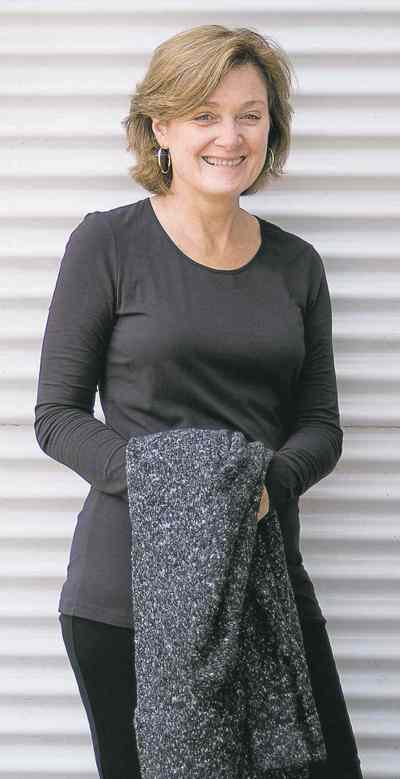
Thomas in a category of her own with latest novel
Advertisement
Read this article for free:
or
Already have an account? Log in here »
To continue reading, please subscribe:

Digital Subscription
One year of digital access for only $205*
- Enjoy unlimited reading on winnipegfreepress.com
- Read the E-Edition, our digital replica newspaper
- Access News Break, our award-winning app
- Play interactive puzzles
*First annual payment billed as $205.00 + GST for one year. This annual subscription will automatically renew at $233.00 + GST every 52 weeks (10% off the regular annual price of $259.35). Offer available to new and qualified returning subscribers only. Cancel any time.
To continue reading, please subscribe:
Add Free Press access to your Brandon Sun subscription for only an additional
$1 for the first 4 weeks*
- Enjoy unlimited reading on winnipegfreepress.com
- Read the E-Edition, our digital replica newspaper
- Access News Break, our award-winning app
- Play interactive puzzles
*Your next Brandon Sun subscription payment will increase by $1.00 and you will be charged $17.95 plus GST for four weeks. After four weeks, your payment will increase to $24.95 plus GST every four weeks.
Read unlimited articles for free today:
or
Already have an account? Log in here »
Hey there, time traveller!
This article was published 20/09/2014 (4320 days ago), so information in it may no longer be current.
After finishing Joan Thomas’s latest novel, The Opening Sky, I immediately went out to find her others — the breakout Commonwealth Prize-winning Reading By Lightning and 2010’s Curiosity.
The Opening Sky is the most quintessentially Winnipeg of the three. It tells the story of a family: Aiden Phimister, a hip, middle-aged therapist, his wife Liz, an A-type professional with a penchant for throw pillows, and their daughter Sylvie, 19 years old, passionate about global issues, and passionately in love with her serious boyfriend Noah.
Tensions among the three are various and shifting, but reach a tipping point when a personal crisis throws a violent incident in Sylvie’s complicated childhood into sharp relief.

Thomas is often compared to Carol Shields, Meg Wolitzer and Jonathan Franzen, but really slips into a category by herself here. The Opening Sky does not perfectly balance its wealth of psychological and family tensions, but it comes close.
The Phimisters are what you might cautiously call a “typical” Wolseley family — concerned with social justice and environmental issues, they are invested in the life of the neighbourhood, even as they resist any kind of absolutism: “Aiden… was embarrassed by Wolseley’s earnestness, the bookstore full of crystals and tarot cards and Tibetan prayer flags, the women lying down in the street to stop Malathion trucks from rolling in when the city wanted to fog for mosquitoes.”
However the family might resist prescribed attitudes, a preoccupation with environmental degradation troubles the pages of The Opening Sky. When the city cuts down the Phimisters’ disease-ridden elms, Aiden retreats to his bed. He cherishes Gerard Manley Hopkins’ approach to nature, expressed in the lines of God’s Grandeur (“The world is charged with the grandeur of God./It will flame out, like shining from shook foil…”) and the death of the trees necessarily stands, for Aiden, as a symbol for other losses in his life.
Some of the conflict in The Opening Sky stems from Aiden’s need to escape his own family, his attachment to a remote cabin that has been a sore spot with Liz for the whole of their married life. Alone on the island years before, Aiden had slept outside on the rocky ground: “lying on that granite slab, he was stoned by wonder at the faithful rotation of the Earth and the perfection of a day washed with light by a sun that hadn’t even risen yet.”
But Liz’s fraught relationship with her hot-blooded, beautiful daughter is perhaps the most painful of the many explored in The Opening Sky, and highlights Thomas’s principal achievement in the novel — her ability to stay faithful to the independence of her three central characters’ perspectives.
She dives deep into the interior lives of each, but messages between them are never properly communicated or fully understood. In this way, the Phimisters operate like any family, struggling and often failing to love each other unconditionally through impassible emotional barriers.

Thomas’s writing taps subterranean registers of feeling. Her characters toy with a dangerous question: Is love worth any personal risk? In one of the book’s most profound moments, while Liz waits for Aiden to swim the distance from his island to the dock on the mainland, her carefully submerged care for her husband breaks the surface of her perfectly maintained independence: “He’s a dark animal moving through luminous water — she will never be that free. Her love for him flounders in her chest. Speak your heart, she says to herself. He clambers up onto the dock, water pouring off his thighs and blackening the wood, and she hands him a towel. ‘Aiden,’ she says.”
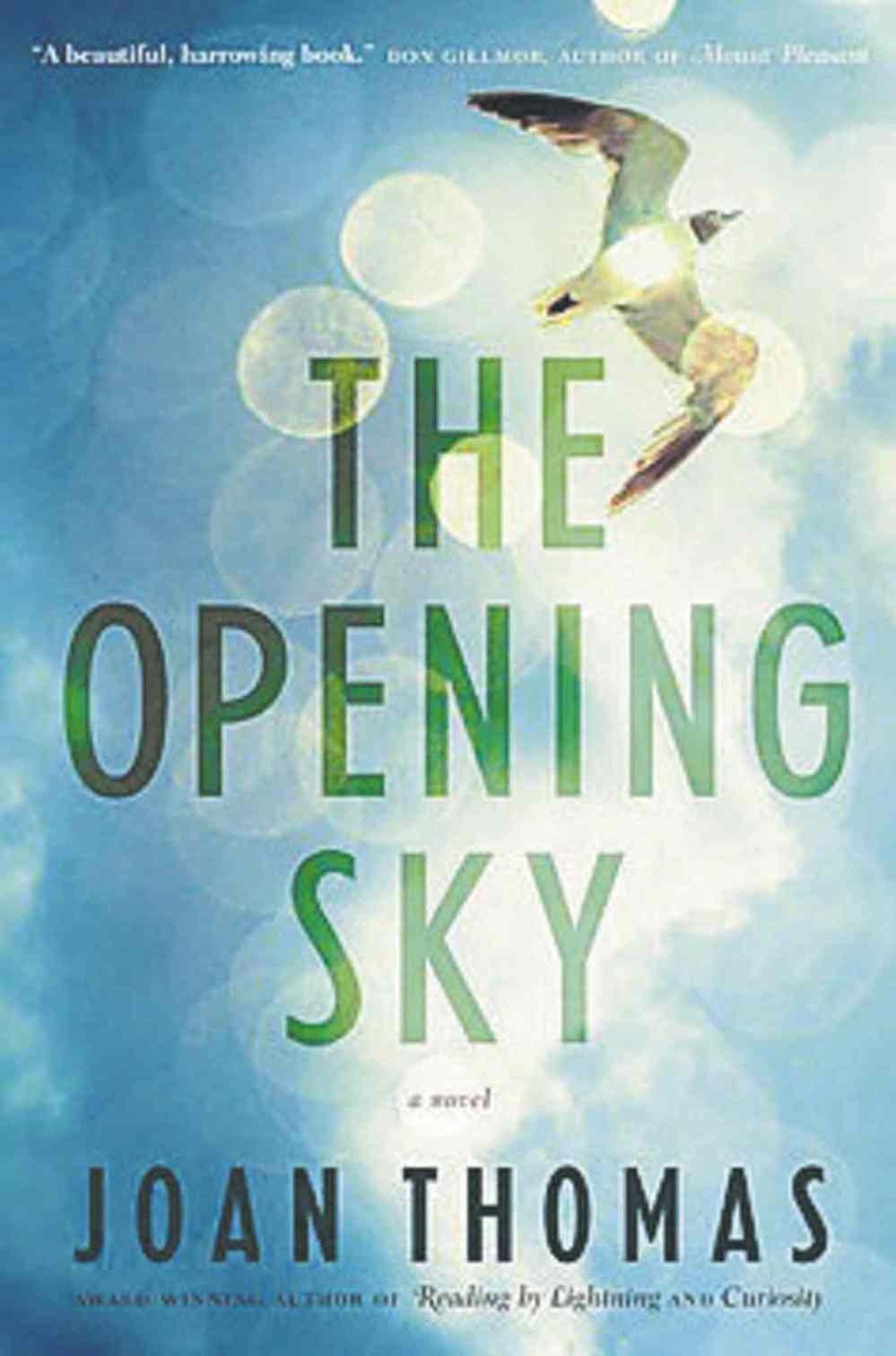
This is not a perfect novel — just as her characters take risks in love, Thomas herself takes narrative risks with The Opening Sky, and offers no typical solutions.
But these risks are the most beautiful; they are the risks worth taking. This is a book worth reading.
Julienne Isaacs is a Winnipeg-based writer and editor.
BOOK REVIEW
The Opening Sky
By Joan Thomas
McClelland & Stewart, 368 pages, $30
Related Articles
Thomas, Chafe on shortlists for Governor General's awards
Advertisement Advertise With Us
Advertisement Advertise With Us
History
Updated on Saturday, September 20, 2014 7:51 AM CDT: Formatting.