Displaced and orphaned, Somali’s traumatic tale traced across Africa
Advertisement
Read this article for free:
or
Already have an account? Log in here »
To continue reading, please subscribe:

Digital Subscription
One year of digital access for only $205*
- Enjoy unlimited reading on winnipegfreepress.com
- Read the E-Edition, our digital replica newspaper
- Access News Break, our award-winning app
- Play interactive puzzles
*First annual payment billed as $205.00 + GST for one year. This annual subscription will automatically renew at $233.00 + GST every 52 weeks (10% off the regular annual price of $259.35). Offer available to new and qualified returning subscribers only. Cancel any time.
To continue reading, please subscribe:
Add Free Press access to your Brandon Sun subscription for only an additional
$1 for the first 4 weeks*
- Enjoy unlimited reading on winnipegfreepress.com
- Read the E-Edition, our digital replica newspaper
- Access News Break, our award-winning app
- Play interactive puzzles
*Your next Brandon Sun subscription payment will increase by $1.00 and you will be charged $17.95 plus GST for four weeks. After four weeks, your payment will increase to $24.95 plus GST every four weeks.
Read unlimited articles for free today:
or
Already have an account? Log in here »
Hey there, time traveller!
This article was published 07/03/2015 (4179 days ago), so information in it may no longer be current.
In May 2008 Asad Abdullahi was attacked, his business was destroyed and he lost almost everything in a wave of bloody xenophobic attacks on African immigrants by local black South Africans.
Asad was a Somali orphan from Somalia who had scratched and clawed his way to becoming a successful shop owner in the shantytowns of South Africa. The violence left him living in a refugee camp — again — and having to start over. Again.
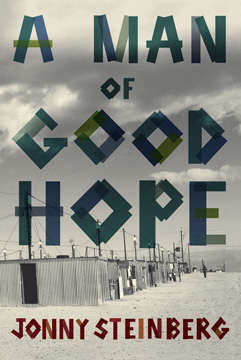
In his latest book of non-fiction, South African academic Jonny Steinberg digs deep to showcase Asad’s life against a backdrop of war, human trafficking and racism.
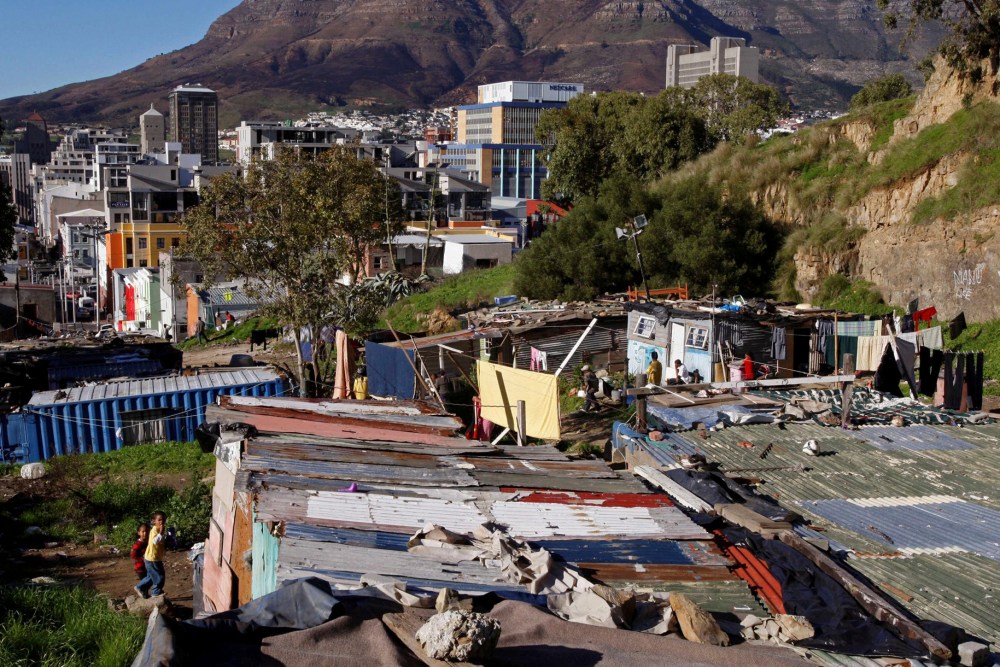
The story is about Asad’s physical journey and, just as importantly, his psychological journey. When he was eight, soldiers shot and killed his mother, his father was kidnapped and he never saw his family again.
He grew up an orphan on the street, “a stone on the road anybody could just come along and kick.”
Steinberg’s fascination with Asad’s life, and their lengthy interview sessions, are an integral part of the story.
Asad would only do the interviews, over the space of months, in a car parked away from his home. He refused to have a white man draw unsavoury attention to his business and his family. In the car he could keep a 360-degree lookout for thugs with guns — a constant threat for Somalis running a neighbourhood store.
Steinberg breaks up Asad’s extremely compelling story with introspective moments where he questions his role as biographer. At one point in the car, Asad was recollecting the period where his wife had taken their children back home to family in Somaliland. Steinberg pushes Asad to admit he knew they were not his priority.
When Asad reacts angrily, Steinberg asks himself: “Who on earth am I to second-guess a man’s feelings about the woman and children he just lost? How can I presume to see that far into a person’s inner world?”
Those are pivotal questions for a biographer — and for readers. Again and again Steinberg reveals moments where the mere fact of having his story recorded is shaping the way Asad is telling it.
Steinberg travels to all the places Asad can remember on his long journey from Somali to South Africa. He walks the same streets, stops in the same café, and talks to the people who might remember the young orphan Asad.
Steinberg finds some inconsistencies — moments where he realizes Asad either does not accurately remember or is modifying his past as he goes.
Asad’s not alone. Recently, Shin Dong-hyuk, one of the most well-known North Korean defectors, admitted there were some inaccuracies in his bestselling memoir Escape from Camp 14. Some activists, readers and supporters were initially angry. But experts are defending Dong-hyuk, saying victims of trauma often recast details as a form of emotional protection.
It is eye-opening to see a biographer and his subject confront the effects of trauma and to see the interview process unfold on the page.
Steinberg gives the reader Asad’s perspective on his life, and then filters it through his own experience as a white South African who knows very little about the world of refugees and human trafficking.

And that world is huge. On one hand the book is Asad’s story: a very deeply personal look at life as a nationless orphan, bounced from refugee camp, to street hovels, to the homes of distant clan members, and his determination to make something of his life.
But Steinberg also puts Asad’s story in context of a world of displaced people struggling to survive war, poverty and corruption. Asad’s journey from Ethiopia to South Africa, at the mercy of human smugglers, is nail-biting. Then Steinberg zooms out the microscope for an incredibly well-researched big picture of life for migrants and refugees.
But ultimately, as the title implies, A Man of Good Hope is a book about the driving force of hope. And Asad’s life more than lives up to Steinberg’s fascination.
Joanne Kelly is a journalism instructor at Red River College. She talks books on CBC’s Weekend Morning Show and hosts a public book club at McNally Robinson. You can follow her on Twitter @joannemkelly.