Fun, surrealist stories suffer small setbacks
Advertisement
Read this article for free:
or
Already have an account? Log in here »
To continue reading, please subscribe:

Digital Subscription
One year of digital access for only $205*
- Enjoy unlimited reading on winnipegfreepress.com
- Read the E-Edition, our digital replica newspaper
- Access News Break, our award-winning app
- Play interactive puzzles
*First annual payment billed as $205.00 + GST for one year. This annual subscription will automatically renew at $233.00 + GST every 52 weeks (10% off the regular annual price of $259.35). Offer available to new and qualified returning subscribers only. Cancel any time.
To continue reading, please subscribe:
Add Free Press access to your Brandon Sun subscription for only an additional
$1 for the first 4 weeks*
- Enjoy unlimited reading on winnipegfreepress.com
- Read the E-Edition, our digital replica newspaper
- Access News Break, our award-winning app
- Play interactive puzzles
*Your next Brandon Sun subscription payment will increase by $1.00 and you will be charged $17.95 plus GST for four weeks. After four weeks, your payment will increase to $24.95 plus GST every four weeks.
Read unlimited articles for free today:
or
Already have an account? Log in here »
Hey there, time traveller!
This article was published 01/08/2015 (4024 days ago), so information in it may no longer be current.
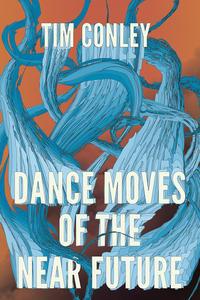
Tim Conley is nothing if not inventive. A bit of a cross between Franz Kafka, Chuck Palahniuk and Woody Allen, Dance Moves of the Near Future (Conley’s third collection of short stories) is the home of such characters as an “amorphous, gelatinous-looking blob,” a cactus (with a plan), and several dermatologists grappling with an inexplicable, almost gravitational pull toward a particular strip club.
Many of the other characters approximate something which one might consider terming “normal,” and these poor baffled souls tend to find themselves in surrealist worlds they cannot understand or predict. A typical office lunch conversation is interrupted when one of the protagonists is unceremoniously sucked up into a large hole in the ceiling. “Maybe it’s a metaphor,” says one of the onlookers. “I think you mean allegory,” another replies. It’s all very funny, imaginative stuff.
While Conley deserves high praise for his wild imagination and his bold creative risks, he is also clearly in the early stages of his literary career.
Besides a few minor problems in many but not all of the stories — the overuse of adverbs, pointless repetition, clunky sentences, all of which are fixable and worthy of the time to do so — is one of greater import, which will surely develop over the course of his career. Many of the characters, and the stories as a whole, while entertaining and original, beg for further depth and development.
Some of the stories’ characters are introduced by the narrator with an ironic, mocking superiority — parodies of human beings (a hotel concierge, for example, is described as “the kind of person who actually claps her hands when excited”). We often feel we’re being enticed to roll our eyes at such people. The narrator himself is frequently left in an embryonic stage of development, and Conley’s experimental literary devices seem to serve little purpose.
Take, for example, the narrator of the story entitled The Renaissance. We quickly learn of his propensity to say “quote/unquote.” (e.g. “Daniel’s friend ordered himself a burger, and Daniel said quote great idea, I’ll have one of those, too, it’s awesome to have real food again unquote.”) The narrator does this throughout the story, and we learn little else about him. So, while the quote/unquote thing is experimental and interesting, a reader can’t help but ask herself what the point of it might be. We are left craving more.
The use of interesting and experimental devices is frequent throughout this inventive work, and while these are wonderful starting points, they often lack a context or surrounding structure in which to meaningfully add to the piece. They’re simply fun and novel.
Not all of the stories suffer such maladies, however. Closer Still is wonderful, engrossing, atmospheric; Me or Your Own Eyes is intriguing, intelligent, and well-developed. But many of the characters throughout the book remain underdeveloped and seem to function to entice mockery or even to dramatize an overly-intellectualized philosophical concept.
That being said, the wonderment of surrealism exists in the experience of a world in which anything is possible. In all of his stories, Conley certainly delivers this delectable treat to readers.
Future reviews of his work will point back toward this period and will extract themes, concepts and characters that have since reached full maturation. In the meantime, Dance Moves of the Near Future is a fun, wild ride.
Jen Robinson plans to spend the entire summer as an “amorphous, gelatinous-looking blob.”
History
Updated on Saturday, August 1, 2015 7:48 AM CDT: Formatting, replaces book jacket.