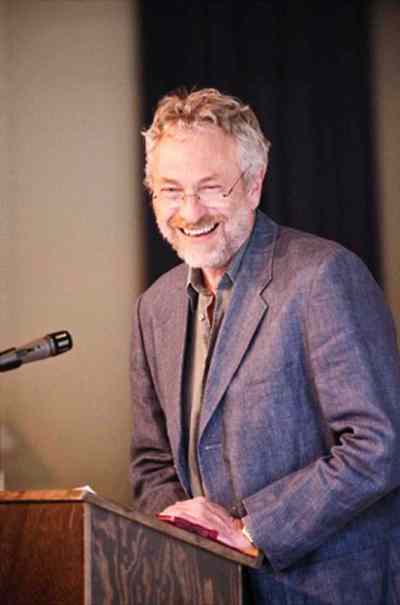
The new normal: Greg Hollingshead’s short-fiction prowess as sharp as ever
Advertisement
Read this article for free:
or
Already have an account? Log in here »
To continue reading, please subscribe:

Digital Subscription
One year of digital access for only $205*
- Enjoy unlimited reading on winnipegfreepress.com
- Read the E-Edition, our digital replica newspaper
- Access News Break, our award-winning app
- Play interactive puzzles
*First annual payment billed as $205.00 + GST for one year. This annual subscription will automatically renew at $233.00 + GST every 52 weeks (10% off the regular annual price of $259.35). Offer available to new and qualified returning subscribers only. Cancel any time.
To continue reading, please subscribe:
Add Free Press access to your Brandon Sun subscription for only an additional
$1 for the first 4 weeks*
- Enjoy unlimited reading on winnipegfreepress.com
- Read the E-Edition, our digital replica newspaper
- Access News Break, our award-winning app
- Play interactive puzzles
*Your next Brandon Sun subscription payment will increase by $1.00 and you will be charged $17.95 plus GST for four weeks. After four weeks, your payment will increase to $24.95 plus GST every four weeks.
Read unlimited articles for free today:
or
Already have an account? Log in here »
Hey there, time traveller!
This article was published 29/08/2015 (3978 days ago), so information in it may no longer be current.
In his 1995 Governor General’s Award-winning book The Roaring Girl, Greg Hollingshead showed he was a master of the quirky, surprise-filled and often hilarious short story. Now, 20 years later, he offers a new collection, and it’s been well worth the wait.
Act Normal, like The Roaring Girl, brings together a dozen stories that feature colourful and not-quite-with-it characters involved in situations that range from absurdly banal to bizarre.
Hollingshead currently lives in Toronto and is the author of two other story collections (besides The Roaring Girl and this latest) and three novels, one of which — The Healer — won the Rogers Writers’ Trust Fiction Prize in 1998.

The opening story, Unbounded, sets the pace. Dorry Cronshaw’s husband Al has left her for a younger woman and she’s anxious to make changes in her life — one is to get a new backyard fence. “Al might have got around to replacing (it) if he hadn’t replaced her first.”
Dorry contacts Lorne’s Wood Fence and, in a typical Hollingshead twist, the company’s sole worker, Lorne, turns out to be a needy poet. He’s OK at building fences — when he’s on the job — and he becomes interested in Dorry. Meanwhile, the temporary lack of a fence exposes the neighbours in telling ways.
In a story curiously called Fist Fight at the Orgy, the first-person narrator sets out to discuss intellectual issues — such as the reputation in Canadian history of 17th-century French explorer Étienne Brûlé — but he seems more concerned about the number of times he was late for school when being driven there by a rich acquaintance. This preoccupation even distracts him from an attractive woman’s unusual overtures. (References to Brûlé bring to mind a funny story in The Roaring Girl that features a mischievous parrot with that name.)
In The Drug-Friendly House, Morris is invited to a neighbourhood meeting to discuss what can be done about a nearby house known to have druggies coming and going. Hollingshead is bang-on in his depiction of what goes on in this kind of meeting.
Later, Morris dares to go to the house and finds one of the druggies is an old school friend. The contrast of this meeting with the neighbours’ meeting is lovely.
A couple of stories seem spoiled by ambiguity, but easily making up for these are such tales as The Amazing Insult. This one gives almost a novel’s worth of insight into what two people in a close relationship believe about each other, and how one thinks she can help the other.
And then there’s Micheline in Sense of an Ending, trying to make sense of husband Walt’s family — how they stick together through outrageous traumatic experiences.
In Night Dreams of the Wise, the protagonist tells us, “I had never had an unpromising relationship I didn’t want to be part of… The more love I had to give, the worse things got, and yet still I’d meet a woman fizzy with intelligence, rage and craziness and think, I can help you with that.” Such an outlook takes him into a wacky affair with the wife of the British defence secretary.
Miss Buffett is a wildly satirical look at the clerical hierarchy in one particular Roman Catholic diocese, especially the vicar-general, who has frequent hallucinations about a woman, and Father Brigilio, who is fanatical about the musical Oklahoma! Also involved is Ron Jackman, their most generous donor, who thinks he can demand a visit by the pope.
Zany as some of the situations are, Hollingshead’s short stories reflect the dialogue and deeds of people who are jarringly real in their peculiarities.
Dave Williamson is the Winnipeg author of 10 books, including a collection of short stories called Accountable Advances, and the novel Dating.

Act Normal: Stories
By Greg
Hollingshead
Anansi Astoria,
226 pages, $20
Advertisement Advertise With Us
Advertisement Advertise With Us