

Graphic novel tells an important, otherwise-overlooked story about indigenous men in Canada

Advertisement
Read this article for free:
or
Already have an account? Log in here »
To continue reading, please subscribe:
Digital Subscription
One year of digital access for only $1.44 a week*
- Enjoy unlimited reading on winnipegfreepress.com
- Read the E-Edition, our digital replica newspaper
- Access News Break, our award-winning app
- Play interactive puzzles
*Billed as $5.77 plus GST every four weeks. After 52 weeks, price increases to the regular rate of $19.95 plus GST every four weeks. Offer available to new and qualified returning subscribers only. Cancel any time.
To continue reading, please subscribe:
Add Free Press access to your Brandon Sun subscription for only an additional
$1 for the first 4 weeks*
- Enjoy unlimited reading on winnipegfreepress.com
- Read the E-Edition, our digital replica newspaper
- Access News Break, our award-winning app
- Play interactive puzzles
*Your next Brandon Sun subscription payment will increase by $1.00 and you will be charged $17.95 plus GST for four weeks. After four weeks, your payment will increase to $24.95 plus GST every four weeks.
Read unlimited articles for free today:
or
Already have an account? Log in here »
Hey there, time traveller!
This article was published 12/09/2015 (3910 days ago), so information in it may no longer be current.
Finally, Canada is waking up to the violence indigenous women inherit and endure. Now it’s time to look at the equally difficult history of indigenous men.
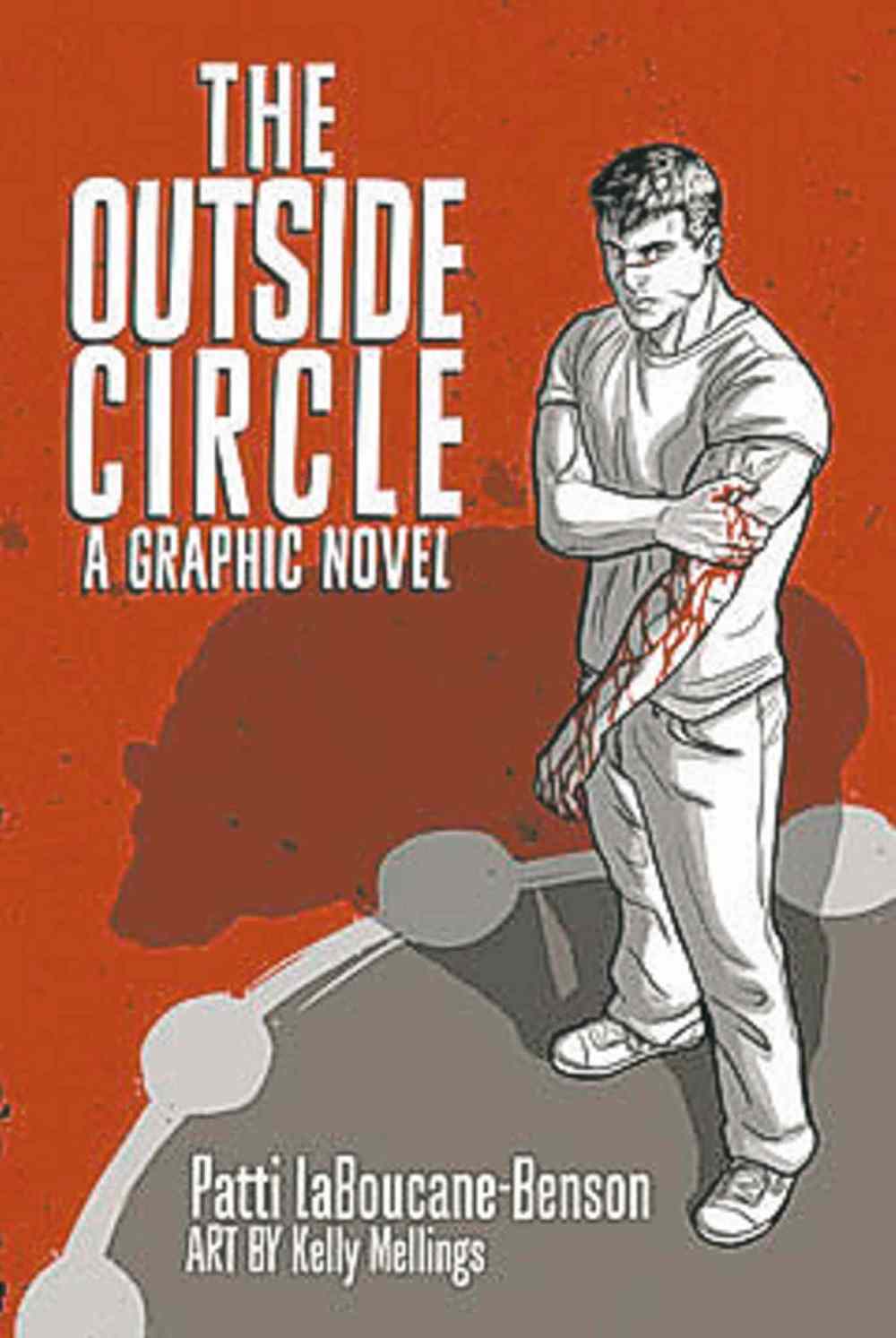
In this remarkable and unforgettable graphic novel, Métis writer Patti LaBoucane-Benson and Canadian illustrator Kelly Mellings gift us this story, exploring the path many indigenous men walk — and struggle — through.
The Outside Circle is more than just a story about two aboriginal men growing up in Alberta, though — it is a story about the past, the present, and the future of Canada.
Pete and Joey are two Cree brothers facing ongoing pressures such as gangs, drugs and an unwanted pregnancy. Like many indigenous youth, they are residential school intergenerational survivors who don’t know about their family’s struggles in the schools.
All they know is the violence that comes after.
Pete is a drug dealer with a fiery temper. He is fiercely protective of younger brother Joey, but an altercation involving his mother’s boyfriend triggers a crime that ends up with Pete in prison. Separated from his brother’s protection, Joey leaves home and begins affiliating with Pete’s gang, slowly becoming the new Pete — and continuing the violent cycle.
It’s only after several incidents that Pete realizes what he has inherited: generations of violent policies and practices rained down on his family, community and everyone around him. Surrounded by other indigenous inmates in prison, he realizes he is not alone. After almost 150 years of violence resulting in removal from their territories, forced indoctrination in residential schools and struggling to make a life in cities, indigenous peoples now flood the gangs, child-welfare system and jails.
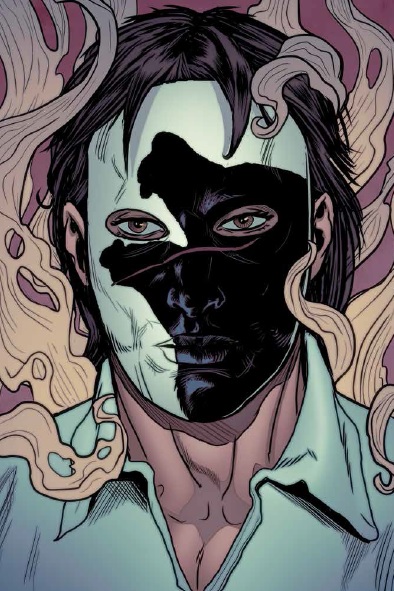
Essentially, the indigenous peoples Pete meets have become unknown to themselves, an image powerfully illustrated by Mellings’ brilliant drawings of masks on characters during cyclical moments.
In other words, violence begets violence and Pete’s community — from his grandparents to his parents to his brother — are caught in a never-ending circle.
The key is finding a way to look beyond the mask.
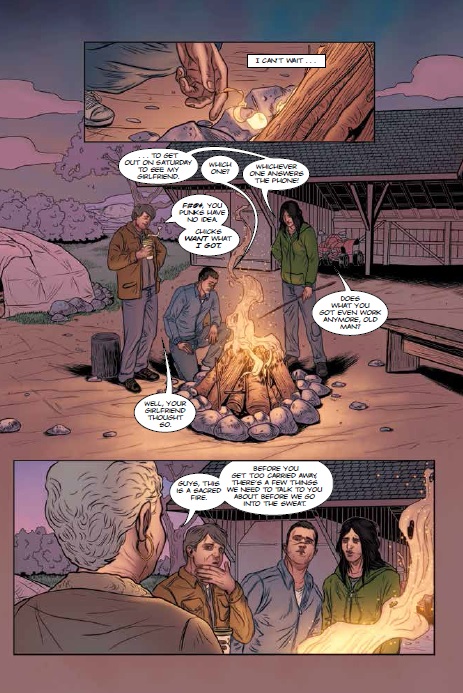
Through a long-lost uncle, Peter is reconnected with his past and begins to take a spiritual journey in becoming “a warrior for the community.” This is not a warrior for war, however, but rather one led by forgiveness, love and life. He finds a new circle that incorporates himself, Joey, and a future as a whole, healed man.
The fact remains that in today’s Canada, indigenous men are increasingly being left behind. Leaders in judicial, social-service and political institutions continue to treat indigenous men as the sole perpetrators infecting indigenous communities and Canada.
Instead of offering healthy educational paths, Canada opens up more jails and removes more and more children, refusing to implement conciliatory visions like those found in the Truth and Reconciliation Commission’s 94 recommendations.
The blood-thirsty Indian savage of stereotypical dime-store novels is still with us in law and practice.
If any cultural, physical, and social reconciliation is to be found in this country, the history and cycles many indigenous men inherit must be engaged meaningfully.
All will benefit as a result.

Graphic novels have the ability to show the reader superheroes and alternate realities. Bringing together image and language, they have the ability to educate, give history life, and show us a radically different future.
Now they can show us a vision of reconciliation.
LaBoucane-Benson and Mellings have done good work — this country sorely needs it.
Naithan Lagace is Métis and a master’s student in the department of Native studies at the University of Manitoba. Niigaan Sinclair is Anishinaabe and an associate professor, writer and head of the department of Native studies at the University of Manitoba.
Niigaan Sinclair is Anishinaabe from Peguis First Nation and a professor in the Department of Indigenous Studies at the University of Manitoba. He’s been a columnist for the Free Press since 2018. Read more about Niigaan.
Every piece of writing Niigaan produces is reviewed by an editing team before it is posted online or published in print — part of the Free Press‘s tradition, since 1872, of producing reliable independent journalism. Read more about Free Press’s history and mandate, and learn how our newsroom operates.
Our newsroom depends on a growing audience of readers to power our journalism. If you are not a paid reader, please consider becoming a subscriber.
Our newsroom depends on its audience of readers to power our journalism. Thank you for your support.
Book review
The Outside Circle
By Patti LaBoucane-Benson
Illustrated by Kelly Mellings
House of Anansi, 128 Pages, $20
Niigaan Sinclair is Anishinaabe from Peguis First Nation and a professor in the Department of Indigenous Studies at the University of Manitoba. He’s been a columnist for the Free Press since 2018. Read more about Niigaan.
Every piece of writing Niigaan produces is reviewed by an editing team before it is posted online or published in print — part of the Free Press‘s tradition, since 1872, of producing reliable independent journalism. Read more about Free Press’s history and mandate, and learn how our newsroom operates.
Our newsroom depends on a growing audience of readers to power our journalism. If you are not a paid reader, please consider becoming a subscriber.
Our newsroom depends on its audience of readers to power our journalism. Thank you for your support.
Advertisement Advertise With Us
Advertisement Advertise With Us
History
Updated on Saturday, September 12, 2015 8:26 AM CDT: Formatting, adds artwork.